Leaders from Slovakia, the Czech Republic, Hungary and Bulgaria have challenged German Chancellor Friedrich Merz’s demand that approval of the European Union’s next long-term budget be tied to a fresh financial commitment to Ukraine.
Slovak Prime Minister Robert Fico threatened to use his country’s veto, arguing that Slovakia has the same decision-making powers as Germany.
Fico made the remarks during a meeting in Bratislava with Czech Prime Minister Andrej Babiš, who also questioned the German Chancellor’s approach.
“We have an equal say in this matter. Just as Mr Merz talks about using his veto, I can say exactly the same. We have the same veto power as the German federal Chancellor.”
Robert Fico
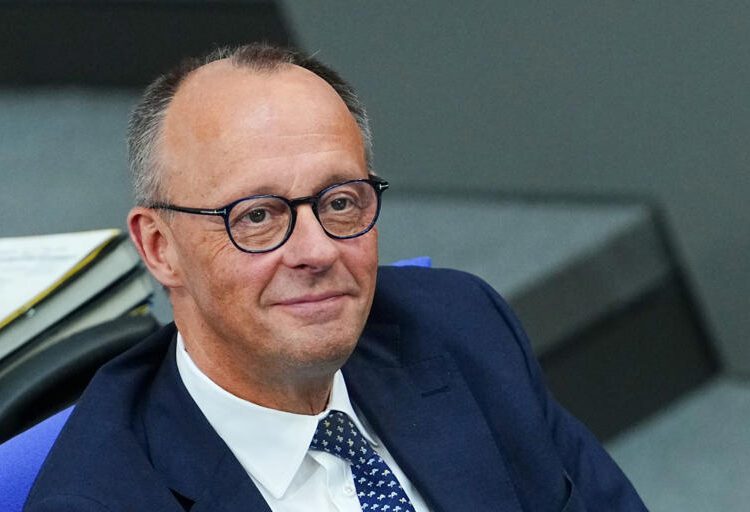
The disagreement follows a letter Merz sent to European Council President António Costa, in which he described a collective commitment by EU member states to provide additional support for Ukraine as an “essential prerequisite” for discussing the bloc’s next long-term budget.
The proposed budget will cover the 2028–2034 period, while Ukraine faces an estimated €70 billion funding shortfall in 2027. The European Union has indicated that it could cover approximately €45 billion of that gap through a financing arrangement that has yet to be determined.
Merz has maintained that financial assistance to Ukraine should be a shared responsibility among all EU members. “Supporting Ukraine is a matter of our indivisible European security, and so must be the burden sharing for that support,” he wrote in his letter to Costa.
Fico argued that Merz’s decision to connect Ukraine funding with the wider EU budget negotiations amounted to pressure on countries that disagree with further financial commitments to Kyiv.
“Today will not be business as usual – not by a long shot. Today, we must respond to blackmail. What the federal Chancellor is doing is a textbook case of blackmail, and I reject it. We are a sovereign country. We are the Slovak Republic. We have our own views.”
Robert Fico
Babiš also expressed reservations about Merz’s position, pointing to the proposed allocation of €100 billion for Ukraine in the next EU budget.
He suggested that the German Chancellor had overlooked the provision, although the proposed funds would not become available until 2028, leaving Ukraine facing an immediate financing challenge in the preceding year.
The dispute centres on how the EU should raise and distribute the additional funding. One option under consideration is another round of joint borrowing, which would add to an existing €90 billion support loan for Ukraine.
Slovakia, the Czech Republic and Hungary previously secured exemptions from participation in the loan arrangements and have indicated that they are unwilling to join another funding package.
Hungary Questions Linking Budget To Ukraine Aid
Hungarian Prime Minister Péter Magyar also opposed making the EU’s next budget conditional on additional support for Ukraine.
Speaking alongside Merz in Berlin, Magyar argued that the two issues should not necessarily be treated as one, while acknowledging that political and financial matters within the EU are often interconnected.
“I do not consider this to be blackmail. So I do not use any such words, because everything is connected to everything in today’s world.
“But I think that this does not necessarily have a good message.”
Péter Magyar
Magyar also said that Hungary could not commit to additional borrowing at the European level because of the pressure it faces in managing its public deficit. “In this regard, this is obviously unacceptable for us for domestic political reasons, but we will negotiate in Berlin, Dublin and Brussels,” he said.
Despite his reservations, the Hungarian leader expressed confidence that the bloc would eventually reach an agreement, saying, “We will find a solution for the EU budget. I am sure of it.”
Bulgaria Raises Concerns Over Further Financial Commitments
Bulgarian Prime Minister Rumen Radev signalled opposition to additional credit arrangements for Ukraine, citing his country’s deficit levels.
Speaking in Varna, Radev stated that Bulgaria would continue supporting Ukraine through other means, including energy supplies, but did not want to participate in further financial commitments. “Bulgaria is in no way blocking the decisions at the Council level that are taken in unity for everyone to support (Ukraine) as they can,” he said.
The positions taken by the four countries reflect a broader disagreement over the EU’s next seven-year budget, particularly the balance between support for Ukraine and funding for other priorities.
Slovakia, the Czech Republic, Hungary and Bulgaria belong to the Friends of Cohesion, a group of 17 member states seeking to protect funding for regional development and agriculture in the next long-term budget.
Their position has brought them into conflict with the so-called “frugals,” a group that includes some of the EU’s largest contributors to Ukraine’s support and advocates reductions in overall spending.
The disagreement has raised questions about whether countries seeking to limit their contributions to Ukraine will also be able to secure the cohesion and agricultural funding they want to preserve.
Merz Insists On Fairer Burden-Sharing
Meanwhile, Merz defended his position by arguing that the responsibility for supporting Ukraine should not fall disproportionately on a limited number of member states.
Speaking alongside Magyar in Berlin, he said that Ukraine policy should be incorporated into the EU budget and that the current distribution of financial responsibilities was not sustainable.
“It’s not a good option to continue down this path. Ukraine policy should be fully included in the European Union budget.”
Friedrich Merz
He acknowledged that some member states disagreed with his approach but maintained that discussions were necessary to reach a common position. He said, “At least four countries think differently, but it is definitely important to talk about this.”
The dispute places Ukraine’s immediate financing needs alongside negotiations over the EU’s broader spending priorities. With member states divided over additional borrowing and the conditions for approving the next long-term budget, reaching an agreement will require difficult negotiations over both financial contributions and the distribution of EU funds.
READ ALSO: Iran Rejects French Claims Over Supermarket Cyberattacks