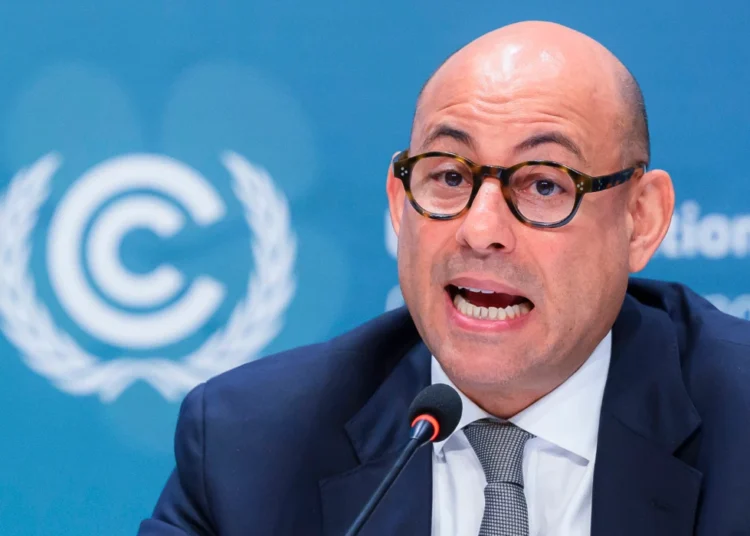
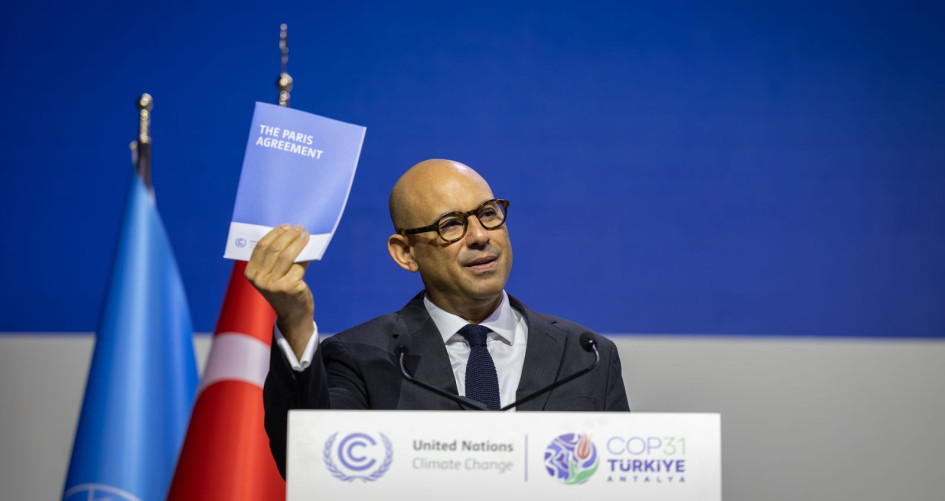
United Nations Climate Change Executive Secretary, Simon Stiell, has indicated that reducing methane emissions is key to slowing near-term global warming, urging governments to accelerate cuts to methane and other super-pollutants.
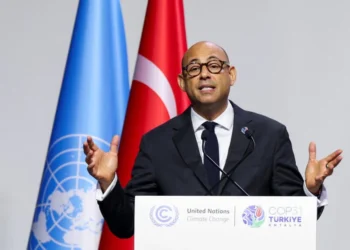
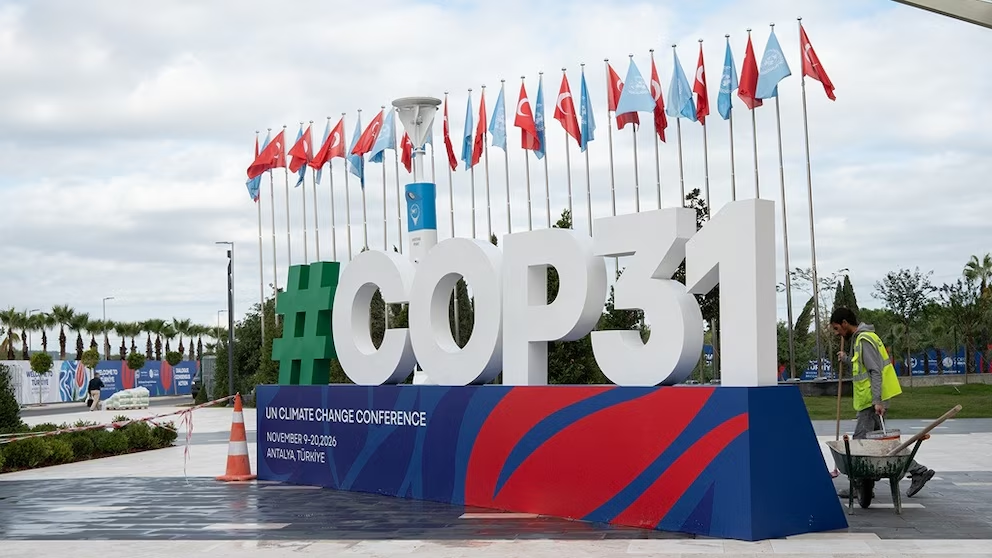
Addressing the Leaders-Level Non-CO₂ Greenhouse Gases Summit at the 31st United Nations Climate Change Conference (COP31) in Antalya, Türkiye, the UN Climate Chief stated that tackling methane emissions could provide immediate relief from the worsening effects of climate change.
“In a world of suffocating disasters, methane offers breathing space. It is one of the fastest, cheapest and most effective ways to check global heating in the near-term. While boosting economies, harvests, and health.”
Simon Stiell
He added, “Already, climate-driven destruction is wrecking lives, ripping livelihoods apart, and driving inflation. The higher temperatures rise, the worst it’s going to get. Action on methane and all super pollutants provides relief.”
Simon Stiell noted further that, it is “essential to limit near-term temperature rise and keep overshoot of the 1.5 limit as short and small as possible.”
“For small island states like mine, methane reduction buys us time. It must be accompanied by rapid action on carbon dioxide to hold back even greater temperature rise.”
Simon Stiell
The United Nations Climate Change Executive Secretary identified the oil and gas, waste, and agriculture sectors as important areas for intervention, pointing to the availability of existing technologies capable of delivering substantial reductions without imposing high additional costs.
He indicated that approximately 70 percent of methane emissions from the oil and gas sector could be eliminated using existing technologies, much of which could be deployed at low or no net cost.
Economic Gains Strengthen the Case for Action
Beyond its climate benefits, Simon Stiell outlined the economic opportunities associated with reducing methane emissions, arguing that investments in available solutions could improve industrial efficiency, strengthen agricultural production and deliver cleaner air.
He pointed to the solid waste sector, where approximately 75 percent of potential methane reductions could generate financial savings, as the value of captured methane could exceed the investment required to recover and utilise it.
The economic case is further supported by findings from the United Nations Environment Programme (UNEP) and the Climate and Clean Air Coalition, which indicate that every dollar invested in key super-pollutant solutions generates approximately $15 in economic gains alone.
The UN Climate Chief revealed that approximately 167 billion cubic metres of gas are flared annually during oil and gas production, representing an estimated $54 billion in lost energy value.
He described the practice as a significant economic loss, arguing that capturing and using the wasted gas could deliver financial returns while reducing harmful emissions.
The UN Climate Chief maintained that the benefits of accelerating methane reduction extend to stronger harvests, lower costs and improved human health, making the measures an opportunity for governments to pursue climate objectives alongside broader development priorities.
Governments Urged to Turn Climate Commitments into Action
Moreover, the UN Climate Chief at COP31 acknowledged growing international recognition of the need to address methane emissions, noting that more than 90 per cent of parties, representing approximately three-quarters of global methane emissions, have incorporated reduction measures into their latest Nationally Determined Contributions (NDCs).
“The task now is to turn those plans into action. COP31 can help deliver the practical solutions countries need to do so, and build momentum, including through the COP Presidency targets on methane and waste.”
Simon Stiell
He highlighted initiatives such as the Super Pollutant Country Action Accelerator, which provides countries with support to advance national efforts to reduce emissions.
Outlining four areas requiring greater attention, Simon Stiell urged governments to prioritise methane and other super-pollutants in their national climate plans, establish supporting policies across key sectors and encourage industries to invest in available technologies.
He further called for increased public and private financing, particularly through development banks and climate funds, to support the implementation of emissions-reduction measures.
“And fourth, use the new UN carbon market the Paris Agreement Crediting Mechanism which is up and running. One of the first areas it’s targeted is landfill methane – rewarding solutions that capture it, and put it to use.”
Simon Stiell
Simon Stiell concluded, “Super pollutants are a supersize opportunity. And it’s low-hanging. For the climate, for economies, and for human health. So let’s take advantage of it.”
READ ALSO: Manchester United Sack Michael Carrick After Poor Start