
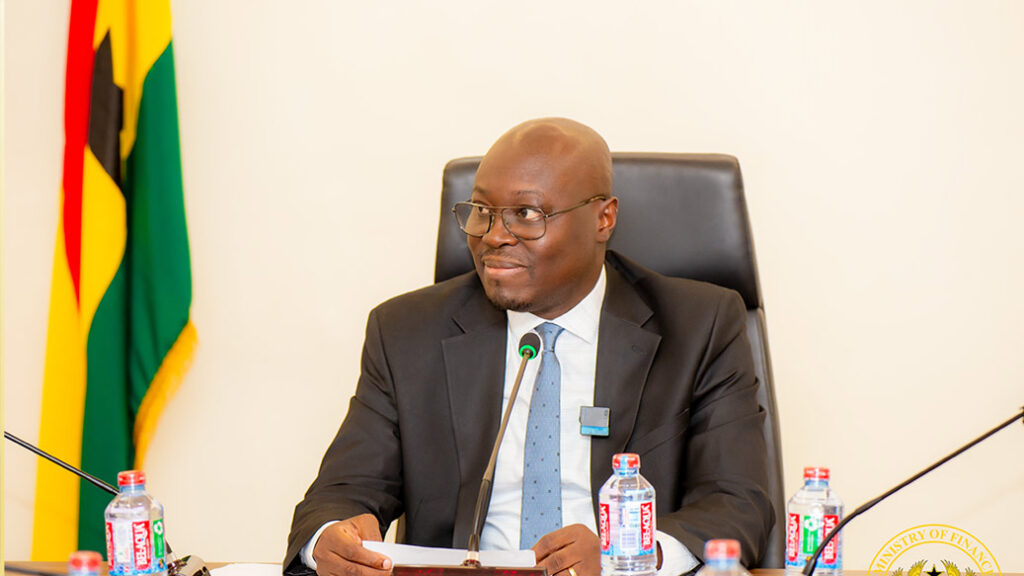
Economist and Technical Advisor at the Finance Ministry, Dr Theo Acheampong, has credited the government’s expenditure control measures with improving fiscal discipline and supporting Ghana’s economic recovery, arguing that tighter spending oversight has created room to manage public resources more efficiently without undermining economic growth.
Speaking in a post-2027 Budget interview, Dr Acheampong explained that the introduction of a commitment authorisation regime at the Finance Ministry has strengthened scrutiny of government expenditure by requiring spending proposals to undergo additional assessment before funds are committed.
“So even before going into government I have always argued that we have a big expenditure problem in this country. The quality of expenditure, the areas that we’re spending and all of that. So we introduced the commitment authorisation regime at the ministry.”
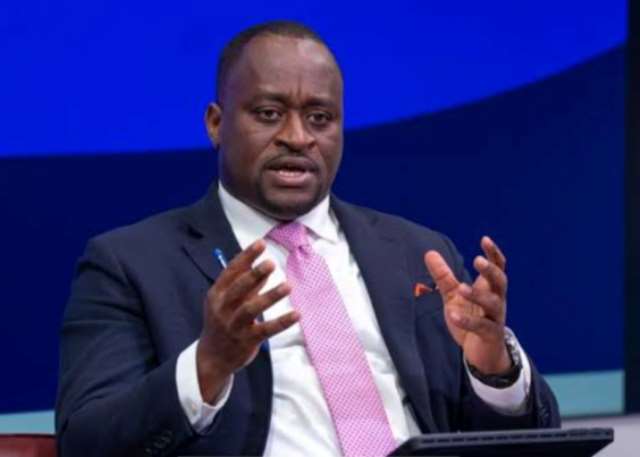
Economist and Technical Advisor at the Finance Ministry, Dr Theo Acheampong,
Commitment Authorisation Regime Tightens Spending Controls
Dr Acheampong explained that under the commitment authorisation regime, approval of the national budget does not automatically permit ministries, departments and agencies to proceed with every proposed expenditure.
Instead, spending requests must return to the Finance Ministry for assessment to determine whether individual items are necessary, justified and offer value for money. He noted that the process has helped identify expenditure that could be avoided, bringing greater discipline to public spending.
According to him, the measure was introduced in response to longstanding concerns about the quality and allocation of government expenditure, rather than simply the amount being spent. Dr Acheampong maintained that the scrutiny has brought greater sanity into the system by ensuring that public funds are directed towards justified priorities.
He also recalled that some critics had warned that spending cuts and tighter controls could negatively affect economic activity. However, he argued that the available economic indicators had not reflected the anticipated contraction.
Economic Growth and Inflation Show Improvement
Dr Acheampong pointed to economic growth of approximately 5.8 per cent, compared with the government’s earlier forecast of 4.8 per cent. He also referenced projections by the International Monetary Fund and other institutions, which had placed growth at around five per cent.
On inflation, he noted that the rate had declined from levels in the high twenties during the latter part of 2024 and a peak of 54 per cent at one point in 2022 to below six per cent at the end of October.
He argued that the improvements in growth and inflation demonstrated that expenditure controls had not prevented economic expansion. However, Dr Acheampong acknowledged that the gains were not sufficient to address all the country’s economic challenges, particularly the need to create sustainable and decent jobs.
He stressed that government must now focus on translating macroeconomic stability into tangible opportunities for businesses, particularly small and medium-sized enterprises.
Fiscal Space to Support Public Investment
The Finance Ministry advisor explained that expenditure controls and broader fiscal reforms had helped create additional fiscal space for government to support investment.
He described fiscal space as a national asset that must be protected and managed carefully, noting that the government had initially adopted a demanding fiscal consolidation target to restore macroeconomic stability.
Under the Public Financial Management Amendment Act, the government had committed to a primary balance target of 1.5 per cent of Gross Domestic Product (GDP). Dr Acheampong disclosed that the country exceeded that target in 2025, recording a primary surplus of approximately 2.5 to 2.6 per cent of GDP.
He explained that the government now intends to reduce the target to 0.5 per cent of GDP, subject to the proposed amendment of the law, to create room for additional public investment. The primary balance measures the difference between government revenue and expenditure, excluding interest payments on public debt.
Dr Acheampong argued that maintaining a high primary surplus comes with trade-offs, particularly when government needs to increase investment in productive sectors.
He explained that the initial fiscal consolidation was necessary to anchor macroeconomic stability, but the next phase would use the room created by those reforms to support the country’s development priorities.
Tax Reforms to Complement Expenditure Controls
Dr Acheampong also identified improvements in tax administration and existing tax measures as another source of fiscal space for investment. He stressed that government was not introducing new tax handles but was pursuing reforms intended to improve revenue mobilisation.
He cited changes to the excise tax and customs regimes, explaining that the measures were expected collectively to generate an additional 0.5 per cent of GDP in revenue. Together with the proposed adjustment to the primary balance target, the reforms are expected to provide an additional 1.5 per cent of GDP for government priorities.
Dr Acheampong maintained that the combination of expenditure discipline, fiscal reforms and improved revenue mobilisation would enable government to support investment while sustaining the gains made in macroeconomic stability. He emphasised that the next challenge was to translate those gains into productive activity and sustainable employment.
READ ALSO: Dangote Cocoa Deal Tests Ghana’s Processing Ambition