Ghana’s inflation rate has climbed to 5.5% in October 2026, extending a worrying upward trend that has seen consumer price increases accelerate for three consecutive months and raising fresh questions about the sustainability of the country’s recent disinflation gains.
The latest figure, released by the Ghana Statistical Service (GSS), represents an increase from 5.2% in September, marking another setback after months of easing inflation had offered households and businesses some relief from the relentless rise in living costs.
Although inflation remains below the Bank of Ghana’s medium-term target of 8% plus or minus 2 percentage points, the latest increase suggests that price pressures are beginning to re-emerge in critical parts of the economy, particularly services, transport and housing.
Presenting the October 2026 Consumer Price Index and Inflation Report, Government Statistician Dr Alhassan Iddrisu identified non-food inflation and rising services costs as the major forces behind the latest increase.
Three Consecutive Months of Rising Inflation Raise Concerns
October’s inflation figure marks the third consecutive monthly increase since July, reversing some of the progress made in bringing down the cost of living.
The latest movement is particularly significant because inflation had previously declined considerably, creating expectations that price stability would become more firmly established.
However, the October data suggest that the battle against rising prices is entering another difficult phase.
Dr Iddrisu explained that non-food inflation accounted for approximately 76% of the overall inflation rate, compared with 24% for food inflation.
“In very simple language, of every one Ghana cedi price rise in October 2026, about 76 pesewas came from non-food items, and 24 pesewas came from food.”
Dr Iddrisu
This development highlights a changing inflation pattern in which services and other non-food expenses are exerting greater pressure on household budgets than food prices.

Services Inflation Emerges as the Biggest Threat
One of the most striking developments in the October report was the sharp acceleration in services inflation, which climbed to 11.5% from 8.3% in September.
Goods inflation, meanwhile, moved in the opposite direction, declining to 3.8% from 4.2%.
The widening gap suggests that the cost of accessing essential services is increasing much faster than the prices of physical goods.
Dr Iddrisu drew attention to the growing divergence between the two categories, noting that “Services are now rising about three times as fast as goods.”
The development could have serious implications for households already dealing with transportation expenses, utility bills, accommodation costs and other recurring payments.
Unlike occasional purchases, many service-related expenses are difficult to avoid or postpone, meaning persistent increases could continue squeezing disposable incomes even when food prices begin to stabilise.
Transport Costs Record Alarming Increase
Transport emerged as the expenditure division with the highest inflation rate in October, recording a sharp increase to 14.1% from 5.7% in September.
Even more concerning was the 8% month-on-month increase in transport prices, indicating that consumers experienced a significant jump in transportation-related expenses within just one month.
The increase could have wider consequences for the economy because transportation costs influence the movement of people, agricultural produce, manufactured goods and other essential commodities.
Businesses that depend heavily on logistics and distribution could face higher operating expenses, potentially transferring some of those costs to consumers through increased prices.
Housing, water, electricity, gas and other fuels also remained major sources of inflationary pressure, recording an inflation rate of 10.5%.
The division was the single largest contributor to October’s inflation, accounting for 24.4% of the overall rate.
Food and non-alcoholic beverages contributed 24.3%, while transport accounted for 22.5%.
Together, these three divisions represented approximately 70% of national inflation.
“Just these three divisions out of the 13 divisions contributed about 70% to October 2026 inflation,” the Government Statistician explained.
Food Inflation Provides Some Relief
While services and transport costs continued rising, food inflation offered a more encouraging development.
Food inflation declined to 2.8% in October from 4% in September, representing a significant improvement compared with the 9.5% recorded in October 2025.
On a month-on-month basis, food prices declined by 2%, contributing to an overall 0.1% reduction in consumer prices between September and October.
The decline suggests that food-related price pressures have eased considerably, although the experience of individual households may differ depending on the commodities they purchase.
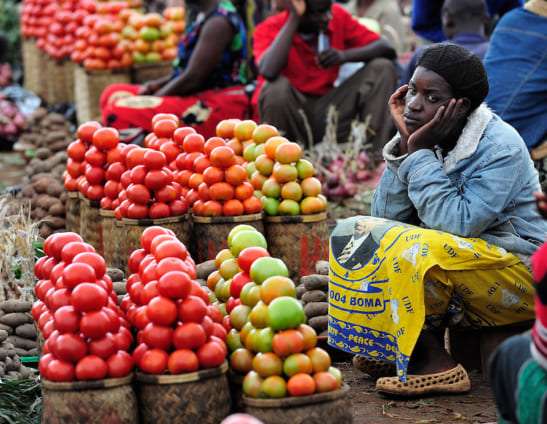
Indeed, fresh tomatoes recorded a staggering 119.3% year-on-year price increase, while shrimps and ginger recorded increases of 88.8% and 88.2%, respectively.
Parking space and related services increased by 47.2%, while mango prices rose by 45.3%.
On the other hand, guinea corn prices declined by 28%, maize fell by 27.2%, foreign apples dropped by 24.5%, and limes recorded a 23.7% reduction.
These contrasting movements demonstrate why the national inflation rate does not necessarily reflect the price experience of every household.
Ashanti Records Ghana’s Highest Regional Inflation
Regional disparities also featured prominently in the October report, with Ashanti recording the highest inflation rate of 9.7%.
Eastern followed with 7.8%, while Ahafo and Central recorded 6.8% and 6.2%, respectively.
The Northern Region recorded the lowest inflation rate at negative 0.5%, indicating that average prices were lower than they were a year earlier.
Dr Iddrisu stressed that inflation differs across geographical locations, making regional data particularly important in understanding the cost-of-living situation.
“Where you live actually changes what you pay. In other words, inflation is not the same everywhere in Ghana,” he said.
The report further revealed that locally produced items recorded inflation of 6.9%, significantly higher than the 2.4% recorded for imported items.
Locally produced goods accounted for 86.4% of October’s inflation, underscoring their dominant influence on domestic price movements.
Inflation Target Remains Within Reach, but Risks Persist
Despite October’s increase, Ghana’s inflation rate remains below the Bank of Ghana’s medium-term target of 8% plus or minus 2 percentage points.
However, three consecutive monthly increases could complicate the country’s efforts to consolidate price stability.
The acceleration in services, transport and housing costs presents a particular challenge because these expenses affect households and businesses across different income groups.
The Ghana Statistical Service has urged stakeholders to use its disaggregated inflation data to guide household spending, business cost management and policy decisions.
The October figures provide an important reminder that declining food inflation alone cannot guarantee broad relief when transportation, housing and essential services continue becoming more expensive.
Ghana may still be within its inflation target range, but the latest increase raises the stakes in the effort to prevent renewed price pressures from eroding the economic gains achieved in recent months.
READ ALSO: Fidelity Bank Makes Ghana Banking History With Exclusive 2X Certification