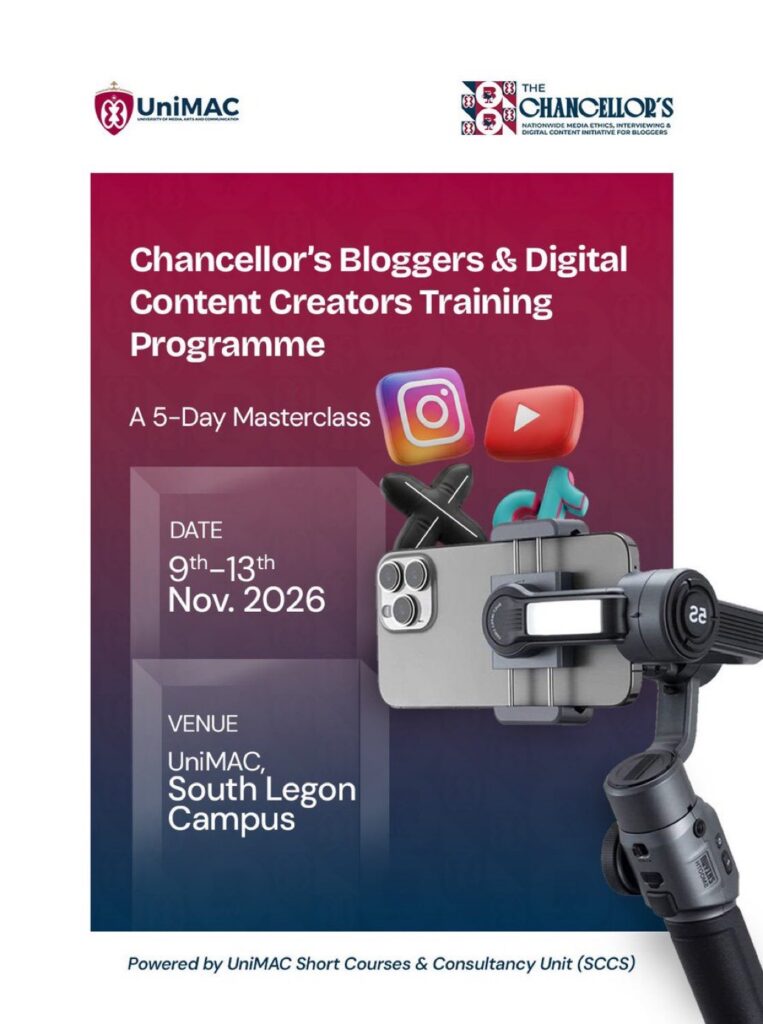
The University of Media, Arts and Communication (UniMAC) is hosting a specialised training programme for bloggers and digital content creators, sponsored by the university’s Chancellor. The institution announced the event on its official X account on November 4, 2026, stating it is proud to welcome a select number of participants from across Ghana for hands-on experience in the digital landscape. Attendance is strictly by invitation.
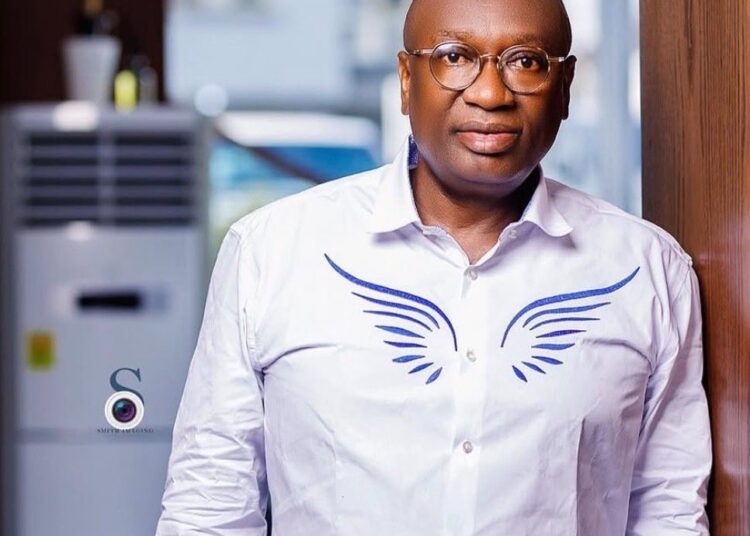
The programme builds on an earlier commitment made by Chancellor Ernest Ofori Sarpong. In September 2026, he announced plans for free professional media training aimed at Ghanaian bloggers. The initiative was designed to promote ethical, credible and responsible digital journalism. Speaking to a group of bloggers at the time, the Chancellor said the university would roll out the programme as part of a broader effort to empower digital media practitioners.
He emphasised that the training would build on existing skills rather than starting from basic levels, with the goal of strengthening professional standards and improving the quality of online content.
UniMAC, Ghana’s specialised public university for media, arts and communication, was formed through the merger of the Ghana Institute of Journalism, the National Film and Television Institute and the Ghana Institute of Languages. It focuses on practical training in journalism, public relations, film, languages and related creative fields.
The university regularly organises capacity-building activities for students and industry practitioners, including fact-checking workshops, modern media practice sessions and short courses in digital skills.
Chancellor Ernest Ofori Sarpong, a businessman and entrepreneur, was appointed as UniMAC’s first Chancellor effective August 1, 2026. He serves as the ceremonial head of the university and supports efforts to strengthen partnerships between academia and industry. His sponsorship of the bloggers’ programme aligns with the institution’s interest in extending professional development beyond formal degree students to independent digital creators who increasingly shape public conversation in Ghana.
Role of Digital Content Creators and Bloggers
Digital content creators and bloggers play a growing role in Ghana’s media ecosystem. Many operate independently or through small platforms, producing news, commentary, lifestyle and educational material that reaches wide audiences on social media. While this expansion has increased the diversity of voices, it has also raised concerns about accuracy, verification and ethical standards.
Training programmes such as the one at UniMAC aim to address these issues by equipping participants with practical tools for responsible storytelling, fact-checking and professional content production.
Details released so far indicate that the current session is invitation-only and targeted at a select group of bloggers from different parts of the country. The hands-on format suggests participants will engage in practical exercises related to the digital media environment rather than purely theoretical instruction.
UniMAC has not yet publicly released a full curriculum, list of facilitators or exact duration of the training, though the September announcement framed it as professional media training focused on ethics and credibility.
The university’s involvement reflects a wider recognition that traditional journalism education must adapt to the realities of digital platforms. UniMAC’s Institute of Journalism and related departments already incorporate multimedia storytelling, digital media and communication skills into their programmes.
Extending similar opportunities to practising bloggers allows the institution to influence standards in the informal and independent digital space.
Industry Observations
Industry observers note that similar capacity-building efforts have been organised by media development organisations and universities in Ghana in recent years. These programmes often cover verification techniques, audience engagement, monetisation, legal considerations and ethical reporting.
By placing the current training under the sponsorship of the Chancellor and hosting it at UniMAC, the university signals institutional support for improving the professional environment in which digital creators operate.
As the digital media landscape continues to evolve, initiatives that bridge formal academic institutions and independent content creators are likely to remain relevant. Participants in the UniMAC programme are expected to leave with enhanced practical skills that can be applied to their ongoing work.
The invitation-only nature of the event suggests organisers are prioritising quality of engagement over large numbers, allowing for more focused instruction and interaction.
Further updates from the university may provide additional information on outcomes, participant feedback or plans for future editions of the training. For now, the announcement confirms that UniMAC is actively implementing the Chancellor’s earlier pledge to support Ghanaian bloggers through structured professional development.
The programme forms part of the university’s broader contribution to media capacity building in the country.
READ ALSO:Miliband Rules Out Extra Costs for Slave Trade Apology