The government has announced plans to introduce a comprehensive Natural Resource Revenue Management Act to replace Ghana’s existing Petroleum Revenue Management Act (PRMA), signaling a major regulatory overhaul aimed at bringing all extractive proceeds under a single, unified legal umbrella.
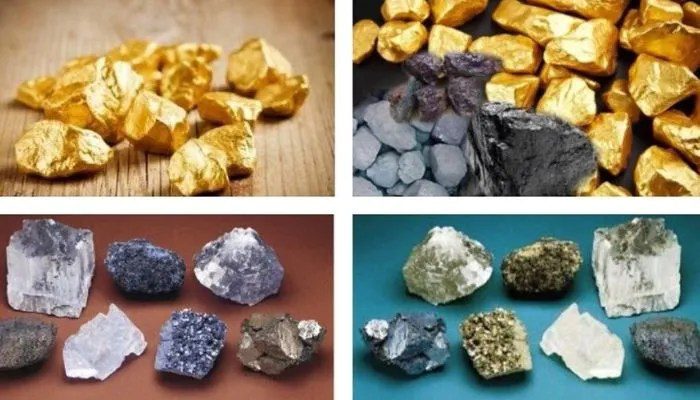
The proposed legislation seeks to consolidate oversight over traditional commodities like gold alongside emerging green-transition minerals such as lithium and bauxite.
By retiring an oil-centric statute in favor of an all-encompassing extractive law, the administration intends to plug long-standing governance gaps across the mining sector.
“The current law covers only oil revenues. The new law will bring revenues from oil, gold, lithium, bauxite and all other extractive resources under one clear and accountable framework, for the benefit of present and future generations. Building on that experience, our natural resource revenues will only be directed to major national infrastructure projects.”
Finance Minister Dr. Cassiel Ato Forson

The government’s initiative directly addresses a structural flaw in the current statutory architecture, where only hydrocarbon earnings are subjected to the strict transparency, tracking, and inter-generational savings rules established by the PRMA of 2011, leaving solid mineral royalties vulnerable to fragmented disbursement and opaque fiscal management.
Expanding these rigorous accounting standards to cover gold, bauxite, lithium, and other mined resources ensures that every cedi generated from Ghana’s subterranean wealth is tracked from extraction to public expenditure.
Crucially, the policy ties these consolidated funds directly to tangible physical development rather than recurrent administrative spending, modeling future allocations on the financing blueprint recently deployed for the Accra-Kumasi Expressway.
Closing the Governance Gap in Solid Minerals
For more than a decade, policy analysts and civil society watchdogs have highlighted a stark regulatory asymmetry in Ghana’s extractive governance.
While petroleum receipts undergo rigorous quarterly audits by the Public Interest and Accountability Committee (PIAC) and mandatory allocations into the Ghana Stabilisation and Heritage Funds, solid mineral royalties have historically flowed through less transparent channels, including the Minerals Development Fund (MDF) and general budget support.

In parliamentary deliberations surrounding the fiscal policy, Dr. Forson emphasized that previous resource inflows were often “spread thinly and spent on wasteful expenditures,” diminishing their long-term developmental footprint.
The urgency for legislative harmonization has intensified as global demand for critical transition minerals accelerates.
With commercial lithium extraction advancing in the Central Region and renewed state focus on integrated bauxite-to-aluminum value chains, relying on outdated mining fiscal frameworks risks repeating historical resource-curse pitfalls.
A unified statute eliminates dual standards, subjecting mining houses, state agencies, and beneficiary institutions to uniform reporting obligations and statutory ring-fencing.
Ring-Fencing Wealth for Transformative Infrastructure
Beyond transparency, the proposed legislation introduces a strict expenditure mandate designed to convert depleting geological assets into permanent economic capital.
By legally restricting natural resource proceeds to flagship capital projects, the government aims to insulate development budgets from political cycles and recurrent wage-bill pressures.
The administration’s decision to channel pooled oil and mineral royalties into constructing the Accra-Kumasi Expressway serves as the operational proof of concept for this model.
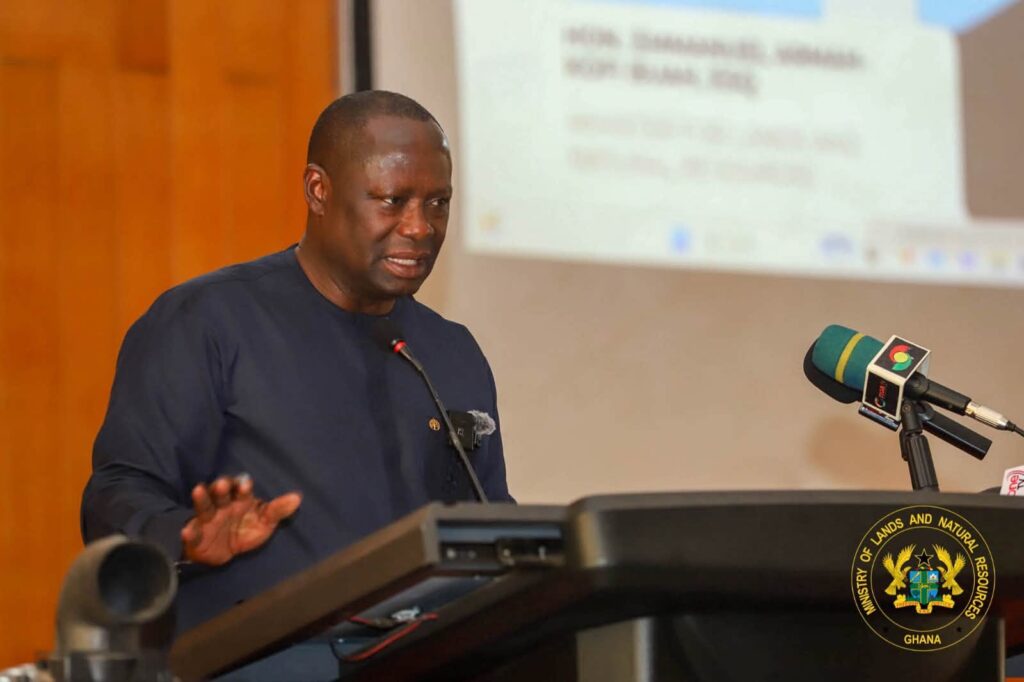
Addressing lawmakers on the shift toward concentrated capital deployment, the finance minister noted that pooling these streams enables the state to execute “two monumental national investments in four years,” specifically citing the Accra-Kumasi Expressway alongside the revitalization of the Western Corridor Railway Line.
For investors and industry observers, dedicating extractive windfalls to high-impact transport corridors creates a virtuous cycle: improved rail and road networks directly lower logistics costs for bulk mineral haulage while stimulating broader domestic commerce.
Balancing Statutory Oversight and Stakeholder Interests
Transitioning from the PRMA to a holistic Natural Resource Revenue Management Act will require careful legislative calibration when the bill reaches Parliament in 2027.
Lawmakers must reconcile existing statutory claims such as traditional authority royalties, district assembly allocations, and the MDF’s community development mandates with the new directive prioritizing national infrastructure.
Furthermore, extractive sector analysts will closely scrutinize whether the incoming bill expands PIAC’s oversight jurisdiction to audit gold and lithium receipts or establishes a broader multi-resource watchdog alongside the proposed Ghana Sovereign Wealth Fund.
Ultimately, the success of this legislative reform hinges on institutional enforcement rather than statutory drafting alone.
If Parliament enacts a robust framework that preserves community-level equity while enforcing strict capital ring-fencing, Ghana could establish a benchmark for critical mineral governance across West Africa ensuring that the imminent lithium and bauxite boom leaves behind enduring national assets long after the mines are depleted.
READ ALSO: Lower Interest Rates Rewriting Ghana’s Stock Market Investment Story – Mr Nyarko