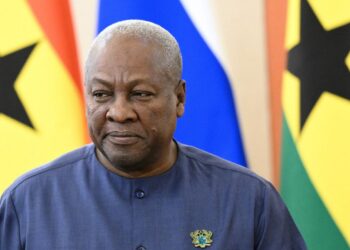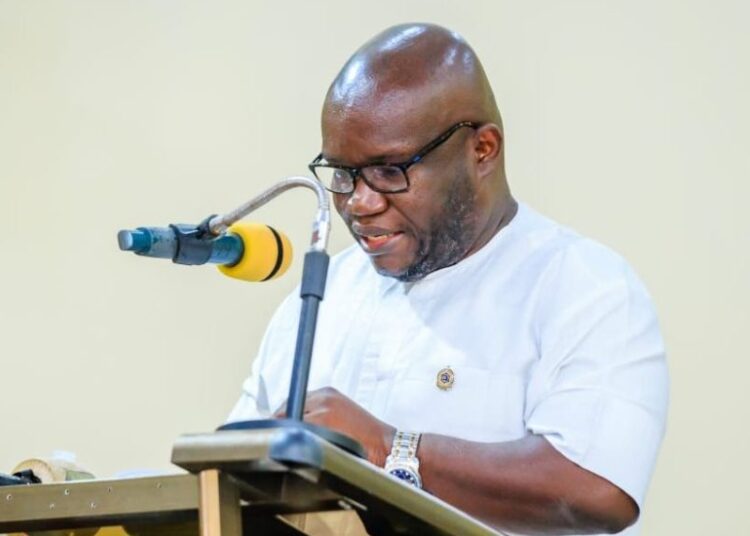
President John Dramani Mahama has ordered a nationwide performance evaluation of all 261 Metropolitan, Municipal and District Chief Executives (MMDCEs), prompting the Convener of the Media Coalition Against Galamsey and Chief Executive Officer of the Ghana Chamber of Mines, Dr Ken Ashigbey, to demand that the fight against illegal mining becomes a central consideration in determining their performance.
The President’s directive requires an independent, evidence-based assessment of the local government executives, with a final report expected by December 20, 2026.
Dr Ashigbey believes the exercise presents an important opportunity to hold district and municipal authorities accountable for the persistence of galamsey in their jurisdictions, particularly where their conduct or inaction has undermined efforts to curb the menace.
“It has to be prominent. You know, especially when it’s coming in the days where the Ashanti Regional Minister makes a statement, where he’s like they have to almost water down what NAIMOS is doing.”
Dr Ken Ashigbey
Dr Ashigbey insisted that the President’s own commitments during the election campaign and after assuming office “establish a clear basis for making galamsey a key performance indicator.” He recalled that President John Dramani Mahama previously pledged to hold leadership accountable for illegal mining, while some government officials proposed using MMDCEs to address the problem.

The Chief Executive Officer also recalled the President’s indication that the performance of MMDCEs would be measured partly by their contribution to the anti-galamsey campaign. He therefore questioned why the issue should receive anything less than prominent attention during the current evaluation.
Although the six assessment indicators do not identify illegal mining as a standalone category, Dr Ashigbey argues that “its implications cut across local development, security and accountability.” He particularly identified peace, security and chieftaincy relations, which account for 15 percent of the assessment, as an area through which the conduct of MMDCEs in mining-affected communities could be examined.
Recent Arrests In Guinea
In addition, he cited Guinea’s recent crackdown on illegal mining as an example of political leadership holding public officials accountable. He referenced the arrest of 1,263 people, including an acting governor, four prefects, 17 deputy prefects and 479 district and neighbourhood chiefs, alongside the dismissal of 22 civilian and military territorial heads.
Dr Ashigbey also invoked the Catholic Bishops’ Conference’s assessment that existing interventions have not produced the expected results. He urged President Mahama to use the review to distinguish executives who actively confront illegal mining from those whose districts remain affected without demonstrable intervention.
Galamsey: Calls For Sanctions Against Failing MMDCEs
Meanwhile, as the Government prepares to scrutinise the performance of all 261 Metropolitan, Municipal and District Chief Executives (MMDCEs), Dr Ken Ashigbey has called for “transparent assessments and decisive sanctions against executives who fail to demonstrate meaningful efforts” to combat illegal mining in their jurisdictions.
The Chief Executive Officer of the Ghana Chamber of Mines and Convener of the Media Coalition Against Galamsey believes that persistent mining destruction in several communities should prompt drive serious actions.
“It is either that you are so incompetent that His Excellency should relieve you of your post, or the worse bit of it, that you might be complicit and His Excellency should throw Act 995, whcih is the Minerals and Mining Act as amended in 2019 at you, and not just remove you from office, but also ensure your prosecution as well.”
Dr Ken Ashigbey
Dr Ashigbey cited visible illegal mining activities along the Bonsu, Anyinam and Osino corridor as examples that should invite scrutiny of the relevant District Chief Executives. He also pointed to extensive environmental destruction between Tarkwa, Wassa, Prestea and more, questioning how local authorities in those areas could demonstrate that they have discharged their responsibilities effectively.
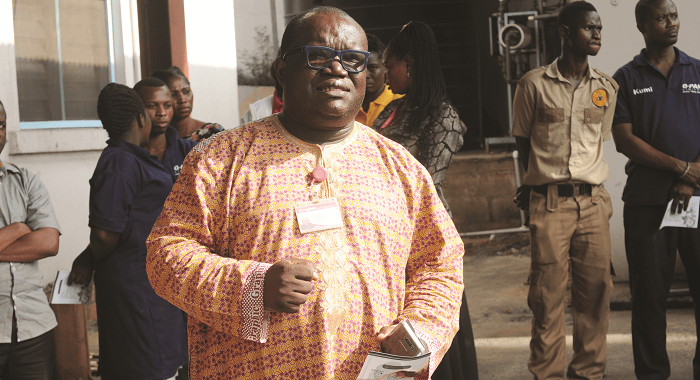
The Convener further identified the flooding of Samreboi, which he attributed to galamsey-related environmental destruction, as an illustration of the consequences communities face when illegal mining continues unchecked. He also referenced mining activities around the town, where farming in polluted water bodies was taking place below a police station.
Nevertheless, Dr Ashigbey acknowledged that an executive should have an opportunity to present evidence of efforts made to confront illegal mining, particularly where those interventions have not yielded the desired results. He insisted, however, that the evaluation must establish whether an executive has genuinely fought the menace or failed to act.
In addition to demanding accountability, the CEO called for the assessment criteria and findings to be made accessible to the public. He believes transparency would enable citizens to contribute evidence about the performance of their local authorities and distinguish executives who are delivering from those who are falling short.
Under the announced timetable, all MMDCEs must submit evidence-backed self-assessment reports by November 30, 2026. Independent teams are scheduled to conduct field verification across the districts from December 1 to 15.
READ ALSO: Minority Describes Government’s Economy Progress As “Artificial”