
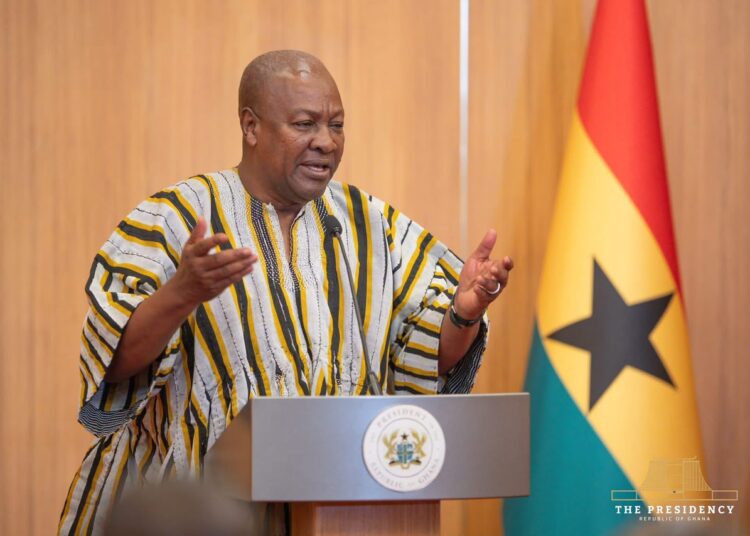
President John Dramani Mahama has disclosed that countries in the Caribbean and the Middle East have requested skilled workers from Ghana under fixed-term employment contracts, potentially creating overseas job opportunities for graduates of the National Apprenticeship Programme (NAP).
Speaking at the graduation ceremony for the programme’s first cohort at the State House in Accra on Friday, November 20, 2026, President Mahama indicated that the Ministry of Labour, Jobs and Employment would consider the graduates for the opportunities through labour mobility agreements being negotiated with other countries.
He explained that most of the contracts would run for approximately five years, after which workers would return to Ghana.
“We have received requests from countries in the Caribbean and the Middle East to send skilled workers on fixed-term contracts, and I’m sure that the Ministry of Labour, Jobs, and Employment will consider graduates of these programmes when recruiting for these external jobs.”
HE President John Dramani Mahama
The announcement offers a potential international employment pathway for the 13,309 graduates who have completed vocational and technical training under the government’s flagship apprenticeship initiative.
Labour Mobility Agreements Could Expand Employment Opportunities
President Mahama placed the overseas employment requests within the government’s broader labour mobility agenda, which seeks to create opportunities for Ghanaian workers through agreements with other countries.
He told the graduates that the agreements could provide additional routes into employment beyond the domestic labour market. “Opportunities also exist through the labour mobility agreements that we are signing with other countries.”
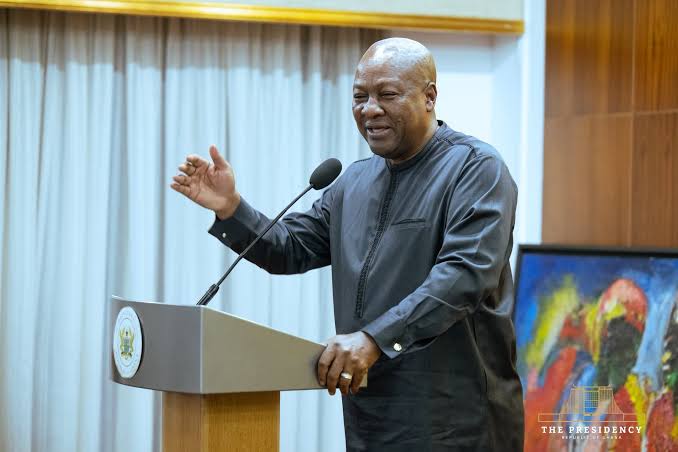
The President’s remarks suggest that graduates could be considered for overseas placements where their acquired skills match the requirements of foreign employers. However, the announcement did not establish when recruitment would begin or how many graduates could benefit from the arrangements.
Skilled Trades Identified for Overseas Recruitment
President Mahama identified several technical and vocational skills for which foreign governments have expressed interest, including masonry, plumbing, carpentry, steel bending and welding.
He indicated that the government would use its records of programme participants to identify graduates whose skills correspond with the requirements communicated by prospective employers. “…so when those requests come, we will look into your database and find the skills that they are looking for…”
The trades identified by the President align with the practical orientation of the National Apprenticeship Programme, which provides training lasting between three and 18 months. Approximately 70 per cent of the training is devoted to practical instruction, allowing participants to acquire hands-on experience in their chosen fields.
The proposed matching process would therefore depend on the availability of relevant skills within the programme’s graduate database and the specific requirements of countries seeking workers.
NAP Connect to Support Graduate Selection
The President also directed graduates to download the NAP Connect application, which is expected to help the government access information about their training and technical competencies.

Through the database, officials would be able to identify graduates according to their respective trades and forward suitable candidates for consideration when overseas employment requests arise.
Using welders as an example, President Mahama explained that officials could identify graduates who completed the welding module and submit their names to prospective employers seeking workers with those competencies.
He further explained that the overseas opportunities would operate through fixed-term arrangements, with most contracts expected to last approximately five years. “You earn some money, you come back.”
The arrangement, as outlined by the President, would allow beneficiaries to gain employment abroad for a defined period before returning to Ghana. However, the government has not yet disclosed the specific recruitment procedures, contract conditions or number of available positions.
Domestic Employment and Enterprise Opportunities Remain
President Mahama also presented overseas employment as one of several pathways available to graduates, rather than the only route into the labour market. He encouraged companies participating in the government’s 24-Hour Economy and New Economy programmes to prioritise graduates of the apprenticeship initiative when recruiting workers with relevant technical skills

For graduates interested in entrepreneurship, he pointed to the Adwumawura programme as another avenue through which young people seeking to establish businesses could access startup support.
Others could pursue employment with existing companies or establish their own workshops and businesses using the technical competencies acquired during their apprenticeship. The approach positions the programme as a potential source of skilled labour for both domestic industries and international employers.
Recruitment Details and Worker Protection Remain Unclear
Despite outlining the potential overseas opportunities, President Mahama did not identify the countries that had submitted requests to Ghana. He also did not disclose the number of workers required, expected remuneration, recruitment timelines, or the criteria that would determine which graduates qualify for selection.
Questions also remain about the safeguards that would govern the employment arrangements, particularly the protection of Ghanaian workers’ rights, welfare and working conditions abroad.
The issue is relevant to the government’s existing labour mobility engagements. On October 16, President Mahama instructed Ghana’s new ambassador to Qatar to ensure that adequate protections for workers accompany employment opportunities under the Labour Mobility Agreement
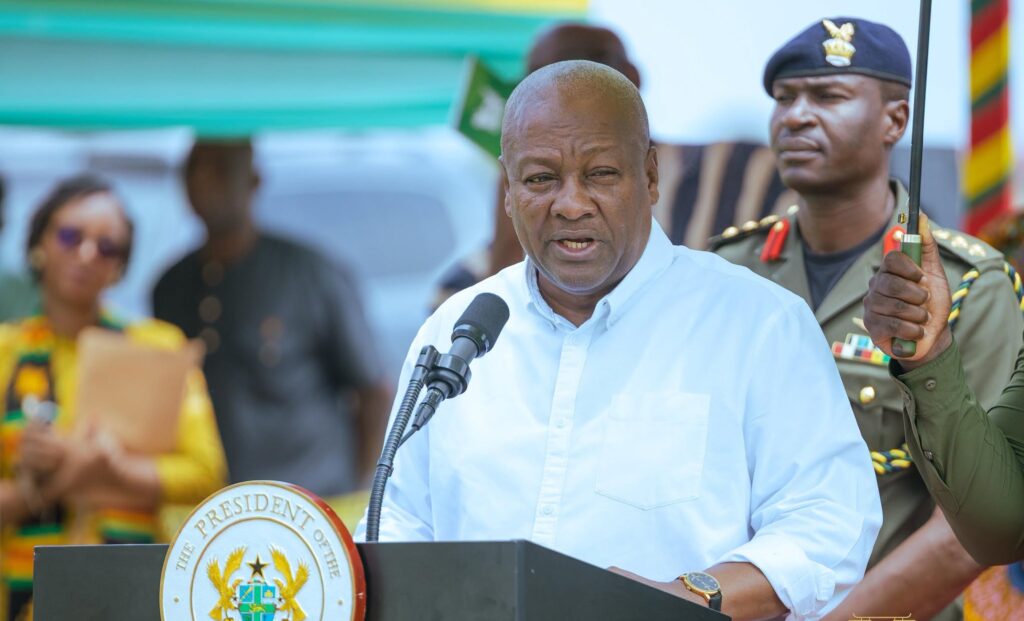
Whether comparable safeguards will apply to the fixed-term contracts announced at the apprenticeship graduation ceremony remains unclear. The Ministry of Labour, Jobs and Employment is expected to play a central role in translating the President’s announcement into a recruitment process.
Its subsequent engagements with prospective employers and participating countries will determine how graduates are identified, selected and deployed. For now, the announcement signals a possible expansion of employment opportunities for the first 13,309 apprenticeship graduates, although the practical arrangements for accessing overseas contracts are yet to be outlined.
READ ALSO: Ghana’s Mineral Ambitions Face A Supply Chain Risk