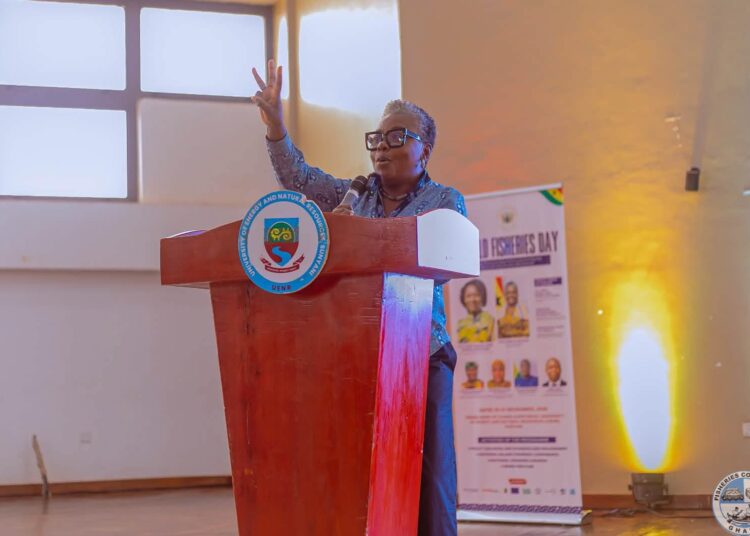
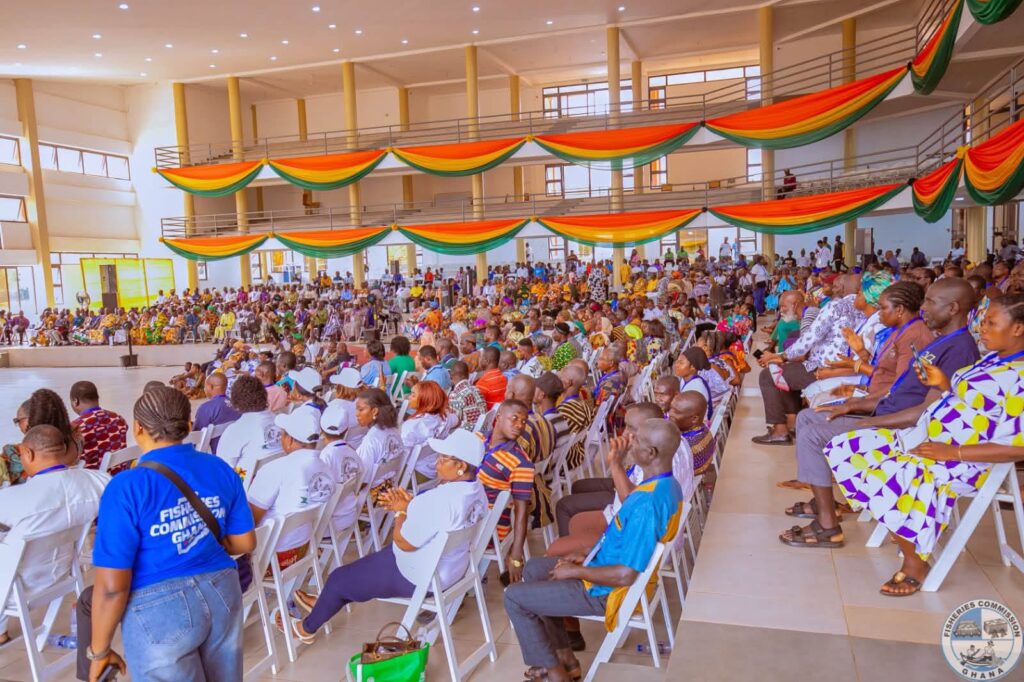
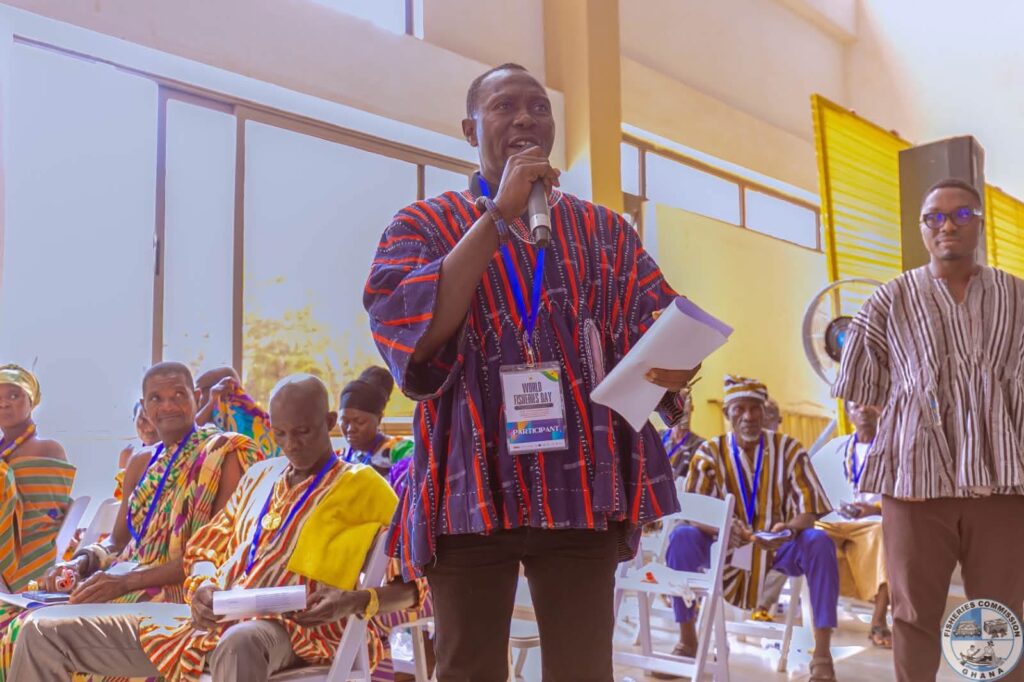
The second day of the Bono Fish Fair and World Fisheries Day Exhibition has highlighted the need for sustainable management of Ghana’s inland fisheries resources, with government officials, traditional authorities and industry stakeholders calling for stronger collaboration to protect aquatic ecosystems and secure livelihoods.
The event, held at the University of Energy and Natural Resources (UENR) in Sunyani, brought together stakeholders in the fisheries and aquaculture sector to discuss policy, resource management and the future of fish production in the country.
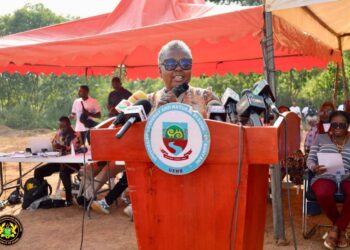
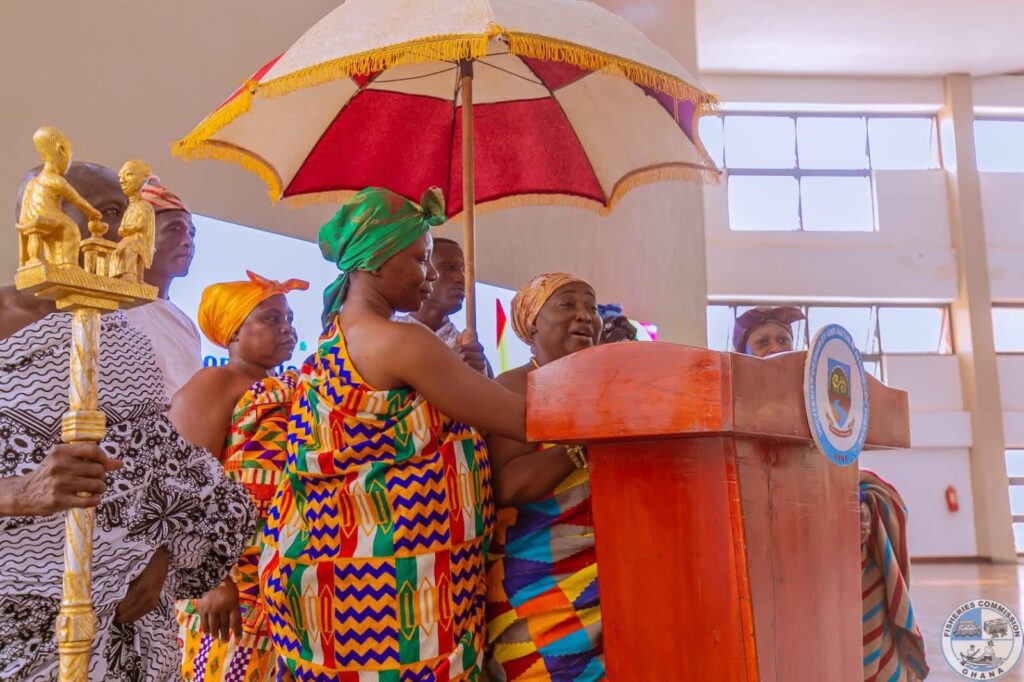
The day’s proceedings featured addresses by the Minister for Fisheries and Aquaculture, Hon. Emelia Arthur, the Director of the Inland Fisheries Management Division of the Fisheries Commission, Jescitan Tetteh Sanakey, and the Special Guest of Honour, Nana Yaa Ansua II, Paramount Queen Mother of the Drobo Traditional Area.
“Sustainable fisheries management, resource conservation and stakeholder collaboration are critical to protecting Ghana’s inland water bodies, strengthening fish production and securing the livelihoods of communities dependent on fisheries.”
Minister for Fisheries and Aquaculture, Hon. Emelia Arthur
Strengthening Fisheries Management To Improve Fisheries And Aquaculture
Hon. Arthur underscored the importance of the fisheries sector, which remains a great contributor to Ghana’s food security, employment and economic development, providing livelihoods for thousands of people involved in fishing, fish processing, distribution, marketing and related activities.
However, the sector faces challenges including declining fish stocks, illegal fishing practices, environmental degradation, pollution and pressure on inland water bodies arising from increasing demand for fish.
These challenges have heightened the need for policies that balance fish production with the conservation of aquatic resources, ensuring that fishing communities can continue to benefit from the sector without compromising the ability of future generations to access fish.
The Minister’s engagement formed part of broader efforts to encourage responsible fishing practices, improve governance and strengthen collaboration between government institutions and communities whose activities directly affect fisheries resources.
Ghana’s fisheries management agenda increasingly recognises that sustainable production requires more than enforcement.
It also involves educating fishing communities, providing alternative livelihood opportunities where necessary, strengthening monitoring systems and encouraging compliance with fisheries regulations.
Inland Fisheries Management Plan To Promote Responsible Exploitation
A major highlight of the second day’s programme was a presentation by Jescitan Tetteh Sanakey on the newly developed Inland Fisheries Management Plan (IFMP).
The Director of the Inland Fisheries Management Division of the Fisheries Commission outlined the plan’s role in establishing a structured framework for the effective management and sustainable utilisation of Ghana’s inland fisheries resources.
The plan is expected to provide direction for fisheries management interventions, promote responsible exploitation of inland fish stocks and strengthen efforts to protect water bodies from activities that threaten their ecological health.
Inland fisheries are particularly important to communities located around rivers, lakes, reservoirs and other freshwater systems, where fishing serves as a source of income, food and employment.
The development of the IFMP represents an important policy step towards improving the management of inland fisheries through a more organised approach to resource utilisation, conservation and stakeholder engagement.
“The inland fisheries management plan provides a structured approach to managing freshwater fisheries, promoting responsible resource utilisation and protecting inland water bodies against practices that threaten their sustainability.”
Minister for Fisheries and Aquaculture, Hon. Emelia Arthur
The presentation also reinforced the importance of translating fisheries management policies into practical interventions at the community level, where fishing activities take place and where the effects of declining resources are most directly experienced.
Traditional Authorities and Community Participation
The Special Guest of Honour, Nana Yaa Ansua II, Paramount Queen Mother of the Drobo Traditional Area, President of the Bono Paramount Queen Mothers Association and Executive Secretary of the National Paramount Queen Mothers Association, also addressed participants.
Her participation highlighted the importance of traditional leadership in promoting community involvement in fisheries management and environmental conservation.
Traditional authorities play an influential role in mobilising communities, communicating development priorities and encouraging adherence to local rules and practices that support the protection of natural resources.
Women also occupy an important position in the fisheries value chain, particularly in fish processing, preservation, distribution and retailing.
Also, strengthening their participation in fisheries governance and economic activities can contribute to improved household incomes and community resilience.
“Traditional authorities and local communities have an important role to play in protecting aquatic resources, promoting responsible fishing practices and ensuring that fisheries management initiatives reflect the needs of the people.”
Nana Yaa Ansua II, Paramount Queen Mother of the Drobo Traditional Area
Sustainable Production and Livelihoods
The second day of the exhibition further underscored the relationship between fisheries sustainability, food security and economic development.
Fish remains an important source of animal protein for many Ghanaian households, making the sustainable management of fisheries resources critical to the country’s nutritional needs and food supply.
The development of sustainable aquaculture, improved fish handling and preservation, access to markets and the adoption of responsible fishing practices could help improve productivity and reduce post harvest losses across the value chain.
“Sustaining Ghana’s fisheries sector requires a balance between production, environmental protection, food security and economic opportunities for fishing communities, supported by collective action and responsible resource management.”
Minister for Fisheries and Aquaculture, Hin. Emelia Arthur
The second day of the Bono Fish Fair reinforced the message that the future of Ghana’s fisheries sector will depend not only on increasing production but also on responsible management, inclusive governance and the protection of the natural resources that sustain the industry.
READ ALSO:Mahama Calls for More Ghanaian-Owned Processing Factories Nationwide