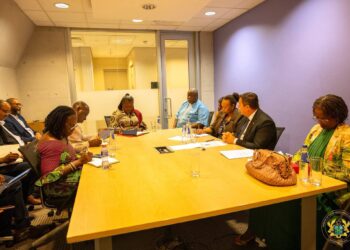
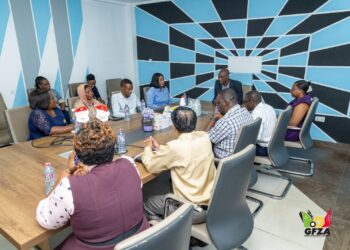
The Adwumawura Programme has moved closer to its next phase of implementation following the successful completion of a three day business plan screening exercise by its Grants Management Committee, setting the stage for a nationwide pitching exercise expected to provide thousands of young entrepreneurs with opportunities to advance their business ideas.
The screening exercise, which examined more than 14,000 business plans submitted by beneficiaries of the 2026 cohort, forms part of the programme’s grant assessment process ahead of the pitching sessions scheduled for December 2 to 20, 2026.
The upcoming exercise will bring together more than 9,000 beneficiaries from all 16 regions, representing participants from Metropolitan, Municipal and District Assemblies (MMDAs) across the country.
“The exercise formed an important part of the committee’s preparation for the upcoming business pitching stage.”
Adwmawura Programme
The development marks an important transition from the submission and assessment of business proposals to direct presentations, where participating entrepreneurs will have the opportunity to demonstrate the commercial potential of their ideas.
Through the pitching process, applicants are expected to explain their business models, identify their target markets and establish the viability, scalability and bankability of their proposed enterprises.
Pitching Creates Pathways for Young Entrepreneurs
The December pitching exercise is expected to serve as a critical stage in determining which business proposals demonstrate the potential to develop into sustainable commercial ventures.
Unlike the initial submission of written business plans, the pitching sessions will require beneficiaries to communicate their proposals directly to assessment panels. This will allow participants to explain the purpose of their businesses, the problems they intend to solve, the markets they seek to serve and the strategies they intend to adopt to achieve commercial success.
The emphasis on viability, scalability and bankability reflects the importance of assessing businesses beyond the attractiveness of their ideas.
A viable business must demonstrate the capacity to operate sustainably, generate revenue and respond to identifiable market demand.
Scalability, meanwhile, considers whether an enterprise can expand its operations, reach additional customers and increase production without compromising its sustainability.
Bankability also remains an important consideration because businesses seeking financial support must demonstrate that their operational and financial models can justify investment.
“The pitch sessions will give over 9,000 beneficiaries the opportunity to orally present their business ideas and demonstrate the viability, scalability and bankability of their proposed businesses.”
Adwumawura Programme
Strengthening Ghana’s Youth Enterprise Ecosystem
The Adwumawura Programme is a government initiative implemented through the National Entrepreneurship and Innovation Programme (NEIP), with a focus on promoting entrepreneurship and supporting young people to establish and develop businesses.
The programme’s broader ambition is to support the creation of at least 10,000 sustainable businesses annually, positioning entrepreneurship as an important component of Ghana’s efforts to address youth unemployment and expand economic opportunities.
Its approach recognises that building successful enterprises requires more than encouraging young people to develop business ideas.
Entrepreneurs also need access to business development services, relevant training, mentorship, financial resources and the technical knowledge required to navigate the challenges associated with establishing and managing businesses.
This is particularly important for young entrepreneurs entering competitive sectors where access to capital, production equipment, distribution networks and reliable markets can determine whether a business survives its early stages.
The screening and pitching process therefore represents an important link between business development preparation and the potential provision of financial support. By examining the proposals before the presentations, the Grants Management Committee is expected to assess the business potential of applications and provide a basis for evaluating their readiness for implementation.
The programme’s focus on sustainable businesses is also significant in the context of Ghana’s private-sector development objectives. Micro, small and medium-sized enterprises (MSMEs) play an important role in economic activity, providing employment, supporting household incomes and creating opportunities for local production and service delivery
Nationwide Participation Expands Economic Opportunities
The organisation of the pitching exercise across all 16 regions introduces a nationwide dimension to the programme’s implementation, providing beneficiaries from different geographical and economic backgrounds with opportunities to present their business proposals.
With participants drawn from MMDAs across the country, the exercise is expected to bring forward business ideas that reflect the different economic activities, resources and market opportunities available within local communities.
This approach is important because entrepreneurial opportunities are not concentrated exclusively in Accra and other major commercial centres. Rural and peri-urban communities also have considerable potential for enterprise development, particularly in agriculture, agro-processing, manufacturing, retail, technology and service delivery.
Young entrepreneurs in agricultural communities, for instance, may identify opportunities in food production, storage, processing and distribution, while others may develop enterprises around digital services, fashion, transportation, construction and other commercial activities.
Providing a platform for these ideas to receive consideration could help broaden participation in entrepreneurship and encourage the development of businesses that respond to local economic needs.
“The pitching exercise is scheduled to take place from 2nd to 20th December 2026 across all 16 regions.”
Adwumawura Programme
The nationwide exercise also creates an opportunity to identify business proposals with the potential to generate employment beyond their immediate owners. Enterprises that expand their operations may require additional workers, suppliers, distributors and service providers, creating economic opportunities across different stages of their value chains.
READ ALSO:GoldBod Exports Reach $11.6bn — Sammy Gyamfi