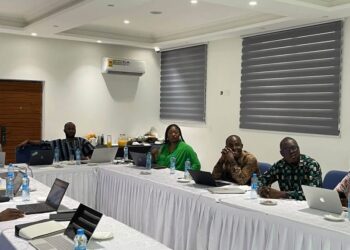
The Ghana Investment Promotion Authority (GIPA) has called on Ghanaians living abroad to deepen their participation in the country’s economic development through direct investments, business partnerships and the transfer of technical expertise, as government intensifies efforts to mobilise diaspora resources for productive economic activities.
The call was made by the Deputy Chief Executive Officer of GIPA, Abdul Razak Baba, during a panel discussion on the theme, From Connection to Capital: The Business Value of Diaspora for German-African Cooperation in Accra, as part of the sixth German-African Business Summit (GABS 2026).
Organised by the German Africa Foundation, AiDiA Africa and the German-African Business Association, the discussion examined how diaspora networks, financial resources and professional expertise could be better integrated into investment activities and commercial partnerships between Germany and African countries.
“Africa’s diaspora is an important driver of investment, entrepreneurship and cross border business.”
Deputy C.E.O of GIPA, Abdul Razak Baba
Diaspora Investment Beyond Remittances
The engagement comes at a time when remittances remain an important source of foreign exchange for Ghana, providing financial support to households while contributing to the country’s external sector and economic stability.
According to the Bank of Ghana, remittance inflows increased from approximately US$4.6 billion in 2024 to nearly US$7.8 billion in 2025, representing a substantial contribution to the country’s external financing position.
The figures highlight the economic significance of Ghanaians abroad and the opportunities available to strengthen their participation in national development beyond personal financial transfers.
Speaking at the maiden Diaspora Roundtable in the United States in April 2026, Governor of the Bank of Ghana, Dr Johnson Pandit Asiama, emphasised the need to position diaspora resources as an important source of long-term investment financing.
He observed that diaspora communities possessed financial resources, professional capabilities, international business connections and technological knowledge that could contribute to Ghana’s economic transformation.
“The Ghanaian Diaspora Is A Strategic Asset,” Dr Asiama stated, highlighting its importance as a source of foreign exchange, technology transfer, innovation and connections to international capital markets.
He further explained that the country needed to establish investment opportunities and financial mechanisms that would make it easier for Ghanaians abroad to participate in the domestic economy.
For GIPA, the investment potential extends beyond financial contributions to include the ability of diaspora professionals and entrepreneurs to introduce new technologies, management practices, international business standards and access to overseas markets.
Investment Reforms Open New Opportunities
Mr. Baba also drew attention to the investment facilitation services provided by GIPA, particularly its one-stop-shop arrangements and network of institutional focal persons designed to assist investors with the processes involved in establishing and operating businesses in Ghana.
The arrangements are intended to reduce the difficulties associated with navigating multiple regulatory institutions by improving coordination and access to relevant investment related services.
For diaspora investors who may be unfamiliar with current regulatory procedures or the requirements governing particular industries, the support mechanisms could provide an important entry point into the Ghanaian business environment.
The introduction of the Ghana Investment Promotion Authority Act, 2026 (Act 1173), also represents a significant development in the country’s efforts to improve its investment climate.
The legislation, which replaces the Ghana Investment Promotion Centre Act, 2013 (Act 865), transforms the former Ghana Investment Promotion Centre into an Authority with an expanded mandate for investment promotion, facilitation and the development of a more responsive business environment.
One of its notable reforms is the removal of the general minimum capital requirements previously imposed on most foreign investors establishing joint ventures with Ghanaian partners or wholly foreign-owned enterprises.
Under the previous framework, foreign investors were required to provide minimum capital of US$200,000 for joint ventures with Ghanaian partners and US$500,000 for wholly foreign-owned enterprises.
The requirements were considered barriers to entry for some smaller businesses, technology based enterprises and knowledge driven ventures whose competitive strengths were based more on expertise, innovation and intellectual property than substantial initial financial investments.
The reforms are expected to widen investment opportunities while maintaining regulatory oversight through sector specific licensing requirements and other applicable standards.
Ghana-Germany Partnerships Gain Momentum
The diaspora investment discussion also forms part of broader efforts to strengthen commercial relations between Ghana, Germany and the wider African continent.
The sixth German-African Business Summit, held in Accra from November 23 to 25, 2026, brought together government officials, business executives, investors and development stakeholders to examine opportunities for expanding trade, investment and industrial cooperation.
The discussions reflected growing interest in moving beyond conventional trading arrangements towards partnerships that promote local production, technology transfer, industrial development and access to new markets.
Germany remains an important economic partner for Ghana, with bilateral trade covering agricultural commodities, raw materials, machinery, chemical products and other manufactured goods.
According to Germany’s Federal Foreign Office, German imports from Ghana reached €290 million in 2025, while exports from Germany to Ghana amounted to €274 million.
The figures demonstrate the existing commercial relationship between the two countries and the opportunities available to deepen business cooperation.
The discussions at the panel therefore highlighted the need for stronger institutional collaboration to transform diaspora connections into commercially viable investments.
For GIPA, the challenge is to ensure that interested investors can access reliable information, identify credible business opportunities and receive the necessary institutional support to establish sustainable enterprises.
Greater participation by Ghanaians abroad could contribute to expanding the country’s investment base, strengthening domestic businesses, improving technology adoption and creating employment opportunities.
Ultimately, the focus is on repositioning the diaspora not simply as a source of financial support for families but as an active partner in Ghana’s industrialisation, entrepreneurship and long-term economic transformation.
READ ALSO:GoldBod Exports Reach $11.6bn — Sammy Gyamfi