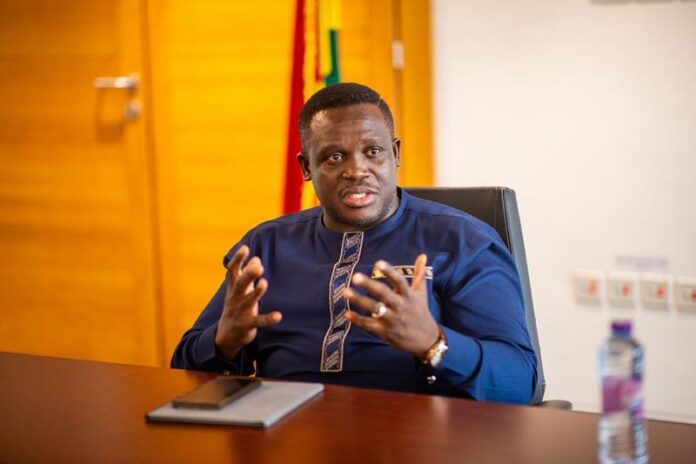
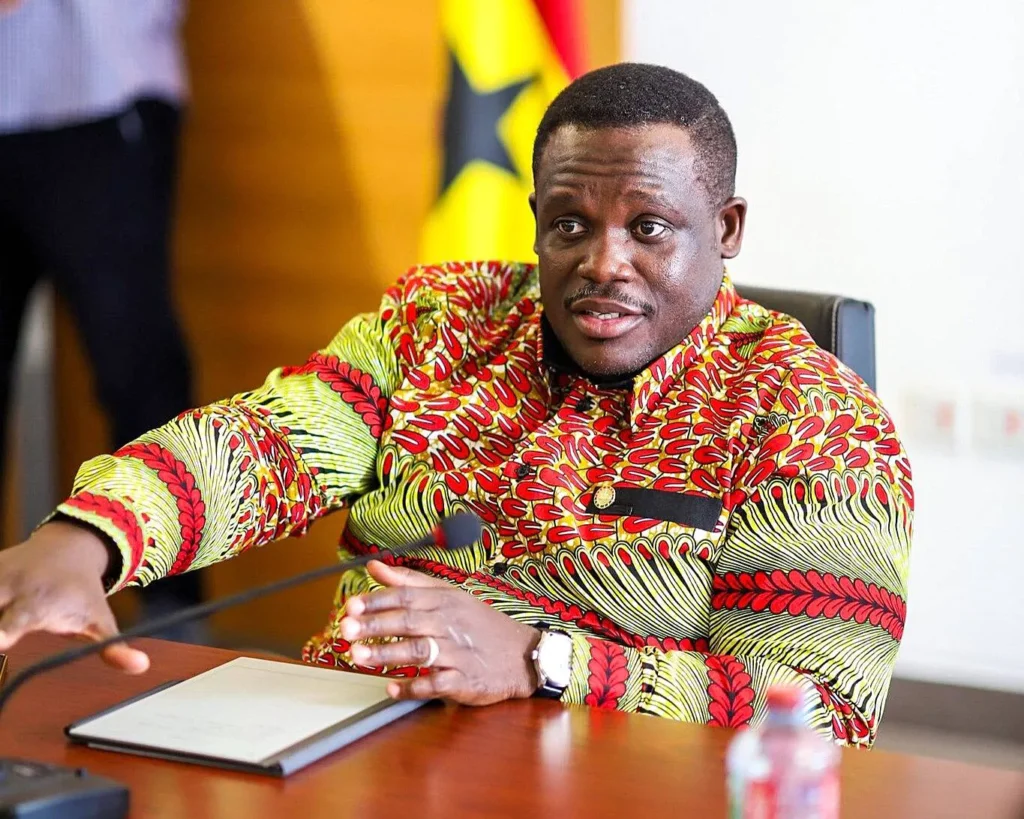
The Minister of Communications, Digital Technology and Innovations, Honourable Samuel Nartey George, has charged the Ghana Meteorological Agency (GMet) to translate its newly commissioned operational building into more accurate weather forecasts, improved alerts and better services for the Ghanaian public.
Speaking at the commissioning ceremony, he emphasised that the facility must advance the agency’s operational capacity and contribute meaningfully to President John Dramani Mahama’s vision of a government whose institutions work effectively for the people.
The Minister situated the project within the progress being made under the President’s reset agenda, noting that a building whose construction began before his birth has finally been completed.
“It’s not about us cutting the ribbon and saying that the project has begun or the project is completed or the building is finished. It’s about what we do with the building that matters.”
Honourable Samuel Nartey George
Honourable George consequently directed the Ghana Meteorological Agency to improve the precision of its forecasts and the reliability of the warnings it issues, recalling that he challenged the agency on these priorities during its annual general meeting the previous day. He stressed that he wants to see that, “the alerts are improved” and strengthen the services through which meteorological information reaches communities.
His expectations also extend to the agency’s human resources. The Minister urged management to use the improved working environment to develop institutional expertise, arguing that infrastructure investment would have limited value without corresponding improvements in staff capacity.
The commissioning also provided an opportunity to honour the late S.E. Tandoh, after whom the operational building was named. Describing him as a “fantastic human being,” Honourable George commended his selflessness and commitment to developing internal capacity, particularly his willingness to give employees opportunities to gain professional experience.
Meanwhile, the Minister announced that the stalled radar project inherited by the current administration is expected to proceed to installation around December 6 or the second week of December. He expressed satisfaction that the long-delayed undertaking was approaching completion, describing it as another important development for the agency’s operational capabilities.

Honourable George further commended GMet’s board, management and staff for completing the building through internally generated funds, emphasising that “all of this has been from IGF, our own internal funds.” He urged the agency to manage its equipment and premises prudently, warning that a facility which had taken 42 years to complete must not deteriorate within two.
GMet Calls For Stronger Protection Of Assets
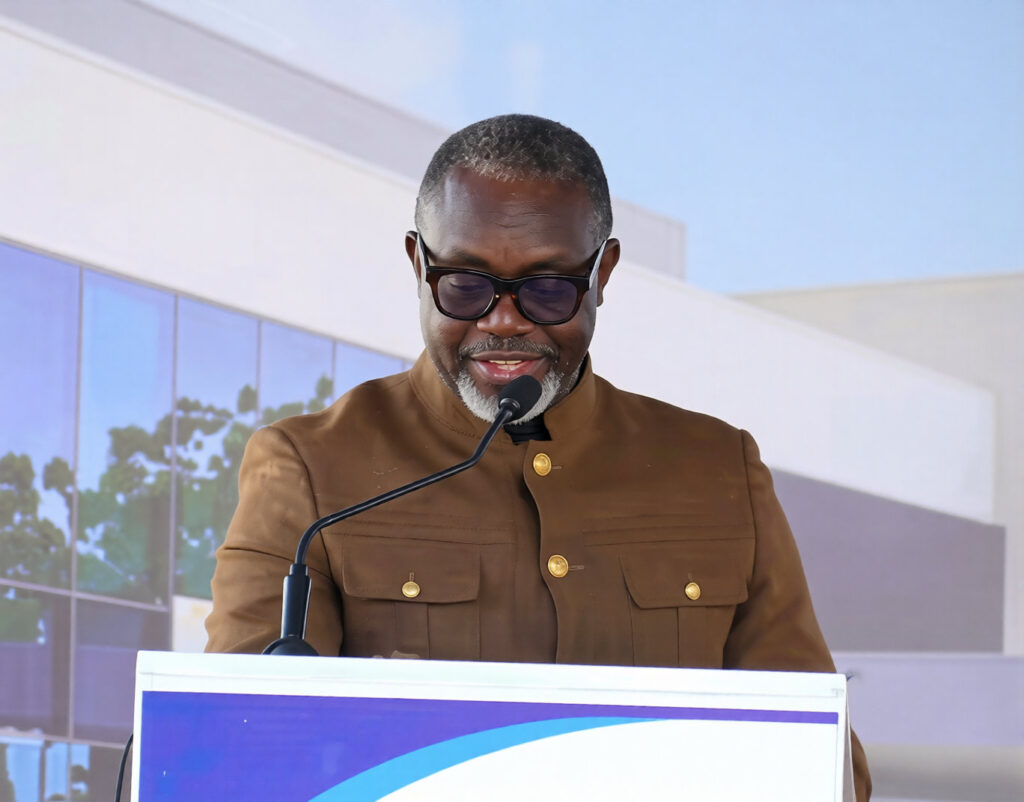
The Director-General of the Ghana Meteorological Agency (GMet), Dr Eric Asuman drew attention to the extensive deterioration of the agency’s physical infrastructure and the financial difficulties that have hindered its rehabilitation.
He identified the restoration, protection and modernisation of GMet’s properties as an institutional priority, particularly given the agency’s responsibilities in disaster preparedness, public safety and national development.
“For many years, the state of the agency’s physical infrastructure and estate across the country has been a source of considerable concern. Our buildings and facilities in several locations had deteriorated significantly.”
Dr Eric Asuman, Director-General of GMet
Furthermore, the Director-General identified the condition of institutional premises as an important measure of organisational standards and public confidence. In his assessment, people form impressions of an organisation before interacting with its employees, making its offices, guesthouses and operational environment visible expressions of its priorities.
He cautioned that an agency with such an important national mandate could not afford to allow its physical surroundings to undermine the significance of its work. GMet’s facilities must demonstrate that “our sense of purpose, our standards, and the value we place on the work we do.”
Owing to financial constraints, the agency struggled to undertake the major rehabilitation, renovation and maintenance required to preserve its estate. Dr Asuman also recounted that some properties have become unusable, while GMet has lost control of or access to certain assets, with some occupied by other state institutions.
Against this background, he characterised the newly commissioned building as a significant step towards establishing a “stronger, more efficient, innovative, and forward-looking Ghana Meteorological Agency.” Its completion, therefore, represents an important institutional development in the effort to improve the physical environment within which employees discharge their responsibilities.
He equally recognised the governing board, staff, development partners and stakeholder institutions, including the Ghana Hydrological Authority, NADMO and the Danish Meteorological Institute. Emphasising the collective nature of institutional advancement, he remarked, “institutional progress is rarely the work of one individual. It is the collective outcome of vision, commitment, partnership, and sustained effort.”
READ ALSO: Ghana Energy Target Requires Roadmap, Transparency and Realism – Kwame Jentuah