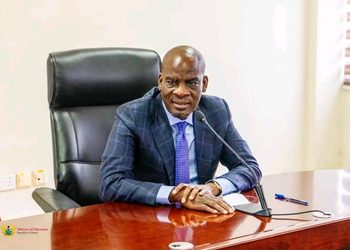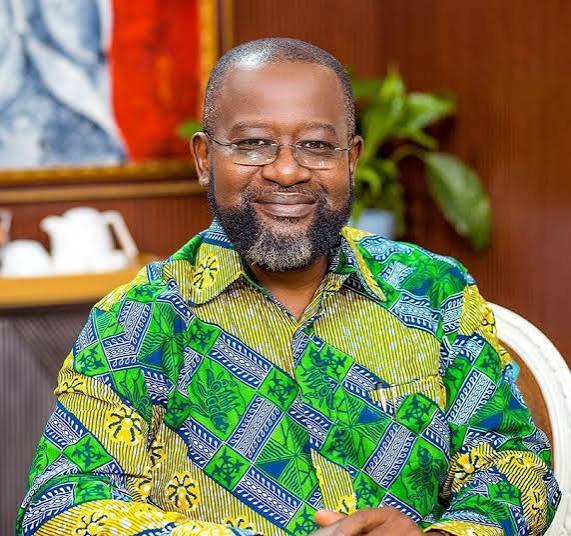
Lawyer and energy analyst Kwame Jentuah has urged Ghanaians to keep politics out of discussions about the country’s electricity challenges, insisting that government must communicate openly about setbacks and publish a clear roadmap for its target of reducing industrial power costs by 50% by 2030.
Speaking on The New Economy programme, Mr Jentuah described the target as achievable but not guaranteed, explaining that generation investments, renewable energy expansion, nuclear options, climate conditions and operational challenges could influence whether the projection is realised.
“Energy has nothing to do with politics. Without energy, forget it. Everything comes to a standstill. So, let us not play politics with it.”
Lawyer and energy analyst Kwame Jentuah
Mr Jentuah cautioned against interpreting the government’s 2030 projection as a firm promise that electricity costs would automatically fall by half.
He explained that a target represents an objective authorities intend to achieve, but unexpected developments could disrupt the plans supporting it.
Energy Target Requires a Clear Implementation Roadmap
He stressed that the government’s announcement should therefore be treated as an objective requiring sustained work, not an assurance that bills would automatically fall on a fixed date. In his view, explaining the assumptions behind the projection would help consumers understand both the ambition and the risks involved over time.
He maintained that government should have a roadmap, while acknowledging that circumstances could change during implementation. The public deserved timely information whenever challenges emerged.
“When it knows there is a challenge, it should not wait until the challenge has been resolved before informing the public,” he stated, urging the government to explain developments as they occur.
On electricity prices, he noted that comparisons with other West African countries must consider differences in infrastructure and investment requirements. Generation and distribution depend heavily on investments calculated in foreign exchange, while private supply arrangements in Côte d’Ivoire are not necessarily equivalent to Ghana’s system.
He maintained that consumers were paying realistic prices but stressed that inefficiencies and corruption remained separate problems. Consumer payments did not automatically resolve weaknesses in the system.
Generation Projects Could Support Lower Power Costs
Mr Jentuah identified several initiatives he understood the government was relying on to support its projections, including a proposed 1,450-megawatt power station, expanded solar energy generation and the consideration of small modular reactors within the nuclear energy sector.
He described small modular reactors as smaller units that could be installed and deployed to generate electricity.
He also pointed to plans for direct power supply arrangements for businesses, like the system operating at the Free Zones enclave, where electricity is supplied directly to companies within the area.
However, he warned that delays or setbacks affecting these initiatives could undermine the target and expose the country to renewed power supply difficulties.
“If there are setbacks in implementing these initiatives, what happens? We could experience dumsor again,”
Lawyer and energy analyst Kwame Jentuah
Climate Change and Rising Demand Pose Risks
The energy analyst also highlighted climate change as a factor that could affect electricity generation, particularly Ghana’s dependence on hydropower.
Reduced water inflows into dams, he explained, could constrain generation at a time when demand was increasing. High temperatures could also increase demand as more people switched on air conditioners.
He argued that the target depended on several interconnected factors, and further challenges could affect the intended reduction. He urged officials to explain the objective alongside its uncertainties and planned responses.
Public Communication and Continuity Remain Essential
Mr Jentuah called on the Ministry of Energy to publish a document explaining how government intended to achieve the 50 per cent reduction, the obstacles that could prevent it and the responses planned to manage those risks.
He stressed that the programme should not depend solely on the political administration that introduced it, arguing that effective structures would allow implementation to continue beyond changes in government.
“Government can say this is what it hopes and aims to achieve. However, it must also explain the potential challenges and outline the measures it will implement to address them,”
Lawyer and energy analyst Kwame Jentuah
He also called for discussion on how private investors could strengthen generation and supply. On the recent electricity infrastructure incident, Mr Jentuah praised engineers from the Ghana Grid Company Limited (GRIDCo) and the Volta River Authority (VRA) for quickly assembling a containerised switchyard after the facility was damaged.
A committee he served on investigated the incident. He praised the engineers’ response but questioned the temporary arrangement’s long-term sustainability.
He maintained that the sector required technical planning, transparent communication and sustained cooperation, rather than partisan exchanges.
READ MORE: EPA Unveils Framework to Restore Degraded Water Bodies