South Africa’s natural gas-to-power supply dream has been considered as “not technically necessary” until at least 2035, if ever, according to a report by the International institute for sustainable Development.
Specifically, the research firm cautioned that the development of 3,000MW of gas-to-power capacity in South Africa from scratch by 2030 would cost at least R47 billion– potentially proving to be a “very expensive mistake”, as “revolutions in renewable energy costs and battery storage costs” with lower carbon footprints squeeze out gas from the global market.
According to the researchers, the view that gas would be necessary either during a transition to low-carbon energy or as part of the long-term energy mix for electricity production was “rational” at first. But, this has been upended by cheaper alternatives.
Researchers Richard Halsey, Richard Bridle, and Anna Geddes, suggested that “the trend toward decarbonization, coupled with cost reductions for renewable energy and storage, creates risks for gas investment”. Therefore, going ahead with investment in gas can reasonably be expected to cascade into higher costs for consumers, just transition challenges for workers, and losses for investors. “Because of these risks, it is time to rethink the development of the electricity supply sector,” the researchers said.

SA Gov’t Gamble
For the South African government, this move fundamentally rests on a gamble regarding the discovery of major oil and gas deposits in the sea off South Africa or in the arid Karoo– or alternatively, importing more gas from further discoveries in Mozambique.
However, the Canadian-based research institute said there are no guarantees that a sufficiently large or reliable domestic supply of gas will be found, while establishing a new gas reticulation network would require major capital expenditure. “Given these recent changes, an objective re-evaluation of the suitability of using natural gas for electricity generation in South Africa is now required,” the authors of the report said.
Understandably so, aside climate crisis impacts driven by fossil fuels such as natural gas, there were other strategic and economic reasons to re-evaluate the use of gas as a transition fuel on the basis of the risk of technology lock-in and stranded assets being championed by Energy Minister Gwede Mantashe and fossil fuel industry lobbyists.
“If gas assets are built and then become stranded, they may continue to operate even when cheaper, superior alternatives are available because the capital is already sunk.
“This type of lock-in can result in pressure from workers, investors, and companies on the government to introduce subsidies to protect the incumbent industry. These subsidies divert funds away from other projects with better socioeconomic metrics and cause an industry to persist even when it is economically unviable.”
International institute for sustainable Development
SA to become increasingly reliant in gas imports
In the absence of domestic gas supply, South Africa is likely to become increasingly reliant on imports. The Pande and Temane gas fields in Mozambique were running out and now attention was fixed on the Rovuma Basin in northern Mozambique as an alternative.
“But even if Rovuma is further developed and the minimum length of pipeline (1,460 km) constructed, there is still risk of supply cut-off due to insurgency. This possibility was demonstrated in April 2021 when Total was forced to close gas operations, withdraw staff, and declare force majeure at their Afungi site within the Rovuma Basin area.”
International institute for sustainable Development
According to the report, additional technologies, including green hydrogen, may well have also matured sufficiently to play a role in the post-2035 electricity sector. That said, “There remains some uncertainty about what the future will bring, which is why a decision on future balancing needs should be postponed.”
The authors highlighted areas the South African government should focus on: low-risk, future-proof strategies to end load shedding and curb electricity price hikes. Furthermore, the short-term focus must be centred on an accelerated addition of least-cost renewable capacity coupled with storage, and increasing energy efficiency.
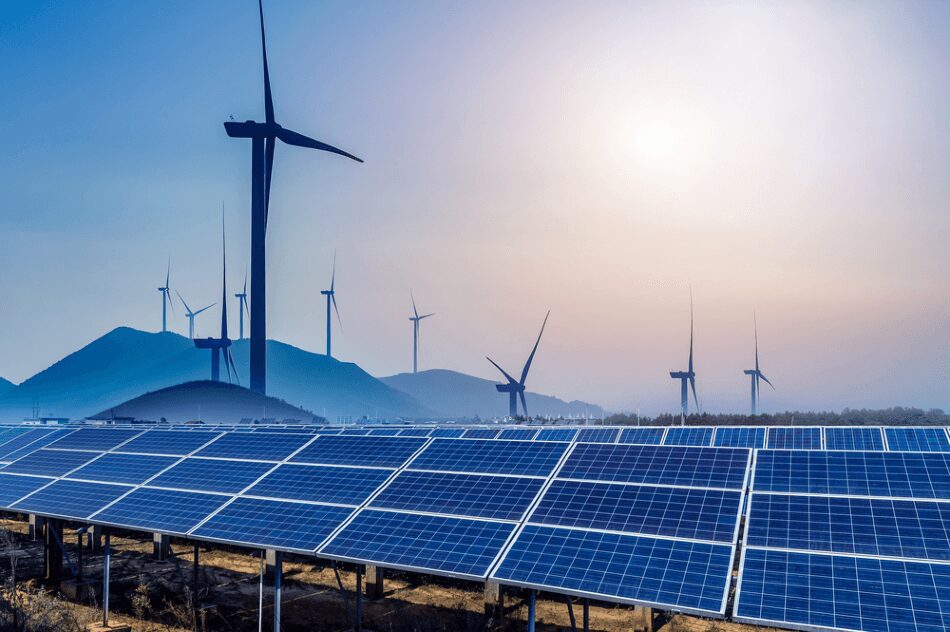
The energy sector is in a disruptive phase due to rapid advances in technologies that compete with gas functions, and this makes natural gas both high risk and not necessary in the power sector until at least 2035, the authors said. They further advised that “a decision on a future requirement for gas should be revisited around 2030 based on available technologies and costs at that time.”
“In the meantime, a moratorium should be placed on the development of the gas-to-power sector. Therefore, gas-to-power should certainly not be viewed as a way to secure sufficient domestic gas demand to grow broader gas supply in South Africa.”
International institute for sustainable Development
READ ALSO: We Must Improve Their Technical Knowledge to Break Professional Biases- SIC