• About
  • Advertise
  • Privacy Policy
  • Contact
Sunday, May 17, 2026
  • Login
The Vaultz News
  • Top Stories
  • News
    • General News
    • Education
    • Health
    • Opinions
  • Economics
    • Economy
    • Finance
      • Banking
      • Insurance
      • Pension
    • Securities/Markets
  • Business
    • Agribusiness
    • Vaultz Business
    • Extractives/Energy
    • Real Estate
  • World
    • Africa
    • America
    • Europe
    • UK
    • USA
    • Asia
    • Around the Globe
  • Innovation
    • Technology
    • Wheels
  • Entertainment
  • 20MOBPL2DNew
  • Jobs & Scholarships
    • Job Vacancies
    • Scholarships
No Result
View All Result
The Vaultz News
  • Top Stories
  • News
    • General News
    • Education
    • Health
    • Opinions
  • Economics
    • Economy
    • Finance
      • Banking
      • Insurance
      • Pension
    • Securities/Markets
  • Business
    • Agribusiness
    • Vaultz Business
    • Extractives/Energy
    • Real Estate
  • World
    • Africa
    • America
    • Europe
    • UK
    • USA
    • Asia
    • Around the Globe
  • Innovation
    • Technology
    • Wheels
  • Entertainment
  • 20MOBPL2DNew
  • Jobs & Scholarships
    • Job Vacancies
    • Scholarships
No Result
View All Result
The Vaultz News
No Result
View All Result
in Banking

BoG Governor Pushes for Fintech and Regulatory Unity in One Africa Vision

M.Cby M.C
May 14, 2025
Reading Time: 3 mins read
BoG Unleashes Sweeping Banking Reforms to Future-Proof Ghana’s Financial Sector

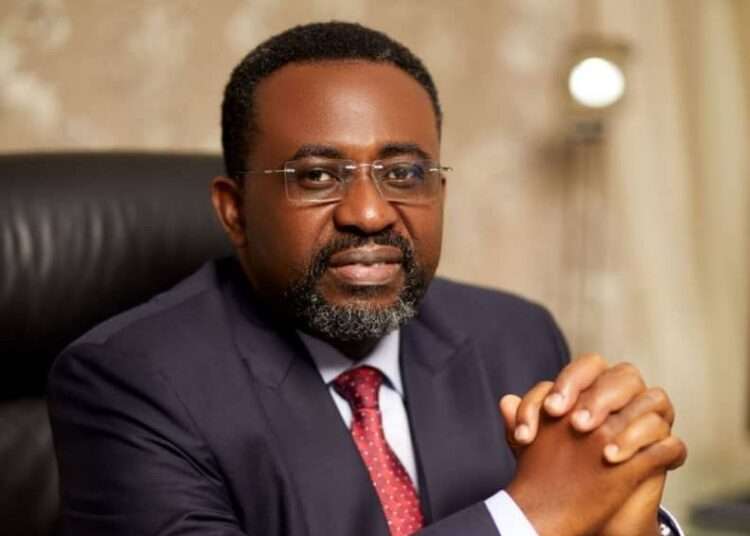
Dr Johnson Asiama, Governor of Bank of Ghana

At the 2nd edition of the 3i Africa Policy Forum held in Accra, the Governor of the Bank of Ghana (BoG), Dr. Johnson Asiama, delivered a powerful message on the need for a harmonised and innovation-driven financial ecosystem across the African continent.

Speaking under the theme “One Africa, One Market: Driving Innovation, Investment and Impact for a Connected Future,” Dr. Asiama urged policymakers and stakeholders to move from fragmented efforts to coordinated action in transforming Africa into a digitally unified economic bloc.

Dr. Asiama stressed the importance of reimagining the African continent as a single, dynamic economic entity driven by innovation and inclusivity.

“The theme for the forum calls on policymakers to envision Africa not as a patchwork of disconnected economies, but as a single dynamic economic bloc powered by innovation, enabled by investment, and committed to inclusive and sustainable development.”

Dr. Johnson Asiama

He emphasised that achieving this vision will require bold collaborations between public and private sectors, underpinned by progressive policy frameworks and a commitment to adopting transformative technologies.

ADVERTISEMENT

Fintech as a Driver of Inclusion and Trade

Highlighting the transformative role of financial technology (fintech), Dr. Asiama acknowledged its growing impact on financial inclusion and intra-African trade.

“Fintech is bridging access gaps, particularly for underserved and remote communities. Cross-border digital payments are gaining traction, promising to ease trade friction and accelerate regional commerce.”

Dr. Johnson Asiama

According to him, innovations such as digital assets and cross-border payment systems are not only reshaping the financial landscape but also expanding opportunities for small businesses and informal economies.

While many countries across Africa have launched promising initiatives such as regulatory sandboxes, innovation hubs, and digital public infrastructure frameworks, Dr. Asiama argued that these isolated national efforts are insufficient. He called for a shift towards continent-wide harmonisation of regulatory frameworks.

“To fully realise the vision of one Africa, one market, we must scale our efforts through continental coordination. This means harmonising regulatory frameworks, fostering interoperability across financial infrastructures, and building trust and transparency across jurisdictions.”

Dr. Johnson Asiama

Dr. Asiama laid out several priorities for the Forum’s agenda. These included attracting sustainable investment into digital finance, unlocking the potential of cross-border payments through regulatory alignment, empowering SMEs to participate in the digital economy, and operationalising digital trade protocols. He emphasised the need to translate dialogue into actionable strategies that can transform the continent’s digital economy by 2030.

Demonstrating Ghana’s commitment to regional integration, Dr. Asiama announced the country’s participation in the Next-Gen Digital Payment Infrastructure Project (DPI), a partnership involving the BoG, the National Bank of Rwanda, and Singapore’s Global Financial Technology Network. The initiative aims to modernise cross-border payments through a central bank-led approach, co-developed with fintechs and financial institutions.

“Our work with the Pan-African Payment and Settlement System (PAPSS), our fintech passporting arrangement with Rwanda’s central bank, and now the DPI initiative all reflect our conviction that regional integration is achievable through trust-based partnerships.”

Dr. Johnson Asiama

Dr. Asiama closed his remarks by calling on stakeholders to act with urgency and unity in building a connected African financial ecosystem. “This forum represents a unique opportunity to move from intention to execution. Let us focus not only on what is possible, but on what is essential,” he charged. His call to be “ambitious, pragmatic, and united” underlined the strategic importance of the 3i Africa Policy Forum in shaping the future of Africa’s digital economy.


READ ALSO: Sammy Gyamfi Cautioned over Dollar Gift Incident

Sign Up to Our Newsletter

Fresh updates, Straight to your inbox

Tags: 3i Africa Policy ForumBoG GovernorDr. Johnson AsiamaFintechOne Africa
Share3Tweet2Share1SendSend
Please login to join discussion
Previous Post

Beijing Hosts Latin, Sudanese Diplomats In Talks

Next Post

Qatar, US Sign Deals To Boost Defence And Trade Ties

Related Posts

Ghana Defies Odds With Record Financial Growth
Banking

Ghana Defies Odds With Record Financial Growth

May 16, 2026
Fidelity Demands Africa Own Its Digital Future At a time when Africa’s digital economy is accelerating at an unprecedented pace, Fidelity Bank Ghana has delivered one of the strongest messages yet on the continent’s technological future. The bank made a bold and urgent case for Africa to stop depending on foreign controlled digital systems and begin building its own infrastructure capable of retaining value, strengthening currencies, and driving long term economic sovereignty. As one of the key sponsors of the 3i Africa summit, Fidelity Bank did not just show up to participate. It arrived with a message that resonated deeply across conference halls and policy discussions. Fidelity Bank emerged as one of the loudest voices championing a future where African nations control the very digital rails that power their economies. Digital Infrastructure Is The New Economic Power One of the defining moments of the summit came during a high level panel discussion on digital public infrastructure, where Adeline Aryee delivered a statement that immediately captured the attention of participants. She declared that if Africa builds its own digital rails, it naturally retains the value created by those systems. Her message was clear and uncompromising. In previous decades, national infrastructure was measured by roads, bridges, ports, and airports. Today, the true engines of economic power are payment platforms, identity systems, financial technology ecosystems, and digital marketplaces. According to Aryee, digital public infrastructure is no longer a luxury. It is now a strategic national asset. Her remarks struck at the heart of one of Africa’s most pressing economic concerns. Despite growing digital adoption, many transactions across the continent still pass through foreign payment systems, resulting in value leakage and continued pressure on local currencies. Ghana’s Success Story Becomes A Continental Blueprint Aryee highlighted Ghana’s progress in financial inclusion, mobile payments, and digital banking, describing the country as an emerging model for other African economies. Over the years, Ghana has invested heavily in domestic payment systems such as GhIPSS and its flagship platform, Gh-link. These systems have significantly expanded access to financial services while promoting digital transactions across urban and rural communities. Yet Aryee argued that inclusion alone is no longer enough. The next chapter for Africa, she insisted, must focus on ownership. She questioned why local transactions continue to depend on foreign rails when domestic infrastructure already exists. According to her, such dependence creates unnecessary external exposure and limits the continent’s ability to fully capture the economic benefits of its growing digital market. Her comments triggered intense debate among summit participants, many of whom acknowledged the urgent need for policy reforms and infrastructure investments. Market Driven Innovation Takes Center Stage Beyond infrastructure, Fidelity Bank also made a strong case for innovation that begins with real market needs. During the Ecosystem Roundtable on platforms, talent, and digital markets, Prince Osei Hyeaman-Addai shared insights from the bank’s years of digital financial innovation. He stressed that successful digital products are not built in boardrooms or based on assumptions. Instead, they are created by listening carefully to the market and understanding customer pain points. According to him, the market itself reveals the problems that need solving, the type of platform required, and the path toward scalable growth. His comments reflected a growing shift in African fintech circles, where customer centered design is becoming essential for product adoption and long term relevance. Trust And Credibility Remain The Real Currency Prince also emphasized that technology alone does not guarantee success. In his view, trust, credibility, and strong operational structures remain the real foundations of successful innovation. He noted that while investor interest in African fintech continues to rise, startups must prove they can deliver sustainable solutions, maintain transparency, and build products that respond to local realities. This perspective reflects Fidelity Bank’s own journey in digital transformation. Over the years, the bank has built strategic collaborations with leading fintech players, including IT Consortium, helping pioneer wallet to bank integrations and mobile financial solutions in Ghana. These partnerships have helped position Fidelity as one of Ghana’s most innovation driven financial institutions. A Defining Moment For Africa’s Digital Future Fidelity Bank’s participation at the 3i Africa Summit 2026 was more than a corporate appearance. It was a strategic declaration. At a time when Africa is racing to build competitive digital economies, the bank’s message was impossible to ignore. Africa cannot simply consume technology created elsewhere. It must own the infrastructure, shape the platforms, and capture the value generated by its digital future. As conversations from the summit continue to ripple across financial and policy circles, one thing is becoming increasingly clear. Africa’s next economic revolution may not be built on oil, gold, or minerals. It may be built on digital rails designed, owned, and powered by Africans. READ ALSO: IMF Ghana Review Ends in Dramatic Cliffhanger Fidelity Demands Africa Own Its Digital Future At a time when Africa’s digital economy is accelerating at an unprecedented pace, Fidelity Bank Ghana has delivered one of the strongest messages yet on the continent’s technological future. The bank made a bold and urgent case for Africa to stop depending on foreign controlled digital systems and begin building its own infrastructure capable of retaining value, strengthening currencies, and driving long term economic sovereignty. As one of the key sponsors of the 3i Africa summit, Fidelity Bank did not just show up to participate. It arrived with a message that resonated deeply across conference halls and policy discussions. Fidelity Bank emerged as one of the loudest voices championing a future where African nations control the very digital rails that power their economies. Digital Infrastructure Is The New Economic Power One of the defining moments of the summit came during a high level panel discussion on digital public infrastructure, where Adeline Aryee delivered a statement that immediately captured the attention of participants. She declared that if Africa builds its own digital rails, it naturally retains the value created by those systems. Her message was clear and uncompromising. In previous decades, national infrastructure was measured by roads, bridges, ports, and airports. Today, the true engines of economic power are payment platforms, identity systems, financial technology ecosystems, and digital marketplaces. According to Aryee, digital public infrastructure is no longer a luxury. It is now a strategic national asset. Her remarks struck at the heart of one of Africa’s most pressing economic concerns. Despite growing digital adoption, many transactions across the continent still pass through foreign payment systems, resulting in value leakage and continued pressure on local currencies. Ghana’s Success Story Becomes A Continental Blueprint Aryee highlighted Ghana’s progress in financial inclusion, mobile payments, and digital banking, describing the country as an emerging model for other African economies. Over the years, Ghana has invested heavily in domestic payment systems such as GhIPSS and its flagship platform, Gh-link. These systems have significantly expanded access to financial services while promoting digital transactions across urban and rural communities. Yet Aryee argued that inclusion alone is no longer enough. The next chapter for Africa, she insisted, must focus on ownership. She questioned why local transactions continue to depend on foreign rails when domestic infrastructure already exists. According to her, such dependence creates unnecessary external exposure and limits the continent’s ability to fully capture the economic benefits of its growing digital market. Her comments triggered intense debate among summit participants, many of whom acknowledged the urgent need for policy reforms and infrastructure investments. Market Driven Innovation Takes Center Stage Beyond infrastructure, Fidelity Bank also made a strong case for innovation that begins with real market needs. During the Ecosystem Roundtable on platforms, talent, and digital markets, Prince Osei Hyeaman-Addai shared insights from the bank’s years of digital financial innovation. He stressed that successful digital products are not built in boardrooms or based on assumptions. Instead, they are created by listening carefully to the market and understanding customer pain points. According to him, the market itself reveals the problems that need solving, the type of platform required, and the path toward scalable growth. His comments reflected a growing shift in African fintech circles, where customer centered design is becoming essential for product adoption and long term relevance. Trust And Credibility Remain The Real Currency Prince also emphasized that technology alone does not guarantee success. In his view, trust, credibility, and strong operational structures remain the real foundations of successful innovation. He noted that while investor interest in African fintech continues to rise, startups must prove they can deliver sustainable solutions, maintain transparency, and build products that respond to local realities. This perspective reflects Fidelity Bank’s own journey in digital transformation. Over the years, the bank has built strategic collaborations with leading fintech players, including IT Consortium, helping pioneer wallet to bank integrations and mobile financial solutions in Ghana. These partnerships have helped position Fidelity as one of Ghana’s most innovation driven financial institutions. A Defining Moment For Africa’s Digital Future Fidelity Bank’s participation at the 3i Africa Summit 2026 was more than a corporate appearance. It was a strategic declaration. At a time when Africa is racing to build competitive digital economies, the bank’s message was impossible to ignore. Africa cannot simply consume technology created elsewhere. It must own the infrastructure, shape the platforms, and capture the value generated by its digital future. As conversations from the summit continue to ripple across financial and policy circles, one thing is becoming increasingly clear. Africa’s next economic revolution may not be built on oil, gold, or minerals. It may be built on digital rails designed, owned, and powered by Africans. READ ALSO: IMF Ghana Review Ends in Dramatic Cliffhanger Fidelity Demands Africa Own Its Digital Future
Banking

Fidelity Demands Africa Own Its Digital Future

May 15, 2026
Absa Bank Ghana Empowers Academic City University College With Money Skills
Banking

Absa Bank Ghana Empowers Academic City University With Money Skills

May 14, 2026
Access Bank Strengthens Ashanti With Strategic Investment
Banking

Access Bank Strengthens Ashanti With Strategic Investment

May 14, 2026

Sign Up to Our Newsletter

Fresh updates, Straight to your inbox

Recent News

Shania Twain, Canadian singer-songwriter

Shania Twain Set to Host Star-Studded 61st ACM Award

May 17, 2026
Xabi Alonso will be in the Stamford Bridge dugout for the 2026/27 season

Chelsea Officially Confirm Xabi Alonso as New Manager

May 17, 2026
Honourable Kwabena Boateng, Member of Parliament for Ejisu Constituency

Ejisu MP Clarifies Court Dispute Delayed Polling Station Elections

May 17, 2026
Benjamin Nsiah, an Energy Expert

Gov’t Trims Industrial Fuel Margins to Safeguard Living Standards – Benjamin Nsiah

May 17, 2026
Dubik Mahama,Former ECG MD

Dubik Mahama Urges Strategic Private Participation in ECG

May 17, 2026
Next Post
Qatar, US Sign Deals To Boost Defence And Trade Ties

Qatar, US Sign Deals To Boost Defence And Trade Ties

The Vaultz News

Copyright © 2025 The Vaultz News. All rights reserved.

Navigate Site

  • About
  • Advertise
  • Privacy Policy
  • Contact

Follow Us

Welcome Back!

Login to your account below

Forgotten Password?

Retrieve your password

Please enter your username or email address to reset your password.

Log In
No Result
View All Result
  • Top Stories
  • News
    • General News
    • Education
    • Health
    • Opinions
  • Economics
    • Economy
    • Finance
      • Banking
      • Insurance
      • Pension
    • Securities/Markets
  • Business
    • Agribusiness
    • Vaultz Business
    • Extractives/Energy
    • Real Estate
  • World
    • Africa
    • America
    • Europe
    • UK
    • USA
    • Asia
    • Around the Globe
  • Innovation
    • Technology
    • Wheels
  • Entertainment
  • 20MOBPL2D
  • Jobs & Scholarships
    • Job Vacancies
    • Scholarships

Copyright © 2025 The Vaultz News. All rights reserved.

This website uses cookies. By continuing to use this website you are giving consent to cookies being used. Visit our Privacy and Cookie Policy.

Discover the Details behind the story

Get an in-depth analysis of the news from our top editors

Enter your email address