Tag: digital security

  • EU’s Google Restrictions Fuel Global AI Data Battle

    EU’s Google Restrictions Fuel Global AI Data Battle

    The European Union’s latest push to curb Google’s dominance in artificial intelligence and online search is being viewed as far more than another antitrust dispute but rather, it is emerging as a defining battle over who controls the data that will shape the future of artificial intelligence.

    According to digital security and AI governance expert, Dr. Rebecca Y. Akatue, the new restrictions could redefine the global AI landscape, but it also raises complex questions about privacy, security and data ownership.

    Speaking in an interview with The Vaultz News, Dr. Akatue said that the European Commission’s new measures are about far more than competition within Europe. Instead, she described them as part of a broader global contest over who will control the data that powers the next generation of artificial intelligence. “This EU-Google case isn’t about Europe alone. It is about who will own data and AI in Africa over the next decades,” she said.

    The EU recently introduced two measures targeting Google. The first requires Google to make Android more interoperable by allowing rival AI assistants to access voice activation and perform background tasks alongside Google’s Gemini AI. The second requires Google to begin sharing anonymized search data with selected competitors by January 2027 to encourage greater competition in AI development and search services.

    European regulators argue the changes will create a more competitive digital ecosystem by reducing barriers for rival AI developers. Google, however, has warned that the rules could expose sensitive data, undermine user privacy and create national security risks if third-party systems lack adequate safeguards.

    Dr. Akatue said the dispute reflects a long-running antitrust battle that has evolved with the rapid rise of artificial intelligence. “This EU-Google case started more than 10 years ago,” she explained, adding, “The AI issue is a new case because AI is emerging and Google needs to do something about it.”

    According to her, the central issue is Google’s extensive control over search data, which has become one of the most valuable resources for training advanced AI models. “It’s all about data monopolies,” she said. “When you want to train AI, you need data, and Google has all the data,” she added. She noted that the EU believes Google’s dominance in search data has given it a significant competitive advantage, prompting regulators to require greater access for competitors.

    However, Dr. Akatue stressed that expanding access to such data is not without risk.

    “The core issue is who even owns the data. If you open the floodgate and there is no security in place, how are you going to check the privacy risk?”

    Dr. Rebecca Y. Akatue

    While acknowledging that the EU has proposed safeguards to reduce those risks, she said that concerns surrounding privacy and cybersecurity remain legitimate. To illustrate the potential dangers of opening Android’s AI ecosystem to multiple providers, Dr. Akatue pointed to the possibility of malicious or poorly governed AI systems distributing false information. She warned that without effective oversight, malicious AI systems could spread misinformation capable of triggering widespread public panic.

    At the same time, Dr. Akatue acknowledged that Google’s dominant market position has made it difficult for competitors to develop comparable AI systems.

    “If Google doesn’t agree to share data or open the AI platform to rival companies, it means it will be very difficult for others to innovate. They need this data to innovate.”

    Dr. Rebecca Y. Akatue

    Nonetheless, she asserted that her expertise leads her to prioritise the protection of individuals’ personal information and national interests.

    “I’m not against innovation, but I’m a privacy scholar. I care about sharing of data and the risks it can impose on individuals and nation states.”

    Dr. Rebecca Y. Akatue

    She described the situation as a difficult balancing act between encouraging competition and protecting sensitive data.

    “Google has monopolised the system for a very long time because they started and collected all the raw data. Now you want them to give you the data. It’s not for free—they will be paid—but Google also wants to protect its image.”

    Dr. Rebecca Y. Akatuee

    According to Dr. Akatue, Google is concerned that if competitors fail to adequately protect shared data, the resulting privacy breaches could still damage Google’s reputation.The dispute also highlights broader questions about how future AI innovation should be supported.

    She suggested that enormous investment will be required for countries and companies to develop their own data resources. “It’s not easy to build data from scratch,” she said, adding “Collecting the data and then training it into AI is a very herculean task.”

    A Signal Of Commitment To Stricter Digital Regulation

    Looking ahead, Dr. Akatue believes the EU’s actions signal a continued commitment to stricter digital regulation and stronger antitrust enforcement.

    She pointed to the bloc’s AI Act as evidence that Europe intends to play a leading role in setting global standards for AI governance.

    “EU has a very strong AI Act. Antitrust literally means fair play rules. The EU thinks Google has taken all the market, making it difficult for others.”

    Dr. Rebecca Y. Akatue

    Without greater access to data, she warned, AI integration across sectors ranging from healthcare and agriculture to public services could progress much more slowly.

    The implications extend well beyond Europe, she added, as governments and technology companies around the world closely watch the outcome. “African countries, EU countries, China—they have all taken positions,” Dr. Akatue said. “Some are waiting to see,” she added.

    She noted that countries including Nigeria, India and Brazil have begun developing their own positions on AI governance, while major technology companies are also weighing the implications of the EU’s approach.

    Even companies that compete directly with Google share some of its concerns, she observed. “Apple is supporting Google’s stand with the privacy and data-sharing risks,” she said.

    “As soon as you open the market in the EU, interested parties elsewhere will also ask for access. That is the impasse between Google and the EU.”

    Dr. Rebecca Y. Akatue

    For Dr. Akatue, the outcome of the EU-Google dispute will likely influence global discussions on cross-border data flows, AI governance and digital competition for years to come.

  • The New System Will Block Fraudulent SIM Use — Communications Minister

    The New System Will Block Fraudulent SIM Use — Communications Minister

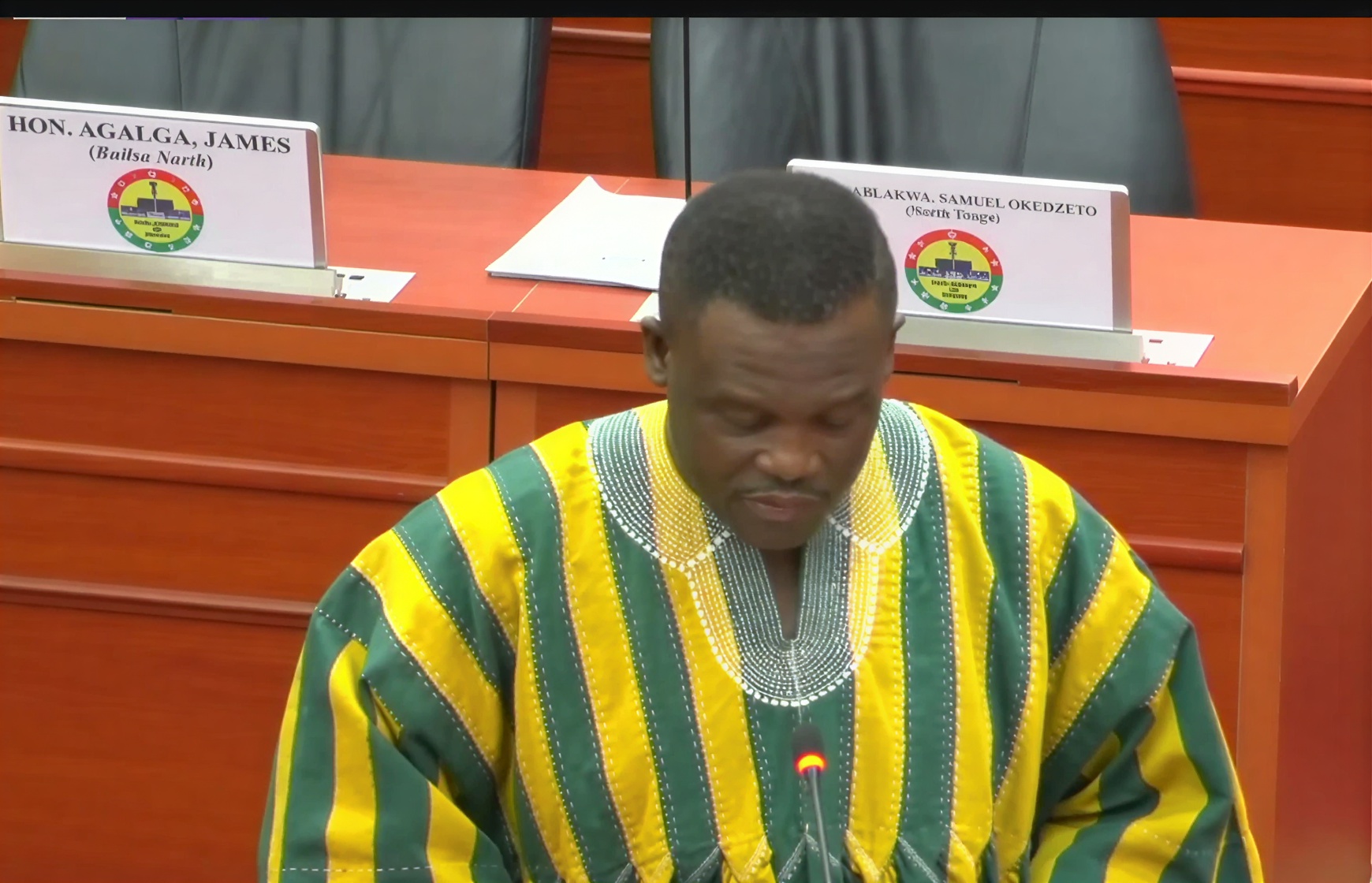
    The Minister of Communications, Technology and Digital Innovations and Member of Parliament for Ningo Prampram, Honourable Samuel Nartey George has explained that government’s decision to introduce a new biometric SIM registration exercise is aimed at strengthening security within Ghana’s telecommunications sector. He stated that the Electronic Communications Numbering Resource Registration Exercise would address weaknesses identified during the previous SIM registration process.

    The Minister explained during parliamentary proceedings that the earlier exercise sought to connect all SIM cards to verified identities through biometric validation and checks against the National Identification Authority database. According to him, the absence of real time biometric verification during the previous process created gaps that affected the reliability of the national SIM register.

    MP for Ningo Prampram And Minister for Communications, Digital Technology and Innovations – Samuel Nartey George

    Honourable Nartey said some SIM cards were registered with false, stolen or unverifiable identities because the information collected was not fully matched with the NIA database. The Minister added that these weaknesses had contributed to challenges including SIM swap fraud, mobile money fraud, identity theft and the circulation of pre registered SIM cards.

    “Every active number in Ghana must be linked to a verified and traceable identity. The new framework will strengthen protection for subscribers and improve national security.”

    Honourable Samuel Nartey George

    Furthermore, the Minister stated that the new registration system would introduce real time biometric authentication before any SIM card or numbering resource could be activated. He explained that the process would ensure that subscriber details are accurately verified before access to telecommunications services was granted.

    Addressing the security measures under the proposed framework, Honourable Nartey mentioned that the introduction of electronic biometric verification, self registration options for physical SIM cards and eSIM services. He also highlighted plans for primary number authentication, remote SIM delinking, device verification through the Central Equipment Identity Register and stronger fraud prevention mechanisms.

    The Communications Minister noted that the changes are necessary to build a more dependable telecommunications environment where subscribers could have greater protection against digital crimes. The system, according to him, would also support efforts to improve the management and security of Ghana’s national communications infrastructure.

    Honourable Samuel Nartey George

    Additionally, the Minister referenced the role of the National Identification Authority in supporting the upcoming exercise through improved registration capacity. He explained that the expansion of Ghana Card registration centres has created a stronger foundation for linking subscriber information with verified identities.

    The proposed exercise, he said, is part of wider measures to modernise Ghana’s telecommunications registration system and improve confidence in digital services. Honourable Nartey stressed that the initiative has been designed to resolve weaknesses from the previous process while creating a more secure platform for future operations.

    Digital Registration Platform To Reduce Queues And Improve Accessibility

    The Ministry of Communications, Technology and Digital Innovations also outlined measures to make the new SIM registration exercise more convenient for subscribers across the country. The initiative will operate under a revised legal framework designed to support modern verification systems and improved digital security.

    Honourable Samuel Nartey George told Parliament that the new Electronic Communications Numbering Resource Registration Regulations, 2026 would replace the existing Subscriber Identity Module Registration Regulations, 2011. He explained that the updated regulations are necessary to provide legal backing for the improved registration process.

    The Minister further stated that Ghana’s identification infrastructure has developed significantly since the previous exercise, with the National Identification Authority expanding its registration network nationwide. He noted that the increased availability of Ghana Card registration services would support smoother verification during the new process.

    According to him, the existing SIM registration platform could not support the advanced requirements of real time biometric verification, stronger cybersecurity measures and integration with other national systems. The proposed platform would therefore provide the technical capacity required for a more efficient registration exercise.

    Honourable Samuel Nartey George, MP for Ningo Prampram And Minister for Communications, Digital Technology and Innovations

    “The new approach is designed to reduce inconvenience for subscribers. Registration will move towards secure digital onboarding and biometric verification.”

    Honourable Samuel Nartey George

    Moreover, Honourable Nartey explained that the subscriber approach would allow many users to complete the process remotely through their smartphones. He said secure digital onboarding and biometric verification technologies would reduce the need for subscribers to spend long hours at registration centres.

    For individuals who require physical assistance, the Minister stated that the National Communications Authority would introduce a scheduled appointment system for visits to subscriber care centres. He added that post offices and community information centres are being considered as additional locations to improve access.

    In addition, the Ministry plans to deploy mobile registration teams to remote and underserved communities to ensure that eligible subscribers are included in the process. The Minister said the approach would help citizens in areas with limited access to registration facilities complete the exercise.

    The Communications Minister also emphasised that the new system would focus on accessibility, efficiency and convenience while improving the credibility of Ghana’s subscriber database. He explained that the combination of remote registration, appointment systems and expanded centres would create a smoother experience for users.

  • CSA Warns Public Over Rising Business Impersonation Fraud

    CSA Warns Public Over Rising Business Impersonation Fraud

    The Cyber Security Authority (CSA) has issued a public alert over a growing wave of fraudulent online business impersonation schemes, warning that unsuspecting individuals are increasingly being deceived through fake listings on search engines and digital map platforms.

    In a statement released on April 30, 2026, the Authority revealed that it recorded fifty-four (54) reported cases of such scams between January 1 and April 26, resulting in total financial losses amounting to GHS 266,195.00. The CSA noted that the trend reflects a broader escalation in cybercrime activities across Ghana, driven by the increasing reliance on digital platforms for business transactions and service access.

    CSA issues directives to combat cybercrimes in Ghana

    The warning comes amid rising concerns about online fraud nationwide. Recent data shows that the CSA received over 700 online fraud reports in the first quarter of 2026 alone, representing a sharp increase compared to the same period in 2025. This surge highlights how cybercriminals are evolving their tactics to exploit digital behaviour patterns among users.

    How the Scam Operates

    According to the CSA, the fraudulent schemes primarily involve impersonation of legitimate businesses through manipulated online listings. Cybercriminals create fake profiles on search engines and map services, often mimicking real companies with convincing details, including names, logos, and contact information.

    Victims who rely on these listings unknowingly engage with the fraudsters, believing they are dealing with authentic service providers. Once contact is established, the attackers deploy social engineering tactics to gain the victim’s trust and extract sensitive information.

    The Authority explained that victims are typically asked to provide personal and financial details under the guise of processing payments or completing service requests. These may include phone numbers, transaction amounts, and, in some cases, highly sensitive data such as mobile money PINs.

    CSA unveils the operations of cyber criminals

    “Once victims submit this information, the malicious actors carry out unauthorised transactions, leading to financial losses.”

    Statement from the Cyber Security Authority

    This form of impersonation is not entirely new but has become more sophisticated. Cybersecurity reports indicate that fraudsters now manipulate search engine results and digital visibility tools to ensure their fake listings appear credible and easily accessible to users.

    Growing Cyber Threat Landscape

    The CSA’s alert forms part of a broader pattern of increasing cyber threats in Ghana’s digital ecosystem. Online fraud, particularly impersonation scams, has emerged as one of the most dominant forms of cybercrime in recent years.

    Experts attribute this rise to the rapid growth of mobile money usage, e-commerce, and digital services, which have created new opportunities for fraudsters. National estimates indicate that millions of cedis are lost annually to various forms of cybercrime, including phishing, impersonation, and online scams.

    The situation is further compounded by the use of social engineering techniques, where attackers exploit human behaviour rather than technical vulnerabilities. By creating urgency or presenting themselves as trusted service providers, fraudsters are able to bypass traditional security awareness among users.

    CSA Issues Safety Guidelines and Incident Point of Contact

    In response to the growing threat, the CSA has outlined several precautionary measures to help individuals avoid falling victim to these scams. The Authority urged the public to verify business contact details through official websites or trusted sources before initiating any communication.

    Users are also advised to be cautious of online listings with limited reviews or recently created profiles, as these may indicate fraudulent activity.Additionally, the CSA strongly warned against sharing sensitive information such as mobile money PINs, one-time passwords (OTPs), or banking credentials with any individual or platform.

    Precautionary measures to combat cybercrime

    “Never disclose sensitive information such as mobile money PINs, OTPs, or banking credentials to anyone.”

    Cyber Security Authority cautions in the statement.

    The public is also encouraged to confirm payment requests directly with verified business representatives using trusted contact details, rather than relying solely on information obtained from online searches.

    To strengthen response efforts, the CSA has made available a 24-hour Cybersecurity/Cybercrime Incident Reporting Point of Contact (PoC) to assist victims and provide guidance on suspicious online activities.

    Members of the public can report incidents via call or text on 292, WhatsApp on 0501603111, or email at [email protected]. The Authority emphasised that timely reporting is critical in preventing further losses and enabling law enforcement agencies to track and dismantle cybercrime networks.

    Need for Increased Awareness

    The CSA’s alert underscores the need for continuous public education and awareness in an increasingly digital society. As more individuals and businesses move online, the risks associated with cybercrime are expected to grow unless adequate precautions are taken.

    Rampant impersonation and fraud calls for awareness and vigilance

    Cybersecurity experts maintain that vigilance, verification, and responsible digital behaviour remain the most effective tools in combating online fraud. They stress that while technology continues to evolve, human awareness remains the first line of defence.

    The CSA reaffirmed its commitment to protecting Ghana’s digital space and urged all citizens to remain alert, cautious, and proactive in safeguarding their personal and financial information.

  • President Mahama Declares War on Cyber Crimes

    President Mahama Declares War on Cyber Crimes

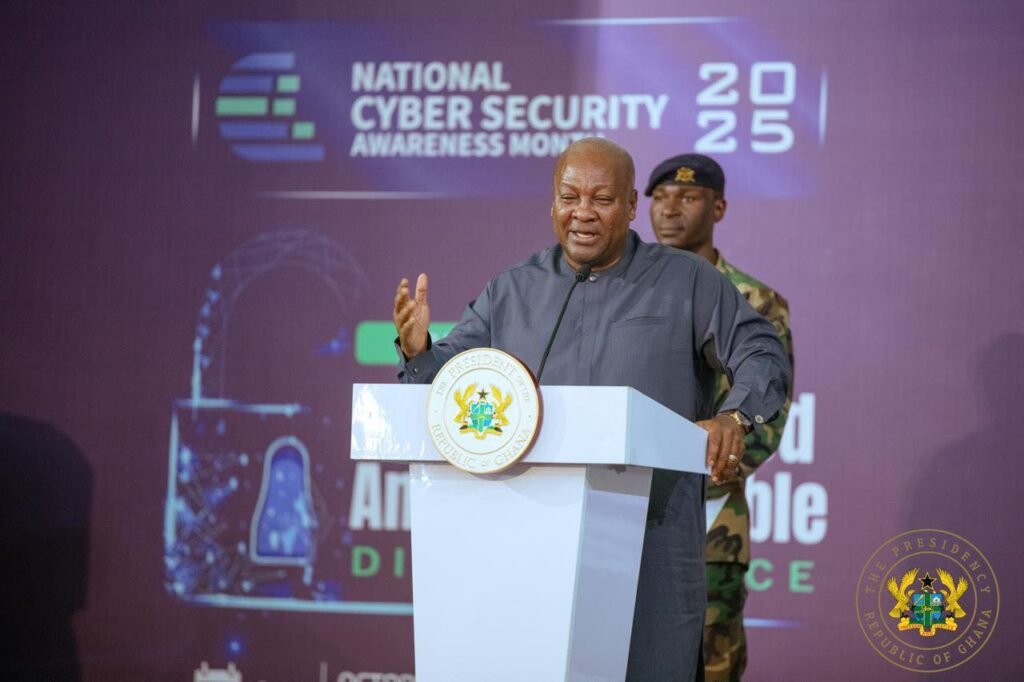
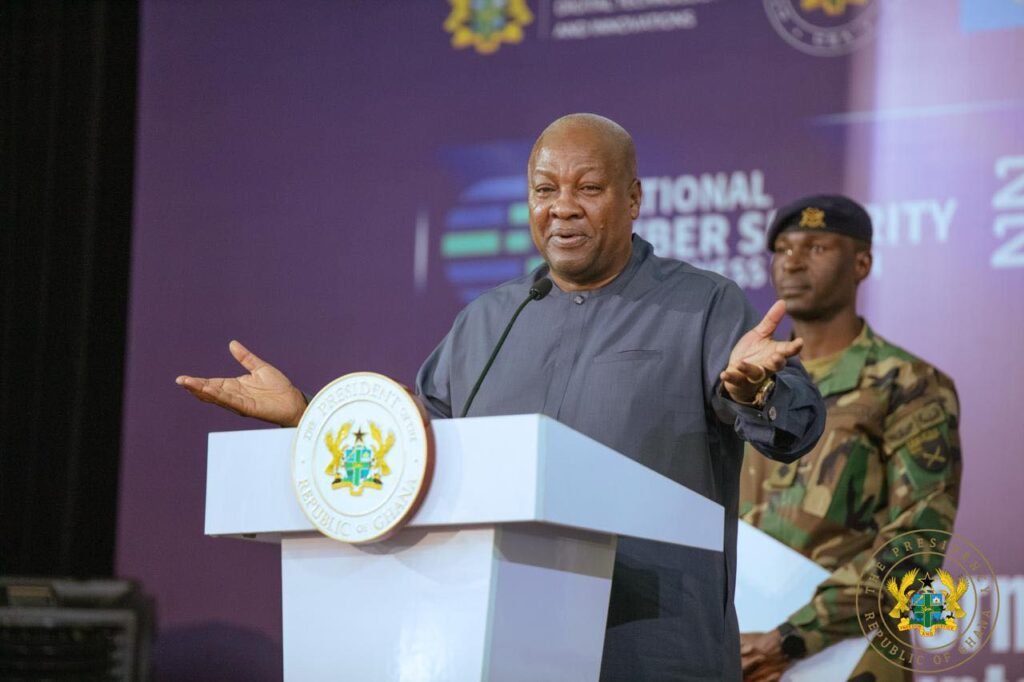
    President John Dramani Mahama has pledged a renewed and aggressive fight against cybercrime, warning fraudsters and criminal syndicates that the government will no longer tolerate their operations.

    He made this declaration at the launch of the 2025 October Cyber Security Awareness Month, where he underscored the growing threats posed by cyber fraud, romance scams, insider banking crimes, and online hate speech.

    Addressing the gathering ahead of his keynote speech, President Mahama described the tactics of cyber fraudsters as both deceptive and alarming, noting that ordinary citizens continue to fall victim to schemes that exploit trust and ignorance. He recounted common scams targeting mobile users, including fake calls purportedly from telecommunications companies.

    “First thing, if they manage some good English, they will say, ‘Please, we are calling you from MTN, and your number has been blocked, so we want to unblock it for you. Your mobile pin has been unblocked.

    “Then they start leading you, and some of our citizens, I respect them, but unfortunately, they play along. The fraudster will say, I’m going to send you a code. When I send you a code, repeat it to me so that I can unblock your mobile pin.”

    President John Dramani Mahama

    The President further noted that some criminals even pretend to stammer in order to disarm unsuspecting victims. “The most interesting one is this guy who pretends to be a stammerer. And says, so read the number for me quickly. They say, what, what, what, what, what, what, what, what?” President Mahama narrated, drawing attention to how easily citizens can be deceived.

    President John Dramani Mahama
    President John Dramani Mahama

    He stressed that public awareness is the most effective shield against such scams. “I wish that all our citizens were aware that your bank won’t call you. Your telecom provider won’t call you and ask for your personal details, and so this is a very important month and program,” he emphasized.

    International Cooperation

    President Mahama’s remarks also extended to other types of cybercrimes, particularly romance scams that have ensnared both Ghanaians and foreign nationals. He revealed that international cooperation has been critical in addressing these schemes.

    “Some are romance scams, and recently it’s been proven that people are involved in them. Using our extradition treaties, we ship the culprits back, and so we will continue to collaborate with all our global partners.

    “Anybody involved in romance scams, whether you are a foreigner or a Ghanaian citizen, we will hand you over to be tried and punished accordingly”.

    President John Dramani Mahama

    The President also expressed concern about insider threats within financial institutions, where some employees exploit their positions to defraud customers and companies. “And so the Bank of Ghana and the cyber security agencies have arrested a few such, and punishment is normally very swift, and the people are sanctioned for what they do,” he stated.

    President John Dramani Mahama
    President John Dramani Mahama

    Online Hate Speech

    Beyond financial fraud, President Mahama warned against the rising tide of online hate speech, which he said is increasingly being weaponized to divide communities along ethnic and social lines.

    “People intentionally post messages that will pit one ethnic group against the other. That is also becoming very commonplace, and it’s something that our cyber security authority and allied agencies must look at”.

    President John Dramani Mahama

    The President’s comments come at a time when Ghana, like many nations, is grappling with the double-edged nature of digital transformation. While the internet and digital platforms have spurred economic growth and connectivity, they have also created opportunities for crime.

    His administration, he said, is determined to equip law enforcement and regulatory agencies with the resources and legal tools needed to protect citizens and businesses.

    President John Dramani Mahama
    President John Dramani Mahama

    Cyber Security Awareness Month, celebrated every October, has become a cornerstone initiative in Ghana’s strategy to strengthen public knowledge and resilience against cyber threats. This year’s launch highlighted the importance of community vigilance, corporate responsibility, and global partnerships in building a secure digital ecosystem.

    President Mahama called on citizens to treat cybersecurity as a shared responsibility. He urged individuals to exercise caution online, companies to reinforce internal controls, and institutions to deepen collaboration with security agencies. “We cannot leave this fight to the government alone,” he stressed.

    As the month-long activities unfold, the President’s declaration signals a broader national commitment to tackling the scourge of cybercrime head-on. For many, the assurance of swift punishment for offenders and the promise of stronger preventive measures represent a crucial step toward securing Ghana’s digital future.