Tag: PIAC

  • Ghana: Reform petroleum fiscal regime to reflect changing dynamics in oil and gas sector

    Ghana: Reform petroleum fiscal regime to reflect changing dynamics in oil and gas sector

    The changing dynamics of the global oil and gas market has necessitated a drastic shift from ‘business as usual’, as oil dependent countries such as Ghana is seeking to ramp up petroleum revenues but this cannot be achieved until a reform of the current fiscal regime.

    By establishing Production Sharing Regimes, oil producing countries have been able to generate massive revenues, contributing hugely to the GDP of their economies. Nigeria, for instance, has its oil revenues contribute 9.25 per cent at Q1 of 2021, according to Statista.

    According to the Public Interest Accountability Committee (PIAC), in the first five years (2011-2015) of commercial production of oil, the country realized US$3.3 billion from petroleum revenues. This represents only 19 per cent of total production revenue while foreign oil companies accrued 81 per cent.  At the time, Ghana operated the Royalty/Tax System used for the Jubilee field.

    Current fiscal regime accrues less revenue

    However, due to the limited revenue accrued, and triggered by the quest to maximize revenue, a new system was sought after— the ‘hybrid system’ (Royalties/Tax System and Profit-Sharing Agreement) which was touted as many times superior to the Royalty/Tax system and backed by Act 919, enacted in 2016.

    With this new system, having been operational for the past five years (2016-2020), petroleum revenues have generated approximately US$3.25 billion. This is despite the influx of new multinational corporations who trooped into the upstream sector for exploration and development.

    Thus, it appears evident that the current fiscal regime needs to be reviewed as revenues accumulated thus far, have been very minimal relative to that of peers in the region.

    The Institute for Fiscal Studies’ (IFS) Dr Said Boakye in a recent research showed that government’s petroleum revenue as a share of the value of production averaged 17.9 per cent from 2015-2018, compared with an average revenue of 51.6 per cent for Nigeria.

    Therefore, in this new era of capital discipline, where foreign oil companies (FOCs) are almost at a ‘chokehold’ by climate change activists and financial institutions, operating under the current fiscal regime will be problematic in the coming years.

    Considerations for the adoption of a Production Sharing Agreement (PSA) regime is not a new phenomenon. The IMF has been knelling the bell for the adoption of PSA in extractive industries across countries.

    PSA regime to maximize oil revenues

    This cannot be said any plainer, as the IMF’s fiscal affairs department, in 2012 profoundly stated: “…Data here suggest that in mining, governments commonly retain one-third or rather more; simulations suggest higher government shares (40–60 percent), but do not capture all possible sources of revenue erosion. They also suggest that the government share is higher in petroleum: around 65–85 percent. Fiscal regimes that raise less than these benchmark averages may be cause for concern, or— where agreements cannot reasonably be changed— regret.”

    For not adopting Production Sharing Agreement (PSA), the Centre for Natural Resources and Environmental Management (CNREM) revealed that as at September 2017, Ghana had lost US$7.7 billion in oil revenues.

    Per CNREM calculations, should Ghana have adopted a PSA regime for all the years (between 2010 and end September 2017), the country would have accumulated approximately US$11.30 billion. This represents a total revenue share of about 61 per cent whereas foreign oil companies would have accrued 39 per cent.

    Dr Said Boakye of the Institute of Fiscal Studies recommended that: “Government should increase Ghana’s paid and participating interests in the existing oil joint ventures by purchasing additional interest so that the country’s interest in each joint venture increases to at least 55 per cent while maintaining the production sharing arrangements.”

    Considering the foregoing, it is important that whilst the government is rallying behind the National Oil Company in the bid that it can assume operations in the nation’s upstream sector, the fiscal regime at play should be reformed to reflect the changing dynamics in the sector.

    READ ALSO: We await how gov’t treats exceptional IMF SDR flows – Seth Tekper
  • Loopholes in PRMA shades performance of Petroleum Revenues over the last decade

    Loopholes in PRMA shades performance of Petroleum Revenues over the last decade

    Loopholes in Petroleum Revenue Management Act (PRMA) have shrank the enormous potential in the performance of petroleum revenues generated over the last decade, since Ghana began the commercial production of oil.

    Despite the fact that the existence of the PRMA has contributed to an overall improvement in the sector’s performance in terms of governance, it still lags in certain vital areas. As a result, these undermine the potential for robust revenue generation and implementation strategy of the sector.

    In the last decade, these issues have become perennial. They span areas of the PRMA including: the management and utilization of the ABFA; revenue collection; management and utilization of the Ghana Petroleum Funds and implementation issues.

    According to the Public Interest and Accountability Committee (PIAC), petroleum revenues accumulated over the last decade amounted to US$6.55 billion. Out of the US$6.50 billion received from 2011 to 2020, the Ghana National Petroleum Corporation received US$2.01 billion, representing about 30.72 per cent.

    Furthermore, the Annual Budget Funding Amount (ABFA) received US$2.56 billion (39.04 per cent), the Ghana Heritage Fund had $0.587 billion (8.97 per cent), while the Ghana Stabilization Fund received US$1.39 billion (21.27 per cent).

    Specifically, from 2011-2015, petroleum revenues amounted to US$3.3 billion, according to PIAC. Therefore, this means that over the past five years, petroleum revenues accumulated reached approximately US$3.2 billion (less US$0.1 billion), reflecting a slowdown in expected revenue. Averagely, less than US$1 billon in revenue is made each year, thus indicating low revenue capacity.

    Considering this development, it is evident that an arousal of utmost concern among stakeholders, especially the government over the future of oil revenues and the finite nature of the country’s oil resources is needed. Besides, a total of US$6.55 billion as revenue from the country’s oil resources is miniscule and could be improved entering into the new decade.

    Capping of Stabilization fund should be amended

    To mention a few of these gaps as identified, the Petroleum Revenue Management Act (PRMA), 2011 (Act 815) provides room for a discretionary capping of the Ghana Stabilization Fund (GSF). While the PIAC acknowledges this trend as having continued this long, the required approach and commitment by the government to ensure recommendations are effected have not been adhered to.

    Contrary to the PRMA, an unutilized amount of GH¢827.60 million from 2017–2019 was spent to partially meet the shortfall in ABFA receipts caused by the impact of the COVID-19 pandemic and its associated effects on crude oil prices globally.

    In 2020, the PIAC report indicated that an amount of US$189.13 million was withdrawn as excess over the cap of US$300 million placed on the GSF. With the lowering of the cap, and subsequent transfer of funds into the sinking fund for debt servicing, these defeat the purpose of the GSF.

    Meanwhile, the GSF was rather established to provide budgetary support in times of shortfalls in expected petroleum revenues as prescribed by section 9(2) of the PRMA. Thus, this undermines the strict adherence of the revenue management law.

    The PIAC recommended an amendment of the PRMA to remove the ministerial discretion over the GSF cap between Contingency and Sinking funds. In place of these, a prescribed minimum portion of the excess over the cap should mandatorily be disbursed into the Contingency Fund.  

    Mr. Noble Wadzah, the former PIAC Chairman is on record to have intimated that:

    “The law on which PIAC operates is grounded on transparency and accountability. So, providing unyielding opportunity for discretion is at variance to the tenets of transparency and accountability.”

    “Clearly, it is an opportunity for corruption risk which we need to address as a country. What is important is to raise the issue and when do, we must have a consensus around it.”

    Mr. Noble Wadzah, Former PIAC Chairman

    Looking ahead, the future of the country’s oil resources and the revenues generated alongside their performance would be one of the topmost issues to consider. However, one of the factors that would ensure benefits to the country remains at the apex, and which lies in the power of the government, is to ensure the law is adhered to the latter.

    READ ALSO: Pace of recovery slower than expected, 5.1% growth unlikely unless growth momentum picks up- Dr. Said Boakye

  • Gov’t interference to be the biggest hurdle for GNPC’s operatorship in upstream sector

    Gov’t interference to be the biggest hurdle for GNPC’s operatorship in upstream sector

    Government interference remains one of the biggest challenges that may stand to impede the Ghana National Petroleum Corporation’s (GNPC) progress when it finally assumes its role as a full operator in the country’s upstream petroleum sector.

    While efforts are underway to ensure that GNPC launches into full operatorship— a move which experts in the industry have touted as long overdue— the NOC’s commercial and operational activities in retrospect reveals a tall list of instances of government interference.

    Quasi-fiscal expenditures affect cashflow of GNPC

    Characteristic of these interference is the frequent use of the NOC as a vehicle for quasi-fiscal expenditures. This, in most cases throw the NOC’s operations out of gear. Meanwhile, GNPC has mostly had significant funding gaps with regard to its annual budget.

    For instance, the Public Interest Accountability Committee (PIAC) 2020 Annual Report documented the non-payment of a loan amount of US$50 million, the Ministry of Finance took from GNPC in 2013 which they are yet pay as at the time of publishing the report. Intriguing about this is that, no written formal agreement detailing the time and mode of payment came into effect.

    Again, earlier reports in 2013 show that the NOC used US$31 million of its share of oil revenue to repay a loan facility taken from PNB Paribas. This loan incurred by the government was as a result of oil lifting since 2009.

    Consequently, the NOC’s expenditure on Corporate Social Investment (CSI) and payment guarantees against default by state-owned enterprises (SOEs) also has consequences on GNPC role as an operator in the upstream sector.

    In its 2020 annual report, the PIAC notes that GNPC spent a total amount of US$31,477,699.31. This represents a 71.81 percent of the corporation’s administrative and other technical operations expenditure (Level B) receipts on sustainability & stakeholder relations and GNPC Foundation. Meanwhile, GNPC has consistently categorized these expenditures as corporate social investments (CSI).

    GNPC’s expenditures on corporate social investments and payment guarantees

    PIAC further notes that GNPC’s expenditure on CSI increased from GH₵41.49 million in 2018 to GH₵49.98 million in 2019, with the corporation’s guarantees— payment guarantees against default by the receiving state-owned enterprises— for other SOEs cumulatively amounting to US$645,511,405.40 as of the end of 2019. Additionally, as of the end of 2020, the corporation’s cumulative guarantees for other SOEs increased to US$694,824,551.

    Concerned about the persistent rise of the GNPC’s expenditure on CSI, the PIAC in its report remarked categorically that “the CSI expenditure must not replace the use of the ABFA to fund government projects and programmes.”

    That aside, PIAC has also indicated that government’s persistent control and interference can be resolved if GNPC is listed on the stock exchange market. This, it said, would cede control and ownership of the NOC to Ghanaians and would then see the GNPC working in pursuance of the public interest than the government’s agenda.

    “The government’s consistent control of the corporation and, for that matter, its use of the corporation to finance quasi-fiscal expenditures is a worry… if GNPC is listed on the stock exchange and the government wants to borrow from it, it would be documented.”

    Mark Agyemang, Technical Manager, PIAC

    Regards GNPC’s stand-alone operatorship, plans are towards making it gain stakes in Aker Energy and AGM Petroleum, as the first asset purchases with plans to go into Springfield as well as the Jubilee and TEN fields.

    READ ALSO: Central Bank of Nigeria overlooks local fintech companies

  • PIAC @ 10: Mismanagement of petroleum revenues remain biggest challenge

    PIAC @ 10: Mismanagement of petroleum revenues remain biggest challenge

    Public Interest Accountability Committee (PIAC), in marking a decade in operations has underscored that infractions or mismanagement of petroleum revenues remain the biggest challenge faced in the last ten years.

    While highlighting the achievements chalked over the last decade, the PIAC indicated it continued to experience challenges, however, noting that there is room for improvement regards implementation of recommendations.

    “Despite the achievements made over the last 10 years, PIAC’s work continues to experience challenges. There is room for improvement regarding the implementation of recommendations made in PIAC Reports that highlight infractions or mismanagement of petroleum revenues in the country.”

    Public Interest Accountability Committee

    At the heart of the issue, PIAC noted that the Petroleum Revenue Management Act (PRMA) made no provision for its outfit to sanction infractions. Its powers in this regard went as far as only making recommendations to parliament for appropriate actions to be taken.

    According to PIAC, “ten years is enough time to do a retrospection of the mandate given to PIAC and how effective its execution has been. It is also time to look at how the Committee can be strengthened further to help strengthen the transition from transparency to accountability in the management and use of the country’s petroleum revenues.”

    The Committee also raised concerns about repeatedly making recommendations which are discussed on public platforms but gradually left to slide away unattended. Strengthening the sector required that relevant institutions acted on the recommendations to ensure that governance of the sector is continually improved so that the resource will benefit citizens optimally.

    Petroleum Revenue Management and Funds

    Highlighting the country’s journey in its crude oil production, the Committee noted that the enactment of the Petroleum Revenue Management Act (PRMA), 2011 (Act 815), some four years after the country discovered oil in commercial quantities marked a new era. Thus, giving clarity in the decision to do better with revenues from the country’s oil and gas sector.

    The PRMA is aimed to “provide the framework for the collection, allocation and management of petroleum revenue in a responsible, transparent, accountable and sustainable manner for the benefit of the citizens of Ghana in accordance with Article 36 of the Constitution for related matters.”

    The Act’s framework makes provision for the establishment and administration of the Petroleum Holding Fund (PHF) which receives all petroleum revenues and from which allocations are made to other designated funds. To avoid any loopholes regarding distribution of funds, the PHF outlines the formula for distribution of funds in the Act.

    Statutory funds outlined in the Act for the purpose of the petroleum revenue management and use are the Ghana Stabilization Fund (GSF), the Ghana Heritage Fund (GHF), the Annual Budget Funding Amount (ABFA).

    Also, petroleum revenues are channeled to other funds such as the Contingency, Sinking Funds and the Ghana Infrastructure Investment Fund (GIIF).

    PIAC indicated that over the 10 years, it has fulfilled its three-fold mandate in engaging citizens at both the district and regional levels, and in all the regional capitals of the country. And highlights that the next years ahead marks a time to bridge the gap between PIAC and the public.

    With the specific issues raised, especially pertaining to the administration and management of the funds and revenues allocated to the fund, the Committee should be offered the authority to sanction infractions to improve its obviously important work of ensuring transparency and accountability.

    READ ALSO: Gov’t spends GHȼ1.5 billion more on capital expenditure in H1

  • Petroleum Revenue Management Act undergoing review- Mark Agyemang

    Petroleum Revenue Management Act undergoing review- Mark Agyemang

    Mark Agyemang, Technical manager at Public Interest and Accountability Committee (PIAC), has disclosed that the petroleum revenue management act is undergoing a review.

    According to him, despite being reviewed in 2011 and 2015, the current one has been submitted for approval.

    His comments follow concerns raised about Petroleum revenue being used to tackle too many national issues at the same time.

     “We started a review process two years ago, it has stalled currently but it is undergoing review. Most of the institutions that have something to do with the PRMA have made proposals; some have been accepted, and others have been rejected. So, the review has been done, it has been submitted to the ministry of finance. In turn, the ministry will submit to the Attorney General’s department for them to put it in the legal language.

    “So, that review is still ongoing, though for the past eight [to] nine months, it has stalled.  Some of these issues and some of these lessons learnt… has been brought to bear in this review process. It is the hope that when it is submitted to parliament; it will be subjected to the strictest of scrutiny for us to get this out of the PRMA”.

    Framework of petroleum revenue management

    Additionally, Mr Agyemang explained that the PRMA has a framework that guides the collection and utilisation of revenue accrued from petroleum activities. As such, all revenues are likely collected into a single fund known as the Petroleum Holding Fund.

    He further suggested that not more than 50% of interest revenues should be given to GNPC, being a national oil company.

    “Out of the fund, there are distribution guidelines that are funds taken from the PHF should adhere to. So you see, you can’t go beyond fifty five percent. Currently, as we speak, we are doing 25% to 30%. Now it says that what is left, not more than 70% should be put into the national budget”.

    Furthermore, Mr Agyemang maintained that since 2011 until 2020 and 2021, “we’ve always done the 70%”.

    “The 30% that is left, it says that 9% of it should be used as an intergenerational equity that goes into the Ghana Heritage Fund and the 21% goes into the stabilization fund. Even what goes to the national budget, there are various ways that you have to expend the money. The law says that first, if there is a long term national development plan, it should be spent through the long term national development plan. In absence of that, the list of twelve areas is that, every medium term, the minister is required to choose up to four… and expend petroleum revenue through the national budget on these programs and projects”.

    Priority areas in Annual Budget Funding Amount

    He further revealed that because they usually go for the higher number, when it comes to projects selection, they spread the money so thinly that the needed impact is not achieved.

    “Unfortunately, since 2011, we have always chosen the maximum four priority areas. In practice, what we’ve witnessed over the past ten years is that because we choose four priority areas, sometimes in administering the ABFAs we seem to even go beyond the four priority areas chosen and approved by parliament.

     “So you have projects getting a meagre GHC 5,000. Last year alone, over 4,000 projects were undertaken through the ABFA. The funds available for that was around GHC 2.7 billion across 4,000 projects and if you do the analysis, you have some projects receiving as little as GH 5, 000 to a project which has contract sum of sometimes GHC 30 million.

    “That is the effect of going for the maximum; [other than] choosing so many projects under the priority areas and spreading the money thin”.

    Read Also: Rising Cost of currency issuance, digital currency the solution?

  • Political class, not interested in long term development plan- Steve Manteaw

    Political class, not interested in long term development plan- Steve Manteaw

    Former Chairman of the Public Interest Accountability Committee (PIAC), Dr Steve Manteaw, has disclosed that political parties within the country are not interested in a long term development plan.

    According to him, the forty years development plan initially proposed under the late President Mills regime received rejection.

    Mr Manteaw however noted that, per the constitutional review commission’s report, majority of Ghanaians “opted for long term development planning”.

    He made this revelations during a public engagement organised by PIAC in the Oti Region on its 2020 annual report.

    “Under the late President Mills, this country undertook an exercise to collect views on Ghanaians on how we should be reviewing our national constitution. Among the questions that were asked was the issue of long term development plan; whether or not Ghana should be adopting such a framework for managing the country’s economy.

    “For me, it makes sense because then it keeps the core country on a consistent development path. The current situation, where we see policy reversals after a change of government doesn’t take us very far. However, you find that, the political class in this country haven’t embraced this idea. Initially, the NDC and the NPP rejected the commission’s report on the long term development plan”.

    To salvage the situation, the former PIAC chairman maintained it had to take some key stakeholders to intervene. Additionally, Mr Manteaw revealed that an opposing NPP government resorted to the implantation of a seven year plan.

    Implementing the forty year development plan

    As such, he exposed the intent of successive government in being self-seeking in the implementation of the development plan.

    “Somehow following engagement with organised groups, CSOs and the rest, then President Mahama had a change of position. We initiated the process of developing a forty year development plan. This was almost finalized at the time the NPP took over power. But the NPP government has decided to set it aside and replace it with the seven years development plan. So, you find that, by and large, the only group of people in Ghana that are not very comfortable with long term development plan are the political class.

    “The reason for me is that, these people like discretion, they abuse that discretion to shore up their political fortunes, especially in election years. You find election coming, something is not planned for [and] it’s not situated within government plans. Yet, because they’re suffering some decline in electoral fortunes, they move resources to go and shore up their fortunes over there and these needs to overrun in government expenditure. This is what the politicians want.”

    Mr Manteaw further urged the public to be resolute in seeking out the interest of the country. To achieve this, he explained that Ghanaians must hold government accountable.

    “Until such times when citizens rise up and demand that enough of the one step forward, two steps backward, we want to be consistent in terms of our development trajectory, long term development planning in this country will not happen”.

    Read Also: Ghanaians slam President Akuffo Addo and Defense Minister over 2.8 million cedis private jet justification

  • LPG sales revenue drop by 4.16% in 2020- PIAC

    LPG sales revenue drop by 4.16% in 2020- PIAC

    Revenue from the sale of liquefied petroleum gas (LPG) declined by 4.16 percent in 2020, according to PIAC findings. This reflects a fall in the amount invoiced for total LPG sold from US$25,881,559.62 in 2019 to US$24,804,618.26 in 2020.

    While revenue from the sale of LPG dropped, the total volume of LPG sold shot up. Specifically, the total volume of LPG sold from January to December, 2020 increased by 22.77 percent. From January to December 2020, the total volume of LPG sold was 81,152.48MT. For the same period in 2019, total volume sold was 66,103.29MT.

    Moreover, at the end of 2020, the total volume of raw gas received by the Ghana National Gas Company (GNGC) from the Ghana National Petroleum Corporation (GNPC) was 31,333,844.65MMBtu. These receivables were specifically from the Jubilee and TEN Fields invoiced at US$171,959,526.20.

    At year-end 2020, a total of US$63,168,178.41 out of US$248,155,869.56 was received from the sale of LPG, Lean Gas and Stabilised Condensates produced by the Ghana National Gas Company (GNGC). This brought the cumulative outstanding receivables due GNGC to US$843,276,652.53 as at December, 2020 as compared to US$942,260,510.63 at the end of 2019.

    Despite the drop in sales in LPG, total gas produced during the period increased by 40 percent, PIAC finds. Also, the report indicates that the volumes and cost of raw gas received from GNPC was quite erratic throughout 2020.

    Available data shows an increase in the trend of exports resulting in a year-to-date total of an amount payable of US$507,024,595.1 of raw gas in 2020 as against US$334,636,806.22 during the same period in 2019. Thus, reflecting a percentage increase of 51.6 percent.

    LNG import by government to supplement Ghana’s gas

    Against this backdrop, GNPC is serving as the off-taker for an LNG import, costing the government not less than US$300 million. According to S&P Global Platts, the first cargo is set to arrive in the country by the end of May.

    Africa Centre for Energy Policy (ACEP) has however indicated that the expenditure on LNG imports is wasteful and would only compound energy sector woes.

    With an increase in gas production by 40 percent in 2020 alone, coupled with a decline in sales, an additional LNG supply will overly increase the required LNG for use by the country as well as sales.

    ACEP notes that to facilitate the LNG supply, the government has repressed the capacities of domestic sources of gas supply. And not only that, gas supply from Nigeria has also been reduced to make way for the import of LNG.

    Some of the LNG volumes, if not consumed within the next two to three years will become a huge liability the government would have to pay. According to ACEP, take-or-pay volumes of gas from the Offshore Cape Three Points (OCTP), for instance, is suppressed to 171 million standard cubic feet (mmscf).

    ACEP also finds that there are some financial risks involved in the additional supply of LNG. The LNG is more costly than the Nigeria gas. Accordingly, LNG is $3 per mmb tube more than the Nigeria gas.

    With the Energy Sector already covered in a pile of debt as well as other gargantuan problems,  this should concern the government on further actions to take regarding this move.  

    READ ALSO: DBG requires no branch network – Ofori-Atta

  • Local Content Fund accumulates almost US$4 million in 2020- PIAC report

    Local Content Fund accumulates almost US$4 million in 2020- PIAC report

    Ghana’s local content fund has accumulated a total of US$3.7 million as proceeds from oil companies, the latest PIAC report reveals.

    After operationalizing the local content fund in January last year, the Petroleum Commission of Ghana underscored the purpose of the Fund to inter alia provide financial assistance to indigenous Ghanaian companies operating in the oil and gas sector.

    Due to the highly capital-intensive nature of oil exploration and production, gaining access to credit to participate is one of the challenges that local companies face.

    Receipts into the fund are under the oversight of the Petroleum Commission, the country’s upstream regulatory agency. The Commission sees to the implementation of the deduction of 1% of the sum of any upstream contract. This is according to the Petroleum Exploration and Production Act, 2016 (Act 919).

    However, the 1% contract sum deduction made into the Fund faced several implementation challenges during the period. These included delay in payment contributions as well as the total disregard or violation of payment by some oil companies. These companies point to Stability Clauses in their respective Petroleum Agreements, as basis for non-payment.

    Per the local content and participation regulations (L.I 2204) promulgated in November 2013, “to inter alia promote maximisation of value-addition and job creation through the use of local expertise, goods and services, financing in the petroleum industry value chain and their retention in Ghana”.

    Progress in the local content and participation Law

    After a decade of producing oil in commercial quantities, the country can only boast of a few indigenous oil companies that can rub shoulders with foreign oil majors operating in the country. As a result, proceeds from this fund will bring onboard more local oil companies into the oil and gas sector. While also leveraging to meet the government’s local content target.

    Progress made as of year-end 2020 include the establishment of a Local Content Fund Secretariat, resourced and situated at Commission.

    Also, the Secretariat has appointed an Interim Coordinator of the Fund, after endorsement by the Minister of Energy. In addition, the Fund has effected a draft Local Content Fund Operational Guidelines for the administration of the Fund.

    Specifically, the report highlights modest improvement so far with regards to localising various positions in major companies.

    Per the various localisation plans, the Commission forecasted about forty roles for localisation in 2020. Accordingly, 37 positions previously held by expatriates including 11 in Yinson and 26 in MODEC have Ghanaians filling those now.

    Furthermore, PIAC noted that the Government initially held true to its commitment to implement local content requirements. This was exhibited when it declined Tullow’s appointment of an expatriate as the Company’s new Managing Director. The Government insisted that Tullow’s action defeats the Government’s localisation agenda.

    “[However,] the new MD was appointed in the middle of May to replace a Ghanaian who was due for retirement on June 30, 2020. Government did not pursue this objection further as the new MD remained Tullow’s MD as at December 31, 2020.”

    READ ALSO: Economy grows 7% on average in 4 years

  • $1.4 Billion Oil Revenue Loss Due To COVID-19- PIAC Vice Chair

    $1.4 Billion Oil Revenue Loss Due To COVID-19- PIAC Vice Chair

    The Vice-Chairperson for the Public Interest and Accountability Committee (PIAC), Professor Akosua Dankwah has indicated that the $1.4 billion oil revenue loss in 2020 was due to the outbreak of the COVID-19 pandemic.

    Speaking in an interview, she explained that, the restriction on movement caused the demand for oil to reduce which indirectly affected the unit price of oil.

    “If in 2019 we were selling one unit for GHC100, now nobody was going anywhere. So, it means at some point the companies were down to zero; the companies were in dire state. What we generally could have earned, we didn’t because of the global lockdown.”

    Professor Dankwah
    Oil Revenue Challenges

    Commenting on the challenges the committee has faced in their 10 years of existence, she stated that, one major challenge is the issue of service rental.

    “In terms of challenges, there are a number of things that has happened in the past. But one of them is with the service rentals that the companies have to pay.

    “What we do is that; we put heat on the regulations that allows us to go after companies who refuse to pay. And we have done that with the amendment of the PRMA Act.”

    Professor Dankwah

    Additionally, she said it was fair to say there had been some slippages with the revenue. She then disclosed that steps have been taken to monitor the activities of the oil revenue.

    “Every year we do a report, a half year report and an annual report. We have done that for ten years consecutively and we are in the last stage of finalizing the end of year report for 2020.

    “We also do go to the various project sites to see what exactly is being done with the oil monies.”

    Professor Dankwah
    Projects Undertaken with Oil Revenue

    She disclosed that, one of the major things the oil revenue has been able to do is with the implementation of the Free SHS program by the Akufo-Addo government.  She indicated that, although other aspects of the Free SHS policy can be criticised, the public must note that, it is funded with the oil revenues.

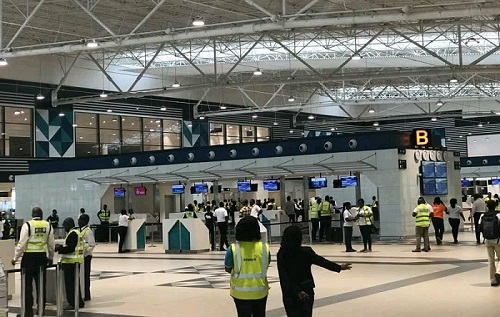
    Furthermore, Professor Dankwah revealed that, another project the oil revenue was used to undertake is the new terminal at the Kotoka International Airport.

    Terminal 3 of Kotoka International Airport

    Also, she suggested that if the oil revenues are utilised effectively, that is building infrastructure that can yield revenue, it will also be ideal.

    “Oil revenue cannot last forever. So, if we build infrastructures as we have done with the terminal,;that will keep giving back revenue year-on-year-on for the next generation and the next generation after that.”

    Professor Dankwah
    PIAC At 10

    Professor Dankwah said for the Committee to have been in existence for ten years is something everyone should be proud of. Especially with regards to having a committee that actually demands accountability for the oil revenue amongst others.

    “I think this is something all of Ghana should be proud of; because this idea of having the public also interested in what happens with our oil monies. It’s a novel idea and Ghana can be proud to be one of the very few countries in the world;that has something of this sort and we have kept at it for ten years.”

    Professor Dankwah

     Read Also: Energy Ministry Budgetary Allocation Approved By Parliament

  • GNPC Must Operate on Sound Commercial Lines- PIAC

    GNPC Must Operate on Sound Commercial Lines- PIAC

    The Public Interest and Accountability Committee (PIAC), the statutory body with oversight responsibility of the management and efficient use of the country’s petroleum revenues, has suggested that the Ghana National Petroleum Corporation (GNPC) should be listed on the Ghana Stock Exchange (GSE).

    The Technical Manager of the Public Interest and Accountability Committee, Mark Agyemang, made these comments, adding that the reason for this is to reduce the level of government interference in the affairs of the Ghana National Petroleum Corporation (GNPC) and to maintain control and ownership of the national oil company to Ghanaians.

     “The government’s consistent control of the corporation and, for that matter, its use of the corporation to finance quasi-fiscal expenditures is a worry.

     “GNPC should operate on sound commercial lines, but the interference of the central government stops the corporation from having a strategic plan of becoming a standalone and world-class operator,” Mark Agyemang remarked.

    Besides the mission of the Ghana National Petroleum Corporation (GNPC), which is to lead the sustainable exploration, development, production and disposal of the petroleum resources of the country, it is also expected to leverage the right mix of domestic and foreign investments in partnership with the people of Ghana.

    The role of the Public Interest and Accountability Committee on the other hand is to ensure there is sound oil revenue management and as such the committee is not expected to watch the government interfere with the Ghana National Petroleum Corporation’s responsibility thereby helping the country to maximise the benefits of its hydrocarbon resources.

    The Public Interest and Accountability Committee Technical Manager also raised concerns about the fact that some of the actions and dealings of the Ghana national oil company with the government breaches some sound business principles which can affect accountability of revenues accrued to the body.

    According to the Natural Resource Governance Institute (NRGI), the Ghana National Petroleum Corporation which holds and manages the state’s interests in the petroleum sector as a partner in all petroleum agreements in Ghana, sold 73 cargos of oil, made up of 71.1 million barrels valued at US$5.2 billion, between 2011 and April 2020.

    Mr. Mark Agyemang revealed that there are certain occasions in the past, where government borrowed from the Ghana National Petroleum Corporation (GNPC), without proper documentation of the transactions undertaken, making it difficult to account for them at the detriment of the people of Ghana.

    The Technical Assistant further cautioned that the national oil company should be seen to be pursuing the public’s interest and supporting the government’s objective of providing adequate and reliable supply of petroleum produce as well as reducing the country’s dependence on crude oil imports, through the development of Ghana’s own petroleum resources instead of the agenda of a particular government or group of people.

    All these reasons contribute to the need for Ghana National Petroleum Corporation to list on the local bourse to formalise and reduce discrepancies pertaining to their transactions, Mr. Mark Agyemang opined.

    “So if GNPC is listed on the stock exchange and the government wants to borrow from it, it would be documented,” he added.