Tag: PIAC

  • PIAC Chides The Finance Ministry

    PIAC Chides The Finance Ministry

    The Public Interest and Accountability Committee (PIAC), has rehashed its displeasure on the lack of cooperation from the Finance Ministry in its 2020 half-year report.

    Contained in the report, the Committee asserted the Finance Ministry did not provide half-year data on its Annual Budget Funding Amount (ABFA) utilization upon their request.

    This, the committee say has been limiting the effectiveness of their work, and gradually wiping out transparency.

    The Ministry was also accused to have violated sections of the Petroleum Revenue Management Act (PRMA) 893, and Ghana Investment Infrastructure Fund (GIIF) Act 877 in that report.

    According to PIAC, the first half of 2020 marks the fourth time it has not been provided data for its report. The first half of 2020 report also indicated that, the failure of the Ministry to provide it with relevant information has resulted in the committee’s failure to report on programmes and activities undertaken with some US$ 169.51million.

    “This Report is also without the Annual Budget Funding Amount (ABFA) expenditure information for the period, arising from the failure of the Ministry of Finance to provide the expenditure data requested by PIAC.

    “This is the fourth time the Ministry has failed to furnish the Committee in a timely manner, with data on ABFA utilization for the compilation of its Semi-Annual Reports, as required by the PRMA. As a result, PIAC is unable to report on the programmes and activities undertaken with an amount of US$169.51 million disbursed to the ABFA for the period.

    “Similarly, the Committee is unable to provide update on the status of the unutilized and unaccounted for ABFA balance which stood at GH₵1.5 billion, as reported in the 2019 PIAC Annual Report.” the report read.

    In its recommendations, it called on the Parliament “to bring its oversight mandate to bear on the Ministry of Finance.”

    “This is because the Ministry’s persistent failure (fourth time) to provide half-year data on ABFA utilization is not only adversely affecting the work of the Committee, but also eroding gains in the fight for transparency and accountability in the management and use of Ghana’s petroleum revenues for the benefit of citizens.”

    The lack of Finance Ministry Data also “makes it difficult to reconcile disbursements and expenditure and undermines the spirit of accountability,” the report also said.

    In its 2019 report, PIAC described the Ministry as having acted with impunity after it did not account for the use of oil money allocated to the budget.

    PIAC has been publishing reports on the management and use of petroleum revenues since the nation began producing oil in 2010.

    This is in line with Section 56 of the Petroleum Revenue Management Act (PRMA), 2011 (Act 815).

  • Recognize Contractors Who Have Demonstrated Value Of Petroleum Revenue Usage- Noble Wadzah

    Recognize Contractors Who Have Demonstrated Value Of Petroleum Revenue Usage- Noble Wadzah

    The Chairman of the Public Interest and Accountability Committee, Noble Wadzah has called on government to recognize contractors who have demonstrated value, for the use of petroleum revenues through the delivery of good projects.

    He made this call, after he led a PIAC team to visit selected oil-funded projects in the Eastern Region, an exercise which forms part of the Committees regular activity to identify with effective use of the country’s petroleum revenues.

    Mr. Wadzah as part of the calls, also, urged government to instigate punitory measures against contractors who carry out shoddy works on oil-funded projects. 

    According him, his outfit has oversight responsibility over the management of the country’s petroleum revenues and such practice defeats the purpose of getting value for money for the use of petroleum revenues.

    He explained that, the petroleum revenues come from a depleting resource base, and it’s for this reason that, the law has been provided for using petroleum revenue in ways that support intergenerational benefit.

    CHPS Compound

    The projects the team visited included the Construction of Community Health-Based Planning Service (CHPS) compound at Ahankrasu, construction of Irrigation Infrastructure at Aditrase and Kornokle in the Yilo Krobo District and the Payment for a 3-Unit classroom block at Amanase Aboabo JHS and Owusu Wawase D/A Primary.

    They also visited Bitumen Surfacing of New Tafo – Nobi – Samlesi – Anwiabeng Feeder roads, Construction of Irrigation Infrastructure at Aditrase and Kornole in the Yilo Krobo District and upgrading of Kade Wenchi Akim Oda Roads.

    Touching on the construction of the Community Health-Based Planning Service (CHPS) compound at Ahankrasu, one of the projects they visited, he revealed that, information made available to them indicated that, the contract was awarded in November 2018. As at the time of PIAC’s visit, main construction works on the CHPS have been completed, finishing works were ongoing, while external works were underway. Supply and installation of medical equipment was yet to begin adding that the overall progress stands at 95 per cent.

    CHPS Compound

    The construction of the CHPS compound, which will serve the community health cases received total funding from the Annual Budget Funding Amount (ABFA) to the tune of GHC1,206,419.14.

    Mr Wadzah described that particular project as one that offered value for money and commended the contractor for his good works.

    He said that, it was inspiring to note that there were contractors who shared in the value of putting petroleum revenues allocated to projects to good use and such people should be commended for their efforts.

    Mr Wadzah also made a call for community involvement to be mandatory in project contracts as it stands, to ensure some level effectiveness and resilience in project works and delivery.

    The PIAC team also held public forums at the district level in Abetifi and Kwabeng to inform and engage citizens on the management and use of petroleum revenues in the country as provided for in law.

     The Public Interest and Accountability Committee (PIAC), is a statutory institution committed to ensuring efficient, transparent and accountable management of petroleum revenues and investments, to secure the greatest social and economic benefit for the people of Ghana through active engagement with government and citizens.

  • Decommission Saltpond Oil Field, PIAC calls on GNPC

    Decommission Saltpond Oil Field, PIAC calls on GNPC

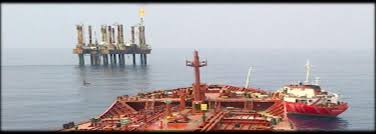
    The Public Interest and Accountability Committee (PIAC) yesterday called on the Ghana National Petroleum Commission (GNPC) to make a decision to decommission the Saltpond Oil Field (SOF) in the Mfantseman Municipality of the Central Region.

    At a public forum on the management and use of Ghana’s petroleum revenues held at Cape Coast on Tuesday, the committee said they believe the huge cost of staff maintenance will be reduced since the oil rig had become an economic burden if the move takes place.

    Speaking at the forum, Mr Noble Wadzah, Chairman of PIAC, stated that

    “the continued use of oil revenues to cater for an idle field did not reflect judicious use of the resources.”

    He also explained that because the SOF was not producing anymore it’s needful to decommission it to reduce unnecessary expenditure and also pointed out that commissioning a rig came with careful planning and so GNPC with the consent of the Ministry of Energy had embarked on a two-phased programme to dismantle the premier oil producing field in Ghana.

    The first phase of the decommissioning will involve the preparations of a complete plan towards bringing the rig down with the second face seeing the start of the decommissioning.

    The forum assembled key stakeholders including; representatives of the Central Regional Coordinating Council, PIAC member institutions, traditional and religious leaders, media and the public.

    Since June 2010, the operations of the Saltpond Oil Field (SOF) was brought to a halt by the GNPC after it began incurring operational cost from a field that was producing minimally from two of its archive wells of six wells originally sunk when the field was operating in the 70s.

    The PIAC chairman added that GNPC’s continuous use of oil revenue to provide maintenance cost for the offshore production platform ahead of plans to decommission was not feasible financially.

    He explained that, the country’s oil revenue was being heavily drained, due to the payment of the emoluments of skeletal staff and the maintenance of the non-functional oil production facility.

    Mr. Nasir Alfa Mohammed, a member of PIAC lamented that the committee lacked the legal resources to prosecute people who swindle funds of Ghana’s oil revenue allocations in spite of their statutory mandate and commitments to ensure efficient, transparent and accountable management of petroleum revenues and investments,

    He iterated the need and support for PIAC to have prosecutorial powers to effectively and efficiently control the misappropriation of oil revenues.

    He also made recommendations that to prevent further oil revenues misappropriation, parliament should empower and support the committee to bring about rapid national development and also make people performing their roles more accountable.

    He assured of the committee’s continuous execution of its mandate with high integrity and remain independent of governmental dictatorship on the oil revenue management.

    The PIAC member representing the Ghana Bar Association affirmed the PIAC’s determination to engage the media and key stakeholders in keeping track of oil revenue disbursement as means of promoting social auditing and accountability and admonished the media and other strategic stakeholders to play their roles more effectively to ensure that oil revenues were better protected.

    Osabarima Kwasi Atta II, Omanhen of Oguaa Traditional Area called for the PIAC to educate and further engage the public on their directive and also work towards impelling the support of prosecutorial authorities.