Tag: PIAC

  • GNPC Was Not Forthright With the Ad Hoc Committee – John Jinapor

    GNPC Was Not Forthright With the Ad Hoc Committee – John Jinapor

    Member of Parliament for Yapei Kusawgu and Ranking Member on Parliament’s Mines and Energy committee, Hon. John Abdulai Jinapor has disclosed that the Ghana National Petroleum Corporation (GNPC), was not forthright with the censure motion ad hoc committee when GNPC appeared before the committee yesterday.

    The NDC MP advised the Deputy CEO of GNPC, Mr. Joseph Dadzie, the man who spoke on behalf of GNPC at the ad hoc committee sitting, to desist from peddling falsehood.

    “I’m not surprised that GNPC was struggling because they were not being forthright and my first advice to Mr. Dadzie is that he should be very conscious. He is under oath and if he peddles falsehood and deliberately does so, that is perjury.

    “Secondly, he shouldn’t forget that he will appear before the Mines and Energy committee. This is just a fact finding committee and whatever he says there can go against him.”

    John Jinapor, MP

    The Yapei Kusawgu Legislator opined that GNPC’s explanation that some oil revenues are paid to Jubilee Oil Holding Limited (JOHL) and not directly into the Petroleum Holding Fund (PHF), was not true.

    Proposed GNPC Headquarters

    He disclosed that, unlike what the Deputy CEO of GNPC told the ad hoc committee, GNPC had initially told the Mines and Energy committee of Parliament that, JOHL was a temporal company and that it had no intention of keeping JOHL.

    “GNPC appeared before the Mines and Energy committee and they were categorical that they did not intend keeping JOHL. In fact, they [GNPC] told us that they wanted to buy the shares directly but Hannah Darko told them that in order to transfer the shares, they needed to establish JOHL as an offshore company and so that company was nothing but a special purpose vehicle to serve as a receptacle to take the shares and transfer it to GNPC.”

    John Jinapor, MP

    Moreover, John Jinapor was very emphatic about what the law says on petroleum transactions. “The law, Act 815; Section 3, says the payment should be made into the Petroleum Holding Fund,” Jinapor noted.

    With the law as his premise, he argued that even if JOHL was still in existence, all monies were supposed to be paid into the PHF.

    “If it [oil revenues] belongs to the company and is for Ghana, you pay it into the Petroleum Holding Fund because that’s what the law says,” he said.

    The Ranking Member on the Energy and Mines committee, stated categorically that the revenues where not paid at all.

    “The State did not even pay the money. The shares were paid in lieu of capital gain tax which should have also been paid in the Petroleum Holding Fund. So GNPC can attempt to dribble anybody but they won’t dribble some of us.”

    John Jinapor, MP

    GNPC’s Appearance Before Ad hoc Committee

    Mr. Joseph Dadzie, Deputy CEO -GNPC

    Yesterday, November 17, 2022, the Ghana National Petroleum Corporation (GNPC) represented by its Deputy CEO in charge of Commerce and Business strategy, Mr. Joseph Dadzie, appeared before the Parliamentary ad hoc censure motion committee.

    In brief, the Deputy CEO of GNPC, sought to debunk the testimony of the Public Interest Accountability Committee (PIAC) which had appeared before the ad hoc committee early on.

    Mr. Dadzie claimed that part of oil revenues were paid to the Jubilee Oil Holding Limited (JOHL), a subsidiary of GNPC which is a full fledged company on its own and so it’s in charge of how it disburses its funds.

    He claimed that, PIAC’s position that all of revenues accrued from oil transactions are to be paid into the PHF was not the case as part of the monies gotten, are paid to JOHL.

    He said that profits made by JOHL are paid to GNPC which intends put the monies into the PHF.

    “At the end of the day if it [JOHL] declares profit and the Directors decide that dividends must be paid; that money is paid to GNPC [and the money paid to GNPC] of course will be paid into the Petroleum Holding Fund.”

    Joseph Dadzie, Dep. CEO -GNPC

    READ ALSO: Censure Motion: We Disagree With PIAC’s Testimony – GNPC

  • Censure Motion: We Disagree With PIAC’s Testimony – GNPC

    Censure Motion: We Disagree With PIAC’s Testimony – GNPC

    The Ghana National Petroleum Corporation (GNPC) has said that it disagrees with the Public Interest Accountability Committee (PIAC) on the latter’s testimony given at the censure motion ad hoc committee sitting yesterday.

    GNPC’s Deputy CEO in charge of Commerce and Business strategy, Mr. Joseph Dadzie, claimed that an independent company called the Jubilee Oil Holding Limited (JOHL) was set up for receiving part of dividends accrued from petroleum transactions.

    By that, Mr. Dadzie meant that all proceeds from the sale of petroleum could not be transferred to the Petroleum Holding Fund (PHF), the fund PIAC mentioned that revenues from petroleum transactions ought to have been paid into.

    “We disagree with what PIAC said. Honourable Chair. As it was discussed during the PIAC testimony, JOHL is a 100% subsidiary of GNPC. It’s a company set up under the company act and the constitution of JOHL is governed by the company act and for that reason 100% of the revenue cannot be paid into Petroleum Holding Fund.”

    Joseph Dadzie, Dep. CEO GNPC
    File Photo

    He noted that JOHL is governed by the company act and not by the Petroleum Revenue Management Act (PRMA). By that, he sought to establish the point that, JOHL was a separate legal entity.

    According to the GNPC Deputy CEO, because JOHL has a life of its own, the disbursement of monies it collects is decided by its Directors and not GNPC.

    “At the end of the day if it [JOHL] declares profit and the Directors decide that dividends must be paid, that money is paid to GNPC [and the money paid to GNPC] of course will be paid into the Petroleum Holding Fund,” he said.

    Moreover, Mr. Dadzie mentioned that “as far as JOHL is concerned, the Finance Minister is not responsible for the revenues.”

    The Finance Minister, Ken Ofori-Atta

    He disclosed that JOHL fulfilled its tax obligations in 2021. Paying GH₵17million to the Ghana Revenue Authority (GRA) as tax on its operations.

    When asked on whether revenues where paid into an offshore account as the Minority caucus in Parliament had claimed, GNPC’s Deputy CEO first of all sought to clarify what an offshore account was.

    “I think the word offshore [is misleading]; for those who are bankers [they understand that] you can even have an offshore account in Ghana. I think the word when we say offshore [makes it a bit confusing] because, the Bank of Ghana has certain categorisation of foreign currency and so what we call FCA [for example] has offshore account.”

    Joseph Dadzie, Dep. CEO GNPC

    In the light of the above explanation, Mr. Dadzie accepted that the revenues were paid into an account outside Ghana.

    “To the extent that the question relates to receipts from the sale of crude, yes, it was paid into an account held by Ghana International Bank in London,” he revealed.

    Furthermore, he mentioned that buyers of crude, pay monies directly into accounts given to them. Whether the account is the PHF or the Ghana International Bank account in London, there is no third party involved in the paying of the monies.

    In essence, the Finance Minister, Ken Ofori-Atta couldn’t have been directly involved in the payment of monies into any of the crude oil accounts.

    The PIAC Testimony

    In the middle: Dr. Alfa Mohammed, Vice Chair of PIAC at ad hoc committee sitting

    Yesterday, at the censure motion ad hoc committee sitting, the Public Interest Accountability Committee (PIAC) claimed that about $100 million of monies accrued from the sale of Ghana’s petroleum were not paid into the Petroleum Holding Fund (PHF).

    Even though the representative of PIAC, Dr. Alfa Mohammed who is Vice Chair of the committee, did not explicitly say the monies were paid into another account, he was confident they were not paid into the PHF.

    For PIAC, where the monies where paid wasn’t necessary. PIAC maintained that “it was contrary to law for that money to have been deposited in any accounts, if [it was done] at all.”

    Minority Caucus in Parliament

    Meanwhile, the Minority group in Parliament in September this year, had accused government of paying the said amount into an account offshore.

    In a statement by signed by the Ranking Member on the Committee of Mines and Energy, Hon. John Abdulai Jinapor, the Minority alleged that government had transferred revenues “from about 944,164 bbls of crude lifting in the Jubilee and TEN fields to a company established in a safe haven without parliamentary approval.”

    The Minority group indirectly accused the Minister of Finance of being behind the alleged circumventing of crude funds into an unknown account offshore.

    READ ALSO: Censure Motion: PIAC Insists $100 million of Oil Revenues Was Not Paid Into PHF

  • Censure Motion: PIAC Insists $100 million of Oil Revenues Was Not Paid Into PHF

    Censure Motion: PIAC Insists $100 million of Oil Revenues Was Not Paid Into PHF

    The Public Interest Accountability Committee (PIAC) has claimed that about $100 million of monies derived from Ghana’s petroleum reserves, were illegally paid into unknown accounts rather than the Petroleum Holding Fund (PHF).

    The Vice Chair of PIAC, Dr. Abdul Nasir Alfa Mohammed, was speaking at the Parliamentary ad hoc committee on Ofori-Atta’s censure motion when he said that, $100 million of Ghana’s oil revenues has not been properly accounted for.

    “We explored all the laws, in our opinion, that border around this issue and we still came to an independent opinion, which we stand by on any day, that those revenues ought to have formed part of the petroleum revenues of Ghana and ought to have been deposited in the Petroleum Holding Fund and not in any other account.”

    Alfa Mohammed, Vice-Chair, PIAC

    Dr. Mohammed said “it was contrary to law for that money to have been deposited in any accounts, if [it was done] at all.”

    File Photo

    The Petroleum Holding Fund (PHF) was established under Section 2 of the Petroleum Revenue Management Act (PRMA), as the official public fund for receiving and disbursing all of Ghana’s revenues accrued from Petroleum transactions.

    The PHF is held offshore at the Federal Reserve Bank of New York, as the Bank of Ghana Petroleum Holding Fund Account. 

    The various revenues that are expected to be deposited into the PHF are: Royalties from oil and gas, surface rentals and other receipts from petroleum operations and sale or export of petroleum; Receipts from direct and indirect participation in petroleum operations by the government; Corporate income taxes from upstream and midstream petroleum companies.

    Other revenues include: All amount payable by the national oil company as corporate income tax, royalty, dividends, or any other amount due in accordance with the laws of Ghana; Any amount received by government such as capital gains tax derived from the sale of ownership of exploration, development and production rights; Production and signature bonuses and additional oil entitlements.

    Minority Accuses Government of Not Paying Revenues Into PHF

    The Minority caucus in Parliament

    Earlier this year, the minority group in Parliament alleged that government for unknown reasons had not accounted for over $100 million of oil funds gotten from petroleum lifting in the first quarter of the year.

    In a statement signed by Hon. John Abdulai Jinapor, Ranking Member on Parliament’s Mines and Energy committee, the caucus alleged that government had circumvented the monies into an account outside the country.

    “The decision by the current NPP government to transfer revenues accruing from about 944,164 bbls of crude lifting in the Jubilee and TEN fields to a company established in a safe haven without parliamentary approval, amounts to a gross violation of the Petroleum Revenue Management Act, 2011 (Act 815) and Public Financial Management Act (Act 921).”

    Abdulai Jinapor, MP
    Hon. John Abdulai Jinapor, MP for Yapei Kusawgu and Ranking Member Mines and Energy Committee

    He relied on the PIAC 2022 semi-annual report to make claims that, contrary to the established laws of PRMA, revenues from Ghana’s oil sales were not being paid into the PHF.

    The Yapei Kusawgu MP specifically pinned the alleged theft on Finance Minister, Ken Ofori-Atta.

    “We have become aware that following the acquisition of a 7-per cent interest in the Occidental (Oxy) transaction in respect of the Jubilee and TEN fields by the government, ostensibly for GNPC in 2021, the Minister of Finance has clandestinely ceded the shares to an offshore company known as JOHL (a company set-up in the Cayman Islands) in a very surreptitious and opaque manner.”

    Abdulai Jinapor, MP

    “This NPP government is proving by the day, that the nation’s oil resources cannot be entrusted in their care,” he wrote, whiles making reference to previous PIAC reports that claimed government had not accounted “for about GHȼ2 billion of Ghana’s oil cash for the 2017, 2018 and 2019 fiscal years” as well.

    READ ALSO: Voters Are Looking For New Leadership – Mike Pence

  • GNPC Foundation Rubbishes Okudzeto’s Claims On Cost Of Astro Turf Facilities

    GNPC Foundation Rubbishes Okudzeto’s Claims On Cost Of Astro Turf Facilities

    The Ghana National Petroleum Corporation (GNPC) Foundation, has debunked claims made by the Member of Parliament for North Tongu Constituency, Samuel Okudzeto Ablakwa, on the cost of Astroturf facilities constructed by the foundation.

    According to the foundation, its attention has been drawn to a social media post by Mr Ablakwa, receiving widespread attention “alleging malfeasance in the cost of construction of Astro turf facilities across the country” as captured under Appendix D of the 2021 Annual Report of the Public Interest and Accountability Committee (PIAC). It revealed that the construction of the facilities relates to GNPC Foundation Projects Expenditure submitted to Parliament in fulfilment of the Petroleum Revenue Management Act, 2011 (Act 815), as amended by Act 893.

    Contained in a statement, GNPC foundation indicated that Mr Ablakwa among other things, alluded to “disparities and grave inconsistencies” in the unit cost of the Astro turf facilities funded by GNPC through its Corporate Social Investment arm, the GNPC Foundation.

    “The Foundation wishes to set the records straight and to assure the public of its commitment to impacting positively on people and communities within GNPC’s production enclave and across the country through the implementation of social impact programmes and projects.”

    GNPC Foundation

    At the outset of the project in 2018, GNPC Foundation highlighted that the cost of construction of each Astro turf was pegged at $250,000 and in 2019 and 2020, the cost of each facility increased to $300,000, as accurately stated by the Minister of Energy, Matthew Opoku Prempeh, in his response to Parliament on July 5, 2022.

    Currently, it emphasized that the cost per Astro turf facility stands at $350,000 with the incremental costs attributed to rising cost in construction.

    “Honourable Okudzeto’s interpretation of the reported figure of GHC319,813.00 as the unit cost of each Astroturf is factually inaccurate and misleading. The figure as contained in the 2021 PIAC Report represents how much had been expended on each project as at the reporting time rather than the total cost per Astroturf facility.”

    GNPC Foundation

    The Foundation expressed that the figure provided figure only represents “20% of the total contract sum of GHS1,599,065.00” per facility in 2019 and 2020. Thus, the GHC319,813.00 quoted in the PIAC report represents progress payment based on milestones.

    Relevance of Astroturf facilities

    The foundation noted that its sports infrastructure project began in 2018 with the aim to improve the standards of sports infrastructure in local communities to harness sporting talents of which football remains a critical agent. The Astro turf project, it stated, seeks to help hone existing football and sporting talents across the country.

    “GNPC funded Astro turf facilities are constructed with FIFA quality approved materials and are set to FIFA specifications with pitch dimensions of 96×66 meters. Each facility is equipped with wire fencing and flood lights.”

    GNPC Foundation

    Meanwhile, the Foundation has revealed that it is funding a total of 32 Astro turf facilities across the country at various stages of completion from 2018 with varying costs ranging from GHC997,337.00 to GHC2,366,666,68.00. It assured Ghanaians that the GNPC Foundation would continue to offer support to Ghanaians across the country.

    “We wish to appeal to the public to be circumspect in the sharing of information received on GNPC Programmes, projects, and activities to avoid causing needless sensation and public disaffection.”

    GNPC Foundation

    READ ALSO:  Nkechi Blessing slams critics of celebrities joining politics

  • Ghana: Four Petroleum Agreements Terminated due to Non-Performance- PIAC

    Ghana: Four Petroleum Agreements Terminated due to Non-Performance- PIAC

    The Petroleum Commission, the regulator of Ghana’s upstream activities, moved to terminate petroleum agreements of four (4) contractors in 2021 due to non-performance, according to the Public Interest and Accountability Committee (PIAC).

    This brings the country’s total petroleum agreements to fourteen (14), since no new petroleum agreement has been signed or ratified by Parliament, with the four contractors being Swiss African Oil Company Limited (SWAOCO), UB Resources, Brittania U, and Sahara Energy Fields Ghana. All 4 companies accounted for about 73 per cent of an outstanding Surface Rental of $2,579,170.22.

    Three of the companies had their effective date of petroleum agreements in 2014: UB Resources (September 17, 2014 with license in the offshore Cape Three Points South); Brittania U (July, 17, 2014, with license in the Southwest Saltpond Block); and Sahara Energy Fields Ghana (September 17, 2014 with license in the Shallow Water Cape Three Points). Swiss African Oil Company Limited was the only company with an effective date of March 11, 2016. In all, termination dates of all of these contracts were dated April 27, 2021.

    petroleum agreements in ghana
    Image Credit: Avigator/Fortuner

    The details of the termination of these contractors was, however, not disclosed in the report, except for the fact that they were non-performing. This brings to question, the licensing processes adopted in ensuring the right contractors are awarded the contracts, as almost all of those contractual agreements terminated were signed in 2014.

    Of course, their failure to have been able to progress in the various development stages of the fields they won could be attributed to several reasons. Again, this brings to question, the duty of the Ghana Negotiating Team (GNT) for the country on whether due diligence was applied to ascertain the ability of these four companies in exploration activities.

    Most IOCs Resume Operations

    In doubt, consider the fact that, the COVID-19 pandemic affected the operations of upstream producers for more than two years, according to the PIAC report. However, the PIAC report notes that,“Most IOCs have resumed their project planning, execution, risk management and associated preparatory activities as well as drilling campaigns.”

    Despite the fact that, these contractors’ licenses was terminated, investments in the upstream sector has not stalled: “Notwithstanding a slow recovery from the COVID-19 pandemic, Ghana in 2021 witnessed some injection of investment by IOCs. In April, Tullow Oil for instance, commenced implementation of its long-term Business Plan to unlock the full potential from the Jubilee and TEN fields through a multi-year, multi-well drilling programme.

    “Additionally, discussions with prospective investors are ongoing to promote Ghana as an attractive destination for investment, technology, and a hub for refined petroleum products in the West African sub-region through the implementation of the Petroleum Hub project.”

    PIAC Report

    The PIAC report noted that, as at December 2021, the Ghana Negotiation Team (GNT) was in the process of concluding negotiations with Eni Ltd. in partnership with Vitol Upstream Tano Ltd., CNOOC International Ltd., Resource Base International Ltd., KOKA Energy Company Ltd. and First E&P towards executing substantive Petroleum Agreements. Upon execution, these Petroleum Agreements are expected to receive Parliamentary ratification to have legal backing, PIAC noted in the report.

    Almost a year since ExxonMobil relinquished its interest in DWT/CTP block, it has not been re-awarded to a new contractor. However, the PIAC report noted that, “the Petroleum Agreement is still in force with the remaining partners being GNPC and GOIL taking responsibility for the contract area. [And that], the 80 percent interest relinquished by ExxonMobil has reverted to the State pending the necessary arrangements for re-award to a new contractor party(s)…”  

    READ ALSO: BoG Gradually Replacing GH¢1, GH¢2 Notes With Their Coin Equivalents

  • ‘If we Need to Protect GNPC, we Might Need to fix the law’- Dr Kwame Baah-Nuakoh

    ‘If we Need to Protect GNPC, we Might Need to fix the law’- Dr Kwame Baah-Nuakoh

    Dr. Kwame Baah-Nuakoh, the General Manager, Sustainability and Stakeholder Relations of the Ghana National Petroleum Corporation (GNPC), has suggested that given current provisions of the law, GNPC cannot be insulated from political interference, unless the law is amended to reflect so.

    While the National Oil Company (NOC) can be credited as among the top six SOEs in the country, it is not immune to shortfalls common to SOEs— ‘unbridled’ government interference, partly because of the power placed in the hands of the President to appoint the Board and CEO of the NOC.

    Particularly, the Public Interest Accountability Committee (PIAC), which serves as an independent watchdog, has consistently cited this position— having unfortunately muted the progress of GNPC, in terms of its core mandate. This, according to PIAC has resulted in concerns raised about gross mismanagement of petroleum revenues in its reports and press briefings.

    Typical among the issues highlighted by PIAC is the use of the corporation to finance quasi-fiscal expenditures of the government; instances of non-documentation of borrowed funds from the Corporation; and the non-repayment of borrowed funds by the government.

    revenue
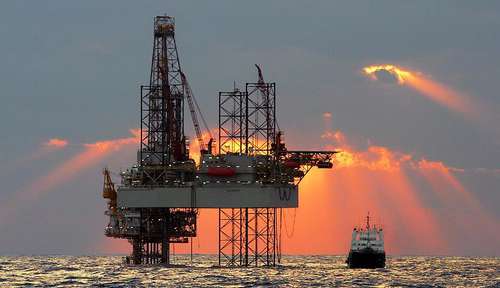
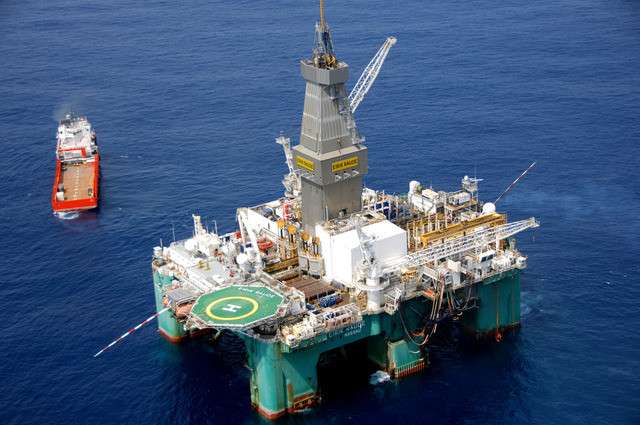
    An offshore oil rig

    Deciding as a country on how GNPC should be Run

    In a public lecture organized by the Public Interest Accountability Commission (PIAC) on March 23, 2022, dubbed “Ten Years of the Management and Use of Petroleum Revenues in Ghana: The Way Forward,” Dr. Baah-Nuakoh said:

    “I think we need to decide as a country on what we want our NOC to be… In our case, GNPC is owned 100% by the State. The State’s interest is determined at any point by the government of the day and most of these things have been couched in law…

    “It’s policy direction and the ventures that it could undertake are determined by politicians. Because, GNPC’s annual work programme has to go to parliament, and it is only parliament that approves whether GNPC can spend certain monies or not. So, if we put all these things into law, I’m wondering how we were insulating GNPC from political interference when the Minister of Energy is the one who determines the policy direction… the President appoints the chief executives of state institutions.

    Dr. Baah-Nuakoh

    “If we need to protect GNPC, it is law. If we think the law doesn’t work… we might need to fix the law,” he said, adding that “…I think it will be difficult for you to insulate GNPC from political interference,” if the law requires that appointments of Boards and CEOs of SOEs be in the hands of the President.

    Insulate Some of the Appointment Powers

    Dr. Theo Acheampong, an Energy Economist and Political Analyst, in agreement, said:

    “…In this case, we know that GNPC and many of the state-owned entreprises are subject to the political process. Like we say the President appoints, hires and fires the Board, CEO… And if we want to improve the corporate governance going forward, then there is a need to address or at least insulate some of these appointment powers.

    “So, why is it that, for example, when you take Saudi Aramco, Abu Dhabi National Oil Company (ADNOC), all these other places; they are able to actually advertise for CEOs for certain positions, people apply and they get the crème de la crème, give them the incentives, they perform and deliver value but we are not able to do same for some of our state-owned institutions.”

    Dr Theo Acheampong
    GDP growth
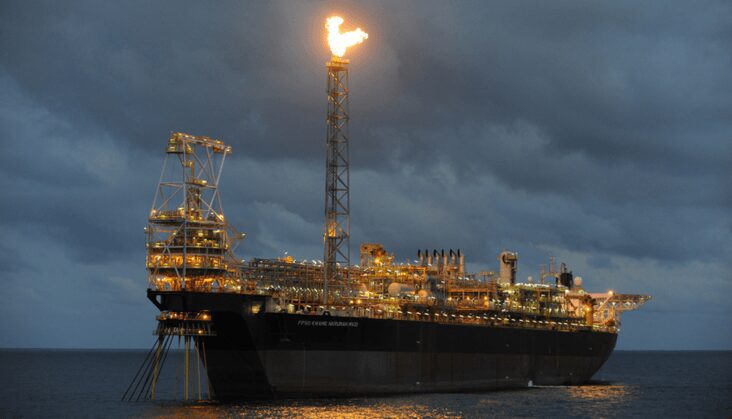
    Gas flames flaring up from an off shore oil vessel

    This notwithstanding, some experts have indicated that in order to solve this issue, the NOC should be listed on the Ghana Stock Exchange, Dr. Yusif Sulemana, an Energy Strategist is cited to have said:

    “…Ultimately, we have to [list GNPC on the GSE], the status quo hasn’t helped. If we have structural weaknesses and we don’t take steps to strengthen them or solve them… we will be sinking money and not get value for our money.

    “Our upstream is very key to our energy security. What we need to do is to make sure that we strengthen the structures; that people are accountable for their actions and inactions…”

    Dr Sulemana

    READ ALSO: Finance Minister to Address the Nation on Measures Taken to fix Economic Challenges

  • PIAC’s Request for GNPC to be listed on GSE Appropriate, Start with GNPC Explorco- Petroleum Expert

    PIAC’s Request for GNPC to be listed on GSE Appropriate, Start with GNPC Explorco- Petroleum Expert

    Dr Yusif Sulemana, an energy consultant and senior oil production specialist at petroleum development Oman has supported calls by the Public Interest Accountability Committee (PIAC) to enlist the Ghana National Petroleum Corporation (GNPC) on the Ghana Stock Exchange (GSE).

    While the National Oil Company (NOC) can be credited as among the top six SOEs in the country, it is not immune to shortfalls common to SOEs— ‘unbridled government interference’.

    This has been cited by the Independent watchdog— the Public Interest Accountability Committee (PIAC) — as muting the progress of GNPC, while instigating the often publicized concern of gross mismanagement of petroleum revenues in its reports and press briefings.

    The PIAC has noted a reversal will only be possible when the control of GNPC is ceded to Ghanaians by listing the NOC on the Ghana Stock Exchange; a call which has yet to be effected since it was first expressed at the beginning of the year.

    listing
    Prof. Kwame Adom-Frimpong, PIAC Chairman

    There are instances cited by the PIAC, highlighting the use of the corporation to finance quasi-fiscal expenditures of the government; instances of non-documentation of borrowed funds from the Corporation; and the non-repayment of borrowed funds by the government.

    These issues tend to delay the execution of the core mandate of GNPC- operating within the upstream Oil and gas sector as an operator.

     “…Ultimately, we have to [list GNPC on the GSE], the status quo hasn’t helped. If we have structural weaknesses and we don’t take steps to strengthen them or solve them… we will be sinking money and not get value for our money.

    “Our upstream is very key to our energy security. What we need to do is to make sure that we strengthen the structures; that people are accountable for their actions and inactions…”

    Dr Sulemana
    Consider some KPIs to inform enlistment

    However, Dr Sulemana noted that “some KPIs should be met” following its enlisting on the GSE, while considering the strength of the financial sector, he said; Whether or not the financial sector or local investors will be able to support such a huge cost-financing institution like GNPC. And especially, as GNPC nears a time (after the next five years) by which oil revenues will cease to be allocated to the corporation (PRMA 2011, ACT815).

     “We need to test our readiness: Even if our financial system is not robust enough to accommodate such a move, we have to make concerted effort to make it robust… GOIL is a working example. Before it was listed on the Ghana Stock Exchange, it was near collapse. Now, GOIL is one of the highest shareholders in the downstream and they command a lot, and the results are there for us to see.

    “Initially, TotalEnergies and Shell used to be the market leaders in terms of branding, quality and competitiveness. Now, I can almost say that GOIL has overtaken that and it is almost like a benchmark that this multinationals have to look at.”

    Dr Sulemana
    Dr KK Sarpong, CEO, GNPC

    “I think it is doable”. What we can do is to “test our readiness, and the resilience of our financial system. And to go ahead with this, there is the need to start with enlisting Explorco. Because it is the vehicle that is entirely in charge of exploration and Production (E&P) activities within GNPC.”

    Start by listing Explorco on GSE to avoid losing focus on core mandate

    He noted that this is important as many auxiliaries undertaken by GNPC including Corporate Social Responsibilities (CSRs), have the tendency of swaying its focus, given the main mandate of the Corporation.

    “[The PRMA Act 2011, Act 815 requires that] after 15 years… GNPC should be able to generate profit, or achieve some maximum cash flow that they may not need capital input [from oil revenues]. In fact, if anything, they have to pay dividends to external parties and not to keep on taking money [from the oil revenues].

    “Unfortunately, as we speak now, GNPC keeps on taking money. The expectation was that GNPC should have been able to start paying dividends, and that is possible. And one of the ways that we can fast-track this is to look at enlisting them. Especially, when we take the vehicle like Explorco, make it vibrant and enlist it.”

    Dr Sulemana

    Access to capital to finance oil investments are diminishing rather rapidly, and gleaning commitments made at the COP26, this will continue for the foreseeable future.

    Also, Rating Agencies are reporting that the government may find it very difficult to access the international capital market due to negative investor sentiments about the country’s unsustainable debt concerns.

    Considering the foregoing, the suggestion that GNPC Explorco should be listed on GSE is in the right direction and the opportunity it offers is that the NOC can aggressively build on its core mandate and remain a profitable venture, Dr Sulemana said.

    READ ALSO: We look forward to Some Relief for Road Vehicle Users- Oppong Nkrumah on Budget Reading

  • Exxon Mobil’s exit from Ghana may not be dramatic- Norwegian Petroleum Expert

    Exxon Mobil’s exit from Ghana may not be dramatic- Norwegian Petroleum Expert

    Sigurd Solem, a Norwegian Petroleum Expert and a former operations manager of Maersk Directional Drilling Services has indicated that Exxon Mobil’s exit from Ghana’s upstream sector may not be dramatic.

    Before its exit six months ago, ExxonMobil operated the Deep Water Cape Three Points Block with an 80 per cent stake in the block while GOIL Offshore Ghana Limited and the Ghana National Petroleum Company (GNPC) owned 5 per cent and 15 per cent stake respectively.

    According to PIAC’s Semi-Annual Report, the 80 percent interest relinquished by ExxonMobil has since reverted to the State pending the necessary arrangements for re-award to a new contractor party(s).

    Nonetheless, it will not be far from truth to suggest that the state anticipates foreign companies will indicate interests in the remaining shares since local companies have relatively no wherewithal to compete for stakes in this space.

    Oil exploration and production is highly capital-intensive in nature, and gaining access to credit to participate is one of the challenges that local companies face.

    Ghana’s upstream sector has only a few local companies participating within the sector and this has continued for years. So far, GOIL Offshore Ghana Limited is a local company that participates in the upstream sector aside Springfield Ghana.

    Ghana has over the years picked up a number of extensive lessons from the Norwegian oil and gas industry, since the first collaboration with the oil-rich country in 2008- from oil revenue management to general legislations in the oil and gas industry.

    “Exxon’s exit may not be dramatic. I looked up the supermajors’ activity in Norway and found the following: Exxon sold their Norwegian assets (20 assets) in 2019 to Vår Energi (ENI is a shareholder). Chevron sold their assets in 2018, [and] ENI merged their assets into Vår Energi in 2019. Also, BP merged their assets into AkerBP and now holds 30% of the company…

    “The big ones are unable to deal with small projects. Today, in Norway, there are a number of small operators who are pursuing the tail end of previously large fields. For Norway, this has so far, been a good thing, longer lasting fields and production, more jobs and more tax revenue.”

    Sigurd Solem, Norwwegian petroleum expert

    After the exit of the supermajors in Norway, “a number of small oil companies who are also working on renewables [took advantage of the situation]. Many of these operators are only 10-12 people and they were previous employees of bigger operators. They formed a team, went to some of the investment companies who then funded them to get started.”

    He indicated that one of the biggest influences on starting up like this is hinged on “political and fiscal stability, and Ghana should be able to offer that.”

    Although Norway varies greatly from Ghana in so many respects including: the level of development; the system of governance; institutional capacity; and various macroeconomic factors, Ghana’s oil and gas sector can become the beacon of hope and the preferred example for oil industries in the sub-region.

    This notwithstanding, efforts to improve contributions to this end have been fraught with huge challenges. For instance, receivables based on approved contract sums by the Petroleum Commission to the Local Content Fund amounted to US$4.2 million, down from an amount of US$4.5 million recorded for the same period in 2020.

    After operationalizing the local content fund (LCF) in January last year, the Petroleum Commission of Ghana underscored the purpose of the Fund to inter alia provide financial assistance to indigenous Ghanaian companies operating in the oil and gas sector. The fund enjoins oil companies to contribute a 1 per cent contract sum deduction into the fund for the purposes highlighted.

    However, the Public Interest Accountability Committee (PIAC) noted that the shortfall in the LCF was due to challenges including the impact of the COVID-19 pandemic on collections and non-compliance by contractors and subcontractors citing the Fiscal Stabilisation Clause in petroleum agreements.

    Since the inception of the Fund last year, stabilisation clause has been repeatedly cited as the problem impeding the collection of the local content fund. Should this continue, the local content fund will turn out to be non-functional at worse, and may lose its significance.

    The extensive participation of local companies is very crucial to the progress of the country’s oil and gas sector, going forward, considering the threats of the ongoing energy transition.

    This is the time to explore ways to empower local companies to participate in the upstream oil sector and the country cannot simply fail at this.

    Besides, the establishment of the National Development Bank Ghana can be used to provide support for local oil companies to participate in the upstream petroleum sector.

    READ ALSO: Set Up A Board To Regulate Prices, Gov’t Urged

  • Oil Production: Ghana performs fairly well, but needs to improve on efficiency of spending— Kodzo Yaotse

    Oil Production: Ghana performs fairly well, but needs to improve on efficiency of spending— Kodzo Yaotse

    Kodzo Yaotse, Policy Lead, Petroleum and Conventional Energy at the Africa Centre for Energy Policy (ACEP) has described Ghana’s petroleum sector as having performed fairly well over the past decad. He, however, indicated there is the need to improve on the efficiency of spending of its oil revenues.

    In cumulative terms, Ghana’s petroleum revenues accrued over the past decade is US$6.55 billion, according to the Public Interest and Accountability Committee (PIAC). This translates into a US$3.3 billion between the period (2011-2015) and US$3.25 billion between the period (2016-2020).

    Meanwhile, it is almost a cliché considering the idea that the country’s mineral resources including its decade-long oil find, have not yielded maximum benefits; for the reason that the real value of resource wealth, has not brought prosperity to wider populations of the economy. 

    Efficiency in Revenue Spending

    Speaking to the Vaultz News, the extractives and energy policy specialist commented: “We’ve done fairly well, but there are areas that we have to improve… the issue of efficiency of spending.”

    Sharing in the sentiments of the ordinary Ghanaian, he quizzed:

    “…We cry that we are not getting enough. How well do we expend those revenues that we get from the resources? Again, how well does GNPC spend these revenues? What goes into the Annual Budget Funding Amount (ABFA); is there value for money for those expenditures?”

    Kodozo Yaotse, Policy Lead, ACEP
    Gas flames flaring up from an off shore oil vessel

    He further asserted that, “making money available goes beyond just collecting”. It is an important endeavor to manage revenues accrued from the country’s oil resource, he added.

    kodzo Yaotse, Policy Lead, ACEP

    “When it comes to efficiency of spending, not a lot of attention has been there. So, there are some governance strategies around those areas that we need to strengthen. However, if you even it out when it comes to regulation, policy and overall governance, we are doing fairly well. ”

    Kodzo Yaotse, Policy Lead, ACEP

    Accordingly, the resource governance index (RGI) which covers all the facets of the sector currently shows improvement in the petroleum sector, scoring 78/100 in the RGI 2021.

    Given the context of the ongoing energy transition, Ghana faces a trilemma of issues: transition towards energy security, moving towards a low carbon emissions pathway and charting a growth and transformation plan that will have to lift millions out of poverty. 

    Suitable fiscal regime in the period of energy transition

    On this basis, there are three divergent perspectives shared among experts, especially considering the ongoing energy transition. While the debate has been strongest on a regime-change towards production sharing agreement (PSA) and a call for no-change to existing fiscal regime, others favour relaxing the fiscal regime through taxes and royalties and PSA contracts reduction.

    The Energy Policy Specialist averred that: “Every country needs to assess what the transition means for them because eventually, the transition is imperative; it is happening.” Specifically, he indicated that the country should consider its own objectives for the transition, and what strategies to implement to achieve the objectives. Currently, Ghana’s fiscal profile accumulates 53 per cent of profits on average, and this is quite appreciable, he said.

    petroleum revenue
    An oil well under operation

    He further indicated that the push for “production sharing contracts does not arise at this time”. Because, the cost involved in petroleum development is huge, and for the government to optimize revenue in that space— PSA, there is need to investigate the cost in order to ascertain the amount left that is to be shared in oil operation activities.

    For the country to attract investment into its hydrocarbon sector, despite the ongoing capital discipline by investors, he indicated that the government can employ a mixture of the strategies to its fiscal regime, considering its objectives towards the energy transition.

    READ ALSO: Economists Back Calls for Replacement of TV License Fee with A Media Tax

  • Ghana Gas’ Indebtedness to GNPC increases by 56.19%— PIAC Semi-Annual Report

    Ghana Gas’ Indebtedness to GNPC increases by 56.19%— PIAC Semi-Annual Report

    The indebtedness of Ghana National Gas Company (GNGC) to Ghana National Petroleum Commission (GNPC) increased by 56.19 per cent in June 2021 on a year-on-year basis, as evidenced in the Public Interest Accountability Commission’s semi-Annual Report.

    This represents an increase from US$393,042,132.35 as at June 2020 to US$613,910,025.21 in June 2021, attributable to Volta River Authority’s (VRA’s) inability to meet its debt service obligation.

    Accordingly, the total volume of raw gas sales to GNGC by GNPC amounted to 19,868,900 MMTBu in June 2021 compared with 10,920,275.49MMTBu in June 2020. This translates into an increase of 81.95 per cent, the report noted.

    Revenues accumulated by GNGC over the period

    On the revenue side, the total indebtedness to GNPC stood at US$110.75 million compared to US$62.31 million for the same period in 2020. Particular to GNGC’s expenditure over the period under consideration, total expenditure amounted to GHS909,799,000.  

    According to the report, at end-June, 2021, a total of US$78,297,090.93 out of US$167,878,774.46 had been received by GNGC from the sale of Liquefied petroleum gas (LPG), Lean Gas and Stabilised Condensates as well as payment under the Cash Waterfall Mechanism (CWM).

    Cumulatively, the volume of Lean Gas, LPG and Condensates processed during the period were 17,928.01MMScf, 54,546.51M3 and 16,819.17M3 respectively.

    Consequently, the total outstanding receivables due GNGC was US$932,379,759.17 at the end of the period. Meanwhile, the report reveals that the volumes and cost of raw gas received from GNPC over the period have been quite erratic than anticipated.

    Additionally, pass through direct cost, a cost to which no element of overhead, administrative expenses or profit is added, constituted the highest expenditure item of GHS674,306,000. Also, expenditure incurred due to Directors’ Fees and Other Board Expenses was the least amount GHS167,000 over the period.

    The report also touched on the government’s consideration for GNGC to become an integrated gas company through the consolidation of midstream gas services (i.e. aggregation, shipping and operation).

    Progress of GNGC National Gas Aggregator Role

    As at the time of reporting, the government’s own established Ministerial Gas Taskforce, with the mandate to ensure a roadmap is developed had not reported any progress action for more than a year now.

    Aside this, one of the critical areas that has sparked several consternations among a section of CSOs is the National Gas Aggregator role of GNGC.

    As a sequel, the PIAC’s recommendation was that, “GNPC cannot novate its Joint Venture Partnership in any of these fields to GNGC without the consent of the other Partners, as the Gas Company is not a Party to any of these Agreements.”

    This fact notwithstanding, the PIAC noted that should it happen, the GNGC’s role as the National Gas Aggregator become fully established, GNGC will qualify as a National Oil Company in addition to GNPC as defined in the Petroleum Revenue Management Act (PRMA).

    PIAC further suggested that assuming the role of a National Oil Company, GNGC will be expected to make statutory payments into the Petroleum Heritage Fund (PHF) as well as receive allocations from it to finance its operations.

    READ ALSO: MHA Calls on Government to Invest in Mental Health