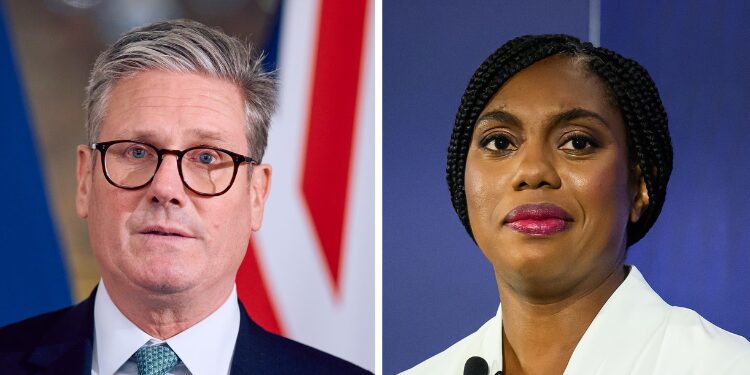
An emotional Keir Starmer has delivered his final Prime Minister’s Questions (PMQs) in the House of Commons, drawing the curtain on his political career with a farewell speech that celebrated Labour’s return to power, thanked those who accompanied him throughout his journey and pledged his unwavering support to his successor, Andy Burnham.
The outgoing Prime Minister’s final appearance at the dispatch box marked the end of a political chapter that saw Labour recover from its crushing defeat in the 2019 general election to secure a commanding victory in 2024 before returning to government.
As MPs from across the political divide listened, Starmer reflected on his years in public service, expressing gratitude to Parliament, civil servants, his political team, colleagues and family while acknowledging that leadership inevitably requires one generation to pass responsibility to the next.
His departure comes as Burnham prepares to assume the Labour leadership and move into Downing Street after securing overwhelming backing from Labour MPs, bringing to a close Starmer’s tenure after two years in government.
Addressing the Commons in a speech punctuated by applause and visible emotion from many Labour MPs, Starmer began by acknowledging the inevitability of political transition.
“Every Prime Minister knows, when they take up the torch, that the day will come when they will have to pass it on. That day has come for me. This is the end of my political journey.”
Keir Starmer
Moreover, Starmer reflected on Labour’s evolution during his leadership, highlighting the party’s remarkable rebound from election defeat to government.
“In six years, we went from historic defeat in 2019, to historic victory in 2024, and in two years in government I leave the country in better shape than I found it. I am proud of everything that we have achieved.”
Keir Starmer
A large portion of the Prime Minister’s farewell speech was devoted to thanking individuals who had collaborated with him while he was in office. Before addressing his closest political supporters, he expressed gratitude to members of the Civil Service, parliamentary staff, constituency office personnel, and Commons Speaker Sir Lindsay Hoyle for their hard work.
“To my political team, many of them are here today, who came on this journey with me, thank you so much for everything you have done and being prepared to walk through fire for me.”
Keir Starmer
He also paid tribute to Labour MPs, describing them as partners in the party’s achievements while promising continued loyalty after leaving office.
“To my colleagues on these benches, I’m proud of all we have achieved together and proud of each and every one of you. To my successor, and each of you, I will give my full support.”
Keir Starmer
Starmer concluded his remarks by directing heartfelt words to the people whose lives, he said, had motivated his political career.
“To all those in the gallery, whose lives have been changed or improved by this Labour government, and all across the country who struggle to be seen or heard, you are the reason I came into politics.
Keir Starmer
He added, “To my wife and children, I love you, goodbye.”
Tributes Pour In as Starmer Defends His Record
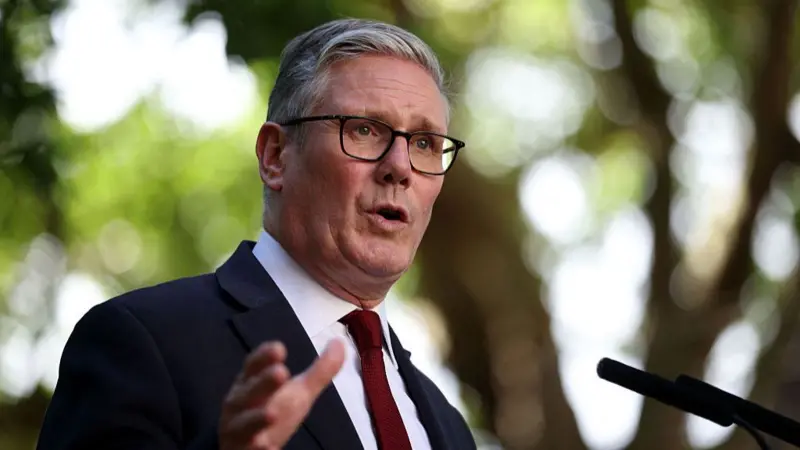
The atmosphere inside the Commons became increasingly emotional as MPs from both sides of the House paid tribute to the outgoing Prime Minister, recognising both his leadership and his contribution to British public life.
Labour MP Carolyn Harris fought back tears while asking what would become Starmer’s final question during Prime Minister’s Questions.
She praised his leadership and argued that his time in office had transformed opportunities for many across the country.
“Because of the Labour leader’s service and his leadership, children are growing up in a fairer Britain. We stand tall on the world stage, and every day we see his decency and his courage shine through.”
Carolyn Harris
Speaking on behalf of her family, Harris also thanked Starmer personally for his friendship.
“Can I thank him and his wonderful family on behalf of me and my family for their cherished friendship? And I am certain everyone will join me in wishing him and his family the very, very best for their next chapter.”
Carolyn Harris
The emotional exchanges extended beyond Labour benches. Commons Speaker Sir Lindsay Hoyle thanked Starmer for his years of public service and singled out his international leadership, particularly Britain’s steadfast backing for Ukraine during the ongoing conflict with Russia.
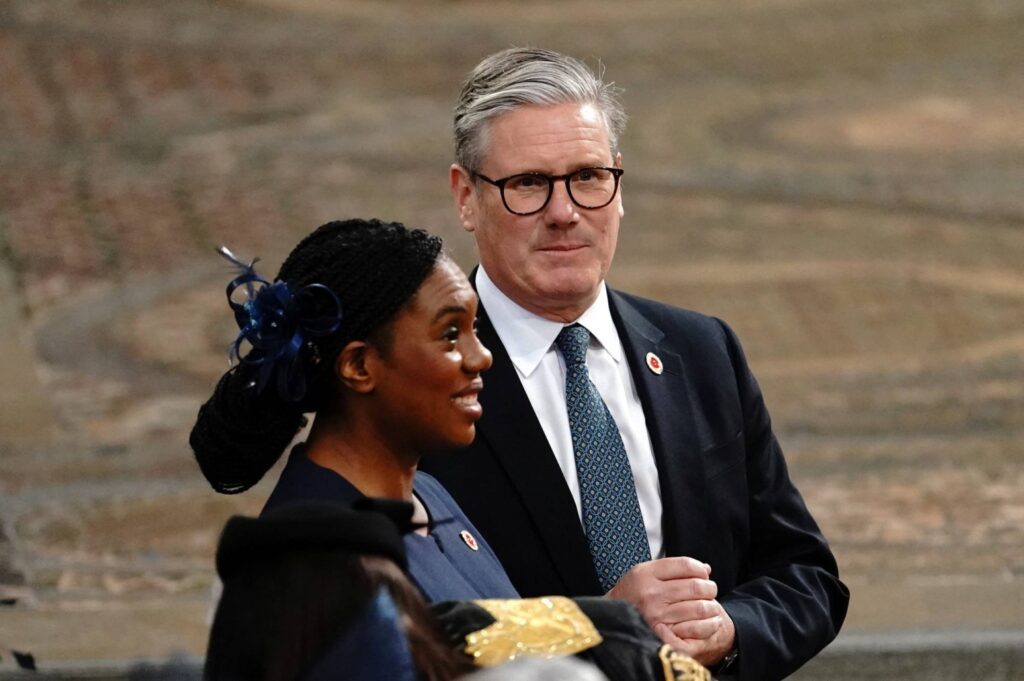
Meanwhile, Conservative leader Kemi Badenoch blended political challenge with personal respect, noting that, although Starmer did not always answer her questions directly, “at least he turned up.”
She urged Burnham to continue appearing regularly before Parliament rather than avoiding scrutiny during the summer recess.
Responding with humour, Starmer noted that he had participated in more than 60 Prime Minister’s Questions sessions during his premiership.
“As Prime Minister, I’ve participated in over 60 PMQs. Always a pleasure. Always something to look forward to. And I’ve answered, or at least given answers, 2,800 times, and I’m sure she will question my successor in the same way.”
Keir Starmer
When Badenoch later asked whether he had any advice for Burnham, Starmer avoided offering public guidance while reaffirming his commitment to supporting the incoming prime minister behind the scenes.
“I will give my wholehearted support to my successor. I want this Labour government to be a success. I want our country to be a success. I shall give my support privately if asked for, not publicly when not asked for.”
Keir Starmer
As applause echoed through the Commons and Ministers including Chancellor Rachel Reeves, who was visibly emotionalprepared for the impending transition, Starmer’s farewell appearance emphasised the moment’s personal and political significance.
His departure closes a chapter that reshaped Labour’s electoral fortunes and returned the party to government. With Andy Burnham expected to take over as Prime Minister in the coming days, attention will now turn to whether the incoming leader can build on Starmer’s legacy while navigating a demanding domestic agenda and an increasingly uncertain international landscape.
READ ALSO: Black Satellites Handed Tough WAFU B U-20 Championship Group Alongside Rivals Nigeria