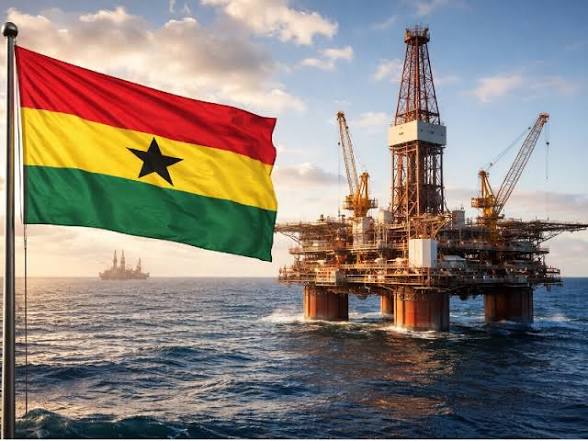
Tag: SGN field

  • Ghana’s Oil Recovery Faces an Investment Test as TEN Stalls

    Ghana’s Oil Recovery Faces an Investment Test as TEN Stalls

    Ghana’s crude oil production recovered in the first half of 2026, but limited development activity across its producing fields raises questions about whether the improvement can be sustained beyond the immediate performance of new wells at the Jubilee Field.

    The Public Interest and Accountability Committee (PIAC), in its 2026 Semi-Annual Report, recorded a 11.73% increase in crude oil production to approximately 20.58 million barrels between January and June 2026, up from 18.42 million barrels in the corresponding period of 2025.

    The recovery is significant for a sector that has faced declining production since its earlier peak. However, PIAC’s findings also show that the improvement was concentrated in Jubilee, where three new producer wells came onstream, while no drilling or completion activity was undertaken on the Tweneboa-Enyenra-Ntomme (TEN) and Sankofa Gye-Nyame (SGN) fields during the period.

    The contrast points to a wider challenge for Ghana’s upstream petroleum industry: production can improve through interventions at an existing field, but sustained national output depends on continued investment, well performance, maintenance and development across the wider portfolio.

    For policymakers, the question is whether the latest recovery represents a durable change in production performance or a temporary improvement that leaves the sector’s underlying investment requirements unresolved.

    Jubilee Drives the Recovery

    Jubilee produced approximately 12.82 million barrels in the first half of 2026, a 16.3% increase from the 11.02 million barrels recorded in the same period of 2025.

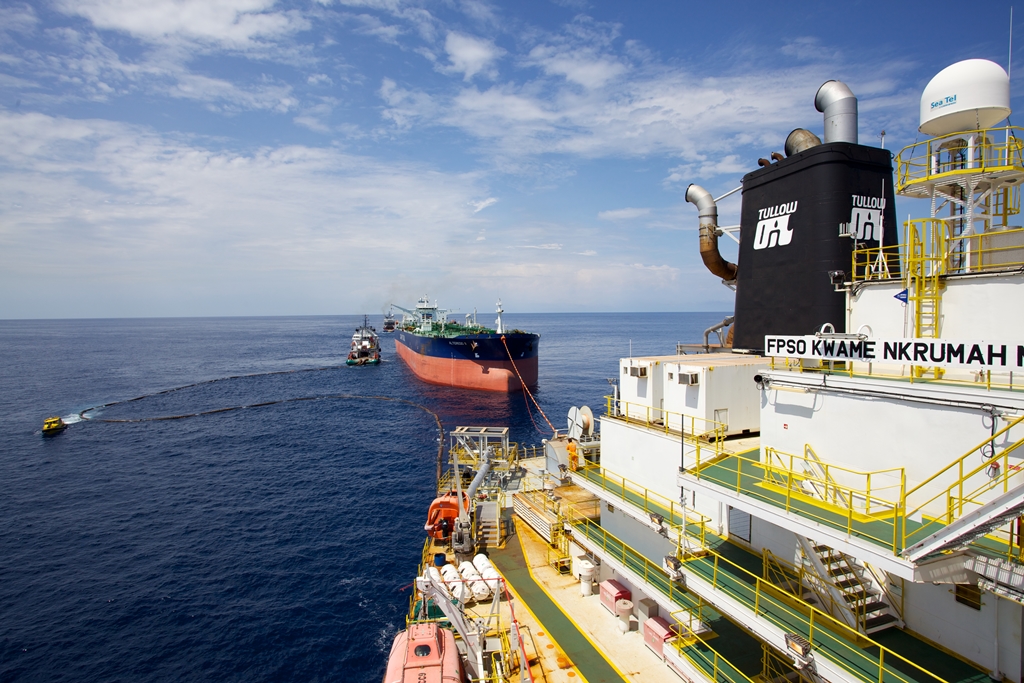
    PIAC attributed the improvement to new producer wells performing above expectations, production optimisation and 99% uptime for the Jubilee floating production, storage and offloading vessel (FPSO).
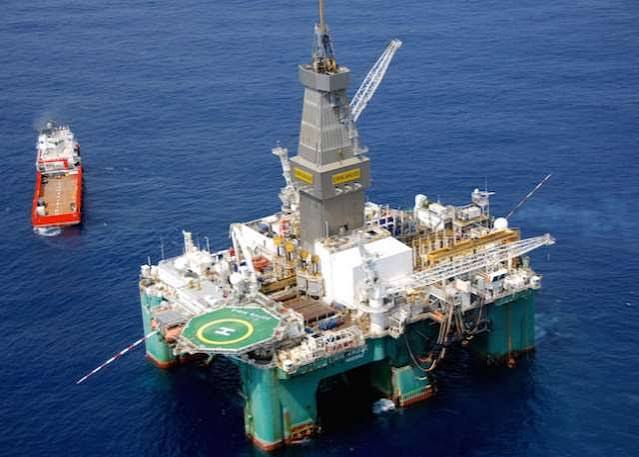
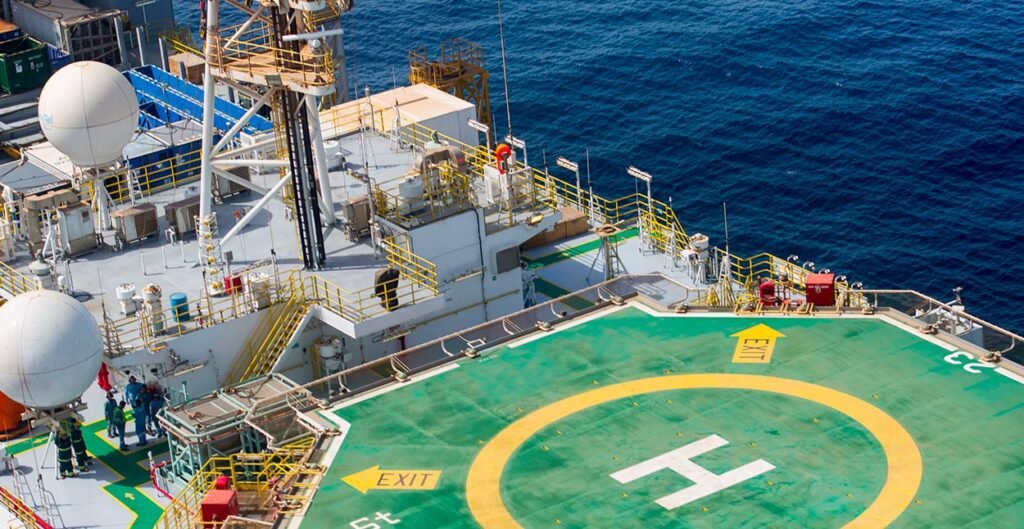
    Jubilee Oil Field

    The committee observed that three new wells—J74-P, J75-P and J76-P—were brought onstream during the period, increasing the field’s average daily production from 57,185 barrels to 85,136 barrels.

    “PIAC observes that three new producer wells (J74-P, J75-P and J76-P) were brought onstream on the Jubilee Field during H1 2026, raising the Field’s average daily oil production from 57,185 bbl/d to 85,136 bbl/d, while no drilling or completion activity was undertaken on the TEN and SGN Fields.”

    The figures demonstrate how investment in additional wells and operational optimisation can influence production within a relatively short period.

    They also highlight the importance of field-level performance: Jubilee’s recovery helped lift the national production total even as activity at the other two producing fields remained limited.

    However, the Jubilee result does not remove the need for a wider investment strategy. A field’s output can be affected by reservoir performance, well decline, equipment availability and the pace at which replacement production is brought online.

    The sustainability of the recovery will therefore depend on whether the gains from the new wells can be maintained and whether further investment is sufficient to offset natural declines elsewhere.

    TEN Raises Questions About Development Priorities

    TEN produced approximately 2.68 million barrels during the first half of 2026, while SGN contributed about 5.07 million barrels.

    PIAC’s observation that no drilling or completion activity occurred on either field during the period is significant because national production depends on more than the performance of Jubilee.

    The committee has specifically recommended that government, through the Petroleum Commission, stimulate investment in existing producing fields, particularly TEN. It has also called for stronger regulatory and fiscal frameworks and improved data acquisition in new basins.
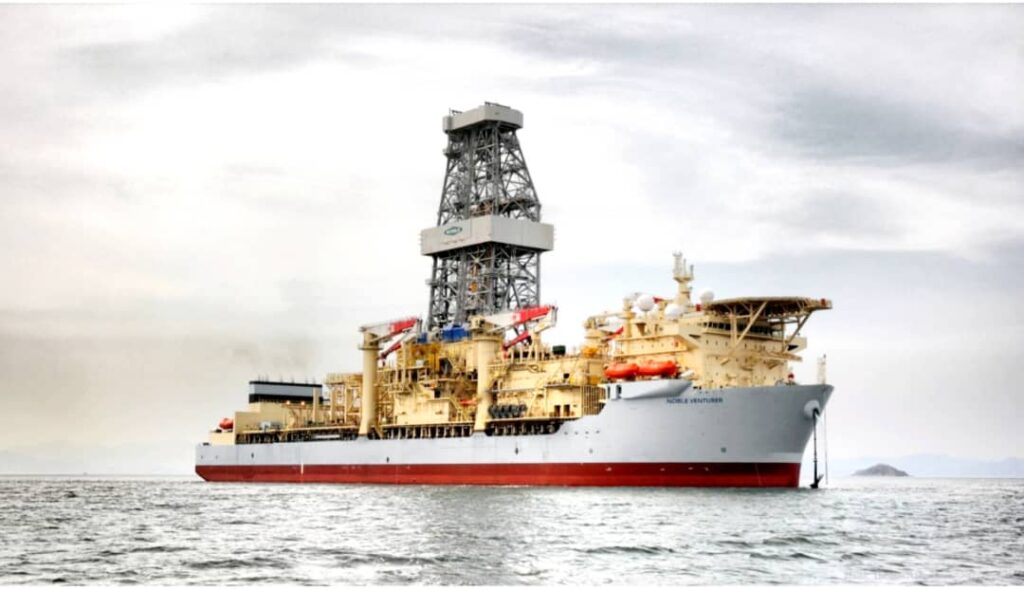
    Jubilee-TEN-Oil-Licences

    The recommendation reflects the need to address both immediate production opportunities and the longer-term challenge of replacing declining output.

    Investment in existing fields can include drilling additional wells, undertaking workovers, improving recovery and addressing technical constraints.

    The appropriate interventions depend on field conditions and commercial assessments, and cannot be determined from production totals alone.

    The absence of drilling or completion activity in a six-month period does not automatically mean that no other operational or investment work occurred.

    It does, however, make it important for operators and regulators to provide clear information on development plans, expected production contributions and the timing of future activity.

    For TEN, the key issue is whether a credible and adequately financed programme can improve field performance and support the wider production outlook.

    Revenue Gains May Conceal a Narrower Production Base

    The production recovery also needs to be separated from the stronger petroleum revenue figures recorded during the same period.

    Petroleum receipts increased by 52% to US$561.41 million, while crude production rose by 11.73%. PIAC identified higher achieved crude prices and a 37% increase in corporate income tax collections as major contributors to the revenue increase.
    Public Interest and Accountability Committee
    Public Interest and Accountability Committee

    The difference matters because higher prices can improve government receipts without requiring an equivalent increase in physical output. If prices weaken, the revenue benefit may diminish even if production remains stable.

    Ghana’s petroleum revenue outlook is therefore exposed to two related risks: declining or inconsistent production and volatility in international crude prices.

    A stronger production base would help the country reduce its dependence on favourable price conditions.

    It would also support more reliable planning for petroleum revenue allocations, state participation costs and investment in related infrastructure.

    The challenge is that upstream development requires substantial capital and long lead times. Exploration, appraisal, development drilling and infrastructure work must be planned well before the resulting production can be counted on to support government receipts.

    That makes the quality and timing of investment decisions particularly important. Delayed development activity today can limit the country’s production options in later years.

    Exploration Spending Remains Modest

    PIAC reported that GNPC spent approximately US$258,617 on exploration and development projects during the first half of 2026, compared with about US$40,162 in the same period of 2025.

    Although that represents a substantial percentage increase, the absolute amount remains modest relative to the scale of Ghana’s longer-term ambition to replenish its upstream resource base.
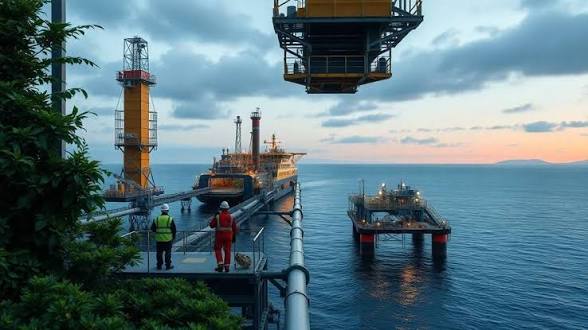
    Exploration

    Of the expenditure, approximately US$250,000 was associated with the Maritime Boundary Special Project, while only about US$9,373 was spent on the Voltaian Basin.

    The figures should be interpreted carefully. Spending recorded during a six-month period may not capture all work undertaken under other budget lines, and exploration programmes can involve different phases of expenditure.

    Nevertheless, the numbers underline the importance of transparent, updated information on exploration activity and the status of prospective resources.

    PIAC stated that it did not receive updated information on several exploration and development activities, including the Voltaian Basin Project, Deepwater Tano/Cape Three Points and the Saltpond Field.

    Such information gaps constrain independent assessment of the progress being made to develop future production opportunities.

    Without updated project information, it is difficult to determine whether exploration is advancing, what technical milestones have been achieved or when potential resources could contribute to national output.

    For Ghana, the objective should be to turn exploration plans into a credible sequence of technical work, investment decisions and development milestones—not simply to announce new prospects.

    A Production Strategy Must Look Beyond One Field

    Ghana’s first-half production improvement is encouraging, particularly because Jubilee’s new wells and operational performance delivered measurable gains. But the report shows that the wider upstream sector still faces an investment challenge.

    A durable recovery will require continued attention to existing producing fields, credible development plans for TEN and SGN, stronger regulatory and fiscal arrangements, and better information on exploration activity.
    Petroleum Commission Ghana
    Petroleum Commission Ghana

    It will also require a realistic assessment of the commercial conditions needed to attract capital. Investors must be able to evaluate the fiscal framework, the regulatory environment, the technical prospects of individual fields and the likely returns from development.

    The government and Petroleum Commission must, in turn, ensure that investment commitments translate into measurable work programmes and production outcomes.

    PIAC’s findings provide a clear basis for that scrutiny. The increase in output is a positive development, but the longer-term test is whether Ghana can maintain production through sustained investment rather than rely on isolated gains at a single field.

    Without a broader and more transparent development pipeline, the current recovery may improve near-term revenue while leaving the country exposed to further production declines in the years ahead.

  • GNPC Reports Higher Oil Profits Despite Lower Liftings in 2024 

    GNPC Reports Higher Oil Profits Despite Lower Liftings in 2024 

    The Ghana National Petroleum Corporation (GNPC) achieved a significant rise in profits in 2024 despite a slight decline in crude oil liftings, according to the Corporation’s latest Annual Report. 

    The performance, driven by efficient commercial strategies and prudent risk management, reflects the resilience of Ghana’s national oil company amid global market uncertainties and the ongoing energy transition. 

    According to the report, GNPC recorded an average crude price of US$81.15 per barrel, a 7.57 percent premium above the dated Brent benchmark, and 1.82 percent higher than in 2023.  

    “Despite the reduction in liftings from 10 parcels in 2023 to 9 in 2024, the Corporation ended the year with a significant increase in profit. 

    “This outcome underscores the Corporation’s prudent commercial strategy, disciplined execution, and resilience in a complex market environment.” 

    GNPC’s 2024 Annual Report

    The Corporation attributed the strong financial results to its enhanced operational efficiency, improved trading strategies, and consistent delivery on production and marketing targets.  

    The stable global oil price environment also provided room for better planning and performance, with GNPC successfully navigating logistical and regulatory challenges that affected many producers worldwide. 

    Sustaining Performance Amid Global Transition 

    The report also highlighted GNPC’s increasing focus on sustainability and diversification, in line with the global shift toward cleaner energy.  

    “The global shift toward sustainability reinforced the importance of strategic diversification, operational agility, and climate-conscious practices.” 

    GNPC’s 2024 Annual Report

    In this regard, GNPC advanced initiatives to reduce its carbon footprint, promote environmental stewardship, and strengthen community resilience through targeted Corporate Social Investment (CSI) programs.  

    These interventions, the Corporation said, reflect its commitment to aligning operations with Ghana’s broader energy transition agenda and the Paris Climate Agreement targets. 

    “As the Corporation deepened its subsidiarization strategy, it expanded its operational scope and technical capacity to remain relevant and competitive in a world transitioning toward cleaner energy. 

    “GNPC remains committed to responsible resource development, national energy security, and the creation of long-term value for Ghana.” 

    GNPC’s 2024 Annual Report

    Production Trends: Jubilee Still Dominates 

    In terms of production, Ghana’s three producing oil fields, Jubilee, TEN, and Sankofa Gye Nyame (SGN) collectively produced 48.24 million barrels of crude oil in 2024, a marginal 0.01 percent decline from 48.25 million barrels in 2023. 

    The Jubilee Field maintained its position as the country’s top producer, contributing 31.85 million barrels, representing 66 percent of total national output.  

    The Tweneboa-Enyenra-Ntomme (TEN) Field produced 6.78 million barrels (14%), while SGN delivered 9.61 million barrels (20%). 

    GNPC’s equity share of crude oil production for 2024 stood at 7.28 million barrels, slightly lower than the 7.38 million barrels recorded in 2023, marking a 1.3 percent decline.  

    Of this, Jubilee contributed 4.34 million barrels (60%), TEN contributed 1.02 million barrels (14%), and SGN contributed 1.92 million barrels (26%). 

    The decline, GNPC explained, was mainly due to natural field decline. However, the Corporation implemented reservoir management strategies to slow production drops and enhance recovery rates.  

    The report stated, “The Corporation achieved approximately 94% of its benchmarked volume of 51.15 million barrels across the three fields,” citing “decreased output from the Jubilee and TEN fields” as the main reason for falling short of the production target. 

    Despite these challenges, operations across the fields remained stable, with production performance aligning with forecasts. GNPC noted that “ongoing efficiency measures continued to mitigate production declines across the assets,” ensuring consistent revenue flows for the state. 

    Crude Liftings: Strong Output from Jubilee and SGN 

    The report provided detailed insights into GNPC’s crude oil liftings across the three major fields in 2024. 

    At the Greater Jubilee Field, a total of 33 parcels of crude oil, equivalent to 31.46 million barrels, were lifted slightly up from 32 liftings totaling 30.40 million barrels in 2023. Out of these, the Ghana Group (GNPC and the Government of Ghana) lifted six parcels, totaling 5.72 million barrels. 

    From the TEN Field, seven parcels, equivalent to 6.61 million barrels, were lifted during the period. The Ghana Group’s share accounted for one parcel totaling 994,698 barrels. This was lower than the 2023 figure of two parcels (1.99 million barrels). 

    In the Sankofa Gye Nyame (SGN) Field, ten parcels totaling 9.43 million barrels were lifted in 2024. Of this, GNPC lifted two parcels totaling 1.83 million barrels — comprising 905,434 barrels from its Carried and Participating Interest (CAPI) and 929,365 barrels as Royalty. 

    This represented a marginal decrease compared to 2023, when eleven parcels (10.58 million barrels) were lifted, including two GNPC parcels (1.95 million barrels) and a royalty cargo of 948,881 barrels. 

    The Corporation’s strong 2024 performance, achieved amid modest output, underscores its growing commercial maturity and its balancing act between profitability and sustainability. 

    Looking ahead, GNPC has pledged to sustain investments in production optimization, deepen its presence in the gas value chain, and continue building technical capacity to prepare for a diversified, lower-carbon energy future. 

  • Ghana’s Oil Production Drops by 26% in First Half of 2025 

    Ghana’s Oil Production Drops by 26% in First Half of 2025 

    Ghana’s crude oil production has taken a sharp downturn, falling by 25.92 percent year-on-year in the first half of 2025, according to the Public Interest and Accountability Committee (PIAC). 

    The decline, is seen as one of the steepest in recent years, raises fresh concerns about the sustainability of petroleum revenue and the broader implications for the economy. 

    In its 2025 Semi-Annual Report on the management and use of petroleum revenues, PIAC revealed that “total output from Ghana’s three producing offshore fields, Jubilee, TEN, and Sankofa-Gye Nyame (SGN) dropped to 18.42 million barrels (bbls) in the first half of 2025,” compared to 24.86 million barrels during the same period in 2024. 

    The Committee attributed the decline mainly to operational shutdowns, natural reservoir decline, and maintenance activities across all three fields.  

    It warned that unless these structural challenges are addressed, Ghana’s petroleum revenue inflows could face continued volatility. 

    Jubilee Field Suffers Major Setback 

    The Jubilee Field, operated by Tullow Oil, remained Ghana’s leading crude producer but also recorded the steepest output decline.  

    Production fell by 32.8 percent, from 16.41 million barrels in the first half of 2024 to 11.02 million barrels during the same period in 2025. 

    PIAC’s data showed that average daily production at Jubilee dropped from 90,755 barrels per day (bbl/d) last year to 60,898 bbl/d this year.  

    The Committee attributed the fall largely to a planned maintenance shutdown between March 26 and 31, followed by extended operational works in early April. 

    “The decline in output was influenced by planned maintenance activities and reservoir management challenges.”  

    PIAC’s 2025 Semi-Annual Report

    The field’s highest monthly production of 2.40 million barrels was recorded in January, while April registered the lowest output at 1.27 million barrels, following the temporary shutdown. 

    Industry experts have long cautioned that the Jubilee Field, Ghana’s oldest producing asset, is entering a natural decline phase, making sustained investment in well optimization and new drilling crucial to maintaining output. 

    TEN Field Output Declines 14% 

    Production from the Tweneboa-Enyenra-Ntomme (TEN) Field, also operated by Tullow, decreased by “14 percent year-on-year, falling from 3.45 million barrels in the first half of 2024 to 2.97 million barrels in 2025.” Daily production averaged 16,420 bbl/d, down from 19,065 bbl/d last year. 

    According to PIAC, the shortfall was caused by a mini-shutdown for flare tip replacement and persistent reservoir management challenges.  

    The report noted that while the maintenance shutdown was brief, reservoir performance has remained an ongoing concern for the TEN partners. 

    The field’s highest monthly output came in March, with 0.51 million barrels, while the lowest was recorded in May, with 0.45 million barrels. 

    The Sankofa-Gye Nyame (SGN) Field, operated by Eni Ghana, recorded the smallest decline among the three producing fields. Output fell by 11.6 percent, from 5.00 million barrels in the first half of 2024 to 4.42 million barrels in 2025. 

    Average daily production declined from 27,600 bbl/d to 24,463 bbl/d. PIAC attributed the drop to intermittent operational disruptions and reservoir management constraints, though it noted that the SGN field had shown greater stability compared to Jubilee and TEN. 

    The Committee stated, “The SGN field continues to exhibit relative operational resilience,” highlighting its importance to Ghana’s overall production mix.  

    The field also supplies associated gas for power generation, making it critical to both petroleum revenues and the country’s energy security. 

    Warning Signs for Revenue and Energy Security 

    The Committee cautioned that the consistent decline in crude production, if not urgently addressed, could threaten petroleum revenue stability, budgetary planning, and energy sector financing.  

    Petroleum receipts remain a vital component of Ghana’s fiscal framework, funding key programs under the Annual Budget Funding Amount (ABFA). 

    “Addressing operational inefficiencies and investing in reservoir maintenance are critical to sustaining Ghana’s oil production levels.

    “Persistent declines will have adverse implications for petroleum revenue inflows and energy sector stability.” 

    PIAC’s 2025 Semi-Annual Report

    The fall in production comes at a time when Ghana’s economy faces tight fiscal conditions and high external debt servicing costs.  

    Any shortfall in oil revenues could widen the fiscal gap, especially as the government pursues ambitious infrastructure and energy investment programs. 

    PIAC also recommended that the government strengthen oversight of field operations and ensure that production-sharing partners adhere to agreed maintenance and optimization schedules. 

    As global oil prices remain relatively stable around $65 per barrel, Ghana’s challenge is not pricing but production.  

    For now, the Committee’s report serves as a clear reminder that without reinvestment, policy clarity, and operational discipline, the country risks losing its momentum in the petroleum sector. 

  • Ghana’s Petroleum Wealth Funds Reach $1.42 Billion in Mid-2025 

    Ghana’s Petroleum Wealth Funds Reach $1.42 Billion in Mid-2025 

    Ghana’s sovereign petroleum wealth funds, the Ghana Stabilisation Fund (GSF) and the Ghana Heritage Fund (GHF), ended the first half of 2025 with a combined value of $1.42 billion, according to the latest semi-annual report published by the Bank of Ghana.  

    The figures reflect the country’s continued effort to manage its oil revenues with fiscal prudence and intergenerational equity in mind, as required by the Petroleum Revenue Management Act (PRMA). 

    The report, covering the first six months of the year, revealed that total inflows into the two funds reached $63.5 million.  

    These receipts stemmed from three crude oil liftings executed during the period, two from the Jubilee Field and one from the Sankofa Gye Nyame (SGN) Field.  

    From these allocations, the Ghana Stabilisation Fund received $44.5 million while the Ghana Heritage Fund was allocated $19.1 million. 

    However, the two funds have experienced divergent trajectories. The Stabilisation Fund, which is used to cushion shortfalls in national oil revenue during economic downturns, saw its balance fall from $196.92 million at the beginning of the year to $122.91 million by the end of June.  

    This drop signals active utilisation of the fund, possibly in response to shortfalls or pre-approved budgetary pressures. 

    On the other hand, the Heritage Fund, a long-term investment vehicle intended to serve future generations, has seen steady growth with no recorded withdrawals.  

    Its balance rose from $1.26 billion at the start of 2025 to $1.30 billion by mid-year, a reflection of both its accumulation from recent inflows and positive investment performance. 

    The source of these revenues, Ghana’s crude oil export sales, generated gross receipts of approximately $218.6 million in the first half. The government lifted oil under the 81st and 82nd cargoes from the Jubilee Field, as well as the 17th cargo from the SGN Field.  

    These barrels were sold to a mix of long-standing off-takers, including Tullow Ghana, Kosmos Energy, ENI Ghana, and Vitol. 

    Petroleum Revenues Boost Ghana 

    Additional income was realised from statutory sources such as corporate income tax, surface rentals, and interest earnings. 

    According to the Bank of Ghana, these revenues, “totaling over $71 million—came primarily from petroleum contractors including Tullow, Kosmos, ENI Ghana, and PetroSA.” 

    The Petroleum Holding Fund (PHF), the central account for all petroleum revenue inflows, also earned approximately $1.3 million in interest during the review period. 

    The publication of this data aligns with Section 28 of the Petroleum Revenue Management Act, which mandates biannual reporting on the performance and utilisation of petroleum revenues. 

    Transparency and public accountability remain central to the legislative framework governing oil income in Ghana.  

    Fiscal analysts have often pointed to this legal architecture as a key reason Ghana’s oil wealth has avoided the pitfalls of mismanagement seen in other resource-rich nations. 

    Looking ahead to the second half of 2025, projections suggest additional inflows to the Ghana Petroleum Funds. These will come from oil liftings executed in the first half of the year, but for which revenues were received later and are scheduled for disbursement in the months ahead.  

    Given the timing of some receipts and global oil price dynamics, there may be moderate upward movement in the fund balances by the end of the year, barring any major fiscal drawdowns. 

    Industry observers note that while the Heritage Fund’s growth is encouraging, the declining balance of the Stabilisation Fund could reignite conversations around prudent spending, especially in an election cycle.  

    As Ghana continues to rely on oil revenues to support its development agenda, the performance of the Petroleum Funds will remain a barometer of fiscal responsibility and long-term planning. 

    For now, the semi-annual report reinforces the critical role that transparency and adherence to legal frameworks play in protecting Ghana’s natural resource wealth. 

  • Ghana to produce a total of 57.3 million barrels of oil in 2021

    Ghana to produce a total of 57.3 million barrels of oil in 2021

    Ghana is set to produce a total of 57.3 million barrels of oil from the three producing fields in 2021. This translates into a daily average of 156,986 barrels of oil. The three oil-producing fields comprise Jubilee, TEN, and SGN fields.  Compared to the total oil produced from the three fields last year, the projections for 2021 are 14.4 percent lower.

    Recent data from the finance ministry show that Ghana produced a total of 66.93 million barrels of oil from January to December 2020.  This translated into an average daily oil production of 182,860.13 barrels. The country obtained its oil from the three producing fields.

    Also, the government has set a target to produce 93.07 billion standard cubic feet of export gas in 2021. This also means a daily average of 254,986.30 million standard cubic feet of gas.

    However, the total target for gas production in 2021 is higher than the total amount produced last year.  In 2020, total gas production was 88,530.61 million standard cubic feet (MMscf). This, according to the Ministry of Finance, translated into an average daily gas export of 241.89 MMscf.  The Finance Ministry noted in the 2021 Budget Statement that the gas was delivered for power generation and non-power gas users.

    Jubilee oil Field

    Meanwhile, the Ministry of Finance has pledged to continue the negotiation of Petroleum Agreements and monitor activities on the fields.

    Oil revenue targets for 2021

    The Government of Ghana is hoping to realize about US$886 million as petroleum revenue for 2021. This is made up of Royalties of US$201.0 million and Carried and Participating Interest of US$524.9 million. Other sources include Corporate Income Tax of US$158.5 million and Surface Rentals of US$1.30 million.

    The government has proposed to allocate US$283.00 million to Ghana National Petroleum Corporation (GNPC) in 2021.  This amount is to be used for its Equity Financing Cost of US$179.33 million. Also, the share of the net Carried and Participating Interest will receive US$103.67 million. This is per the Petroleum Revenue Management Act (PRMA).

    Other allocations include the Ghana Petroleum Fund which is set to receive US$180.81 million of the Benchmark revenue. Out of this amount, the government will spend US$126.57 million on the Ghana Stabilisation Fund and US$54.24 million on the Ghana Heritage Fund.

    Development of a Petroleum Hub

    The government is still committed to making Ghana a Petroleum Hub. The finance ministry stated in the 2021 budget that it will ensure the setup and operationalization of the Petroleum Hub Development Corporation. This seeks to capitalize on the Petroleum Hub Corporation Bill passed by Parliament into law on 23rd October 2020.  In 2021, the government plans to continue reparatory activities towards the development of the Hub. Such activities include the conduct of a strategic environmental assessment, spatial planning, and land acquisition.

    Crude Oil Export receipts

    Recent data from the Bank of Ghana show that oil export receipts are still below the pre-COVID level.  However, the recent uptick in the price of crude oil in the world market has started reflecting in the county’s export of the commodity. 

    Surprisingly, oil export receipts declined from US$2,910.6 million in December 2020 to as low as US$268.0 million in January 2021.  But the good news is that oil export has begun to pick up considerably.  The Bank of Ghana revealed that oil export has risen to 505.9 million in February 2021. 

    The fall in oil price due to the disruptions in supply chains and low demand affected oil revenues in 2020.  Data from the central bank show that crude oil exports declined sharply by 35.2 percent in 2020. 

    READ ALSO: Government overturns decision to cap Parliamentary budget allocation