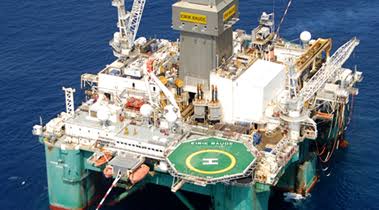
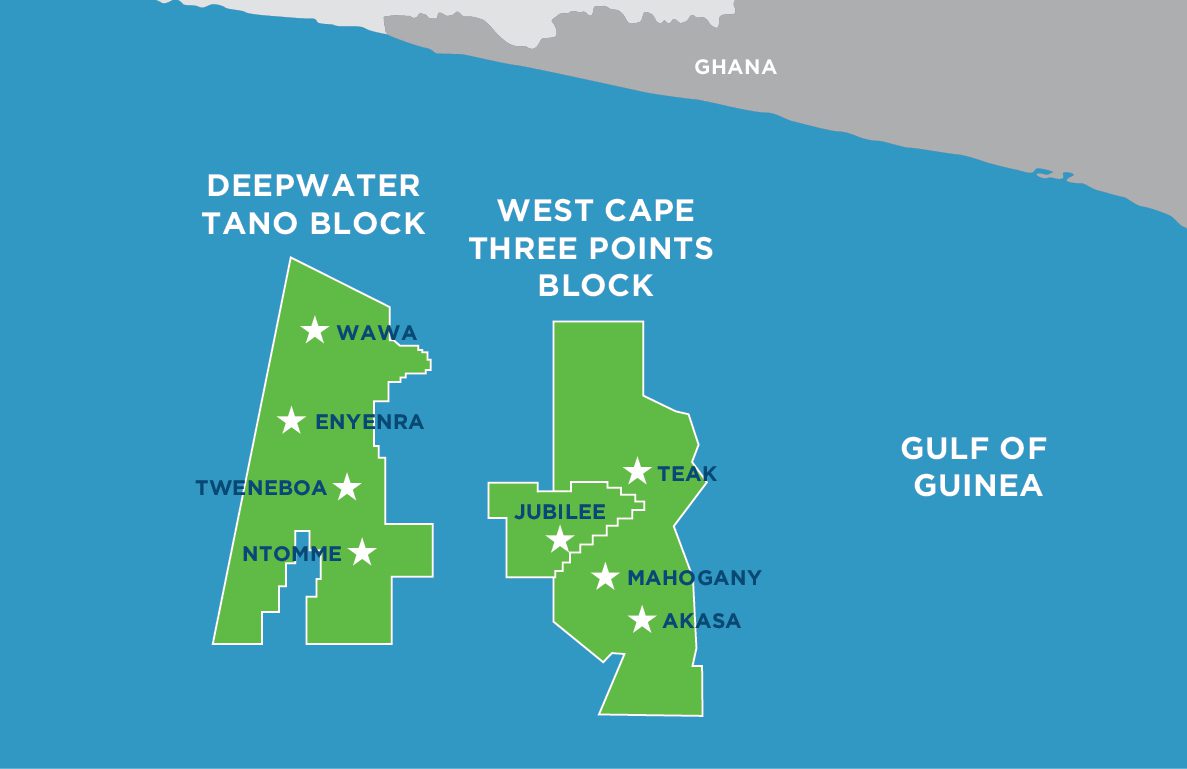
Ghana’s flagship Jubilee oil field is showing renewed production momentum after two new wells delivered stronger-than-expected results, a development that could support crude exports, petroleum revenues and government income as the country continues efforts to strengthen its energy sector.
The latest operational update from Jubilee’s operator, Kosmos Energy, indicates that production at the offshore field is expected to approach 90,000 barrels of oil per day in the coming weeks following the completion of another producer well, with additional drilling activities scheduled before the end of the third quarter.
Fresh drilling campaign gathers pace
The strongest performance so far has come from the J76 production well, which entered service in mid-June.
According to Kosmos Energy, the well is contributing approximately 20,000 barrels of oil per day to gross Jubilee production after benefiting from improved seismic imaging and enhanced reservoir modelling.
Initial results from the 2026 Ghana drilling program, in particular J76, highlight the potential of Jubilee with high-impact wells, supported by both modern seismic and enhanced reservoir modelling.
Andrew G. Inglis, Chairman and Chief Executive Officer of Kosmos Energy.
The company said Jubilee produced an average of about 72,000 barrels of oil per day during the second quarter of 2026, with production exiting the quarter above 85,000 barrels per day.
A second producer well, J77, has already been completed and is expected to begin producing shortly.
Once operational, Kosmos expects gross Jubilee production to rise to approximately 90,000 barrels per day, representing one of the field’s strongest production performances in recent years.
The final producer well under this year’s drilling campaign, J50, is expected to come onstream around the end of July.
What higher production means for Ghana
For Ghana, rising production extends beyond the performance of a single oil field.
Higher crude output can translate into increased export volumes, stronger foreign exchange earnings and potentially higher petroleum revenues flowing into the Petroleum Holding Fund, from which statutory transfers are made to the Annual Budget Funding Amount (ABFA), the Ghana Petroleum Funds and other designated allocations under the Petroleum Revenue Management Act.
While actual government revenue will ultimately depend on international oil prices, production costs, lifting schedules and fiscal terms, stronger production generally improves the country’s capacity to generate income from its upstream petroleum resources.
The development also comes at a time when government is seeking to revitalise activity across the petroleum value chain.
Recent months have seen renewed efforts to increase upstream investment, strengthen domestic refining capacity through Tema Oil Refinery, improve energy infrastructure and position the sector as a driver of industrial growth.
Against that backdrop, sustained performance at Jubilee could reinforce confidence in Ghana’s upstream industry and support broader efforts to attract additional investment.
Preparing for future production
The current drilling programme is also looking beyond immediate production gains.
After the remaining producer well comes online, the campaign will conclude with the drilling of a water injection well expected to enter service around the end of the third quarter.

Water injection plays a critical role in maintaining reservoir pressure and improving long-term oil recovery by helping push crude towards production wells.
Kosmos said the injector will prepare Jubilee’s northeastern section for the next phase of drilling planned for 2027 and 2028, suggesting operators continue to see long-term production potential at the field.
Operational strength supports financial recovery
Beyond production, Kosmos reported continued progress in strengthening its financial position.
The company said net debt declined to approximately US$2.56 billion at the end of the second quarter, representing a reduction of more than US$400 million compared with the end of 2025.

Liquidity remained above US$500 million, while discussions are expected to begin with lenders on extending the maturity of its reserve-based lending facility.
Although these are company-level developments, financially stronger operators are generally better positioned to sustain capital investment programmes, including future drilling and field development activities.
A reminder of Jubilee’s continuing importance
Nearly two decades after its discovery transformed Ghana into an oil-producing nation, Jubilee remains one of the country’s most important strategic assets.
Its performance continues to influence export earnings, investor confidence and petroleum revenues that support national development spending.
The latest drilling results suggest operators are still unlocking additional value from the field through improved technology and reservoir management rather than relying solely on new discoveries.

Whether the stronger production outlook ultimately translates into higher national revenue will depend on global oil prices and continued operational performance.
For now, however, the latest drilling campaign provides another indication that Ghana’s largest producing oil field remains central to the country’s upstream petroleum industry and wider economic outlook.
READ ALSO: Government of Ghana Settles $700m Eurobond Debt Ahead of Schedule