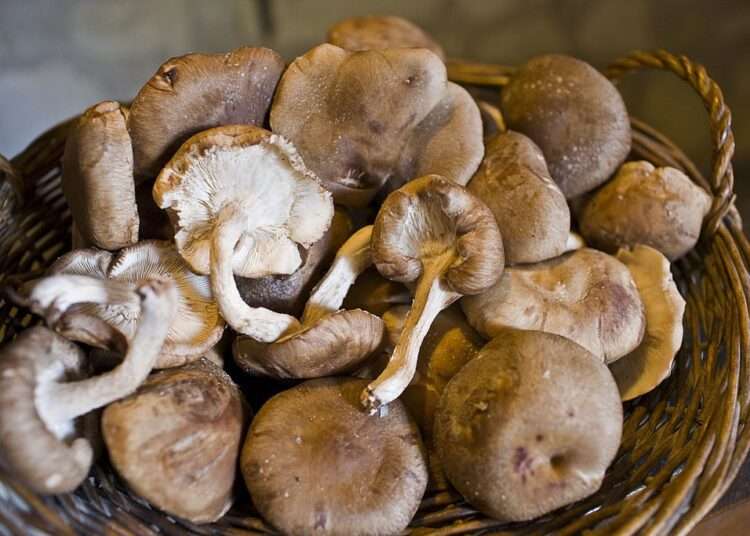
Mr. Maganoba Charles, the Chief Executive Officer of Maganoba Farms, a mushroom production company in the Northern region, has urged Ghanaians to consume a lot of mushrooms.
Mr. Maganoba disclosed that mushrooms contain a super-high concentration of two antioxidants: glutathione, which plays a vital role in the body, and phosphorus, which are not found in plant-derived foods.
“Mushrooms have a lot of benefits. It contains potassium which helps in boosting memory. Mushrooms help recipes taste better in place of salt because they contain glutamate and nucleotides. Mushrooms can replace red meat in any dish to reduce the food’s calories, fat, and cholesterol. Eating mushrooms regularly will increase vitamin D requirements and make one’s bones very strong. Mushrooms also aid the body with energy from the food consumed and produce red blood cells, which carry oxygen throughout the body.”
Mr. Maganoba Charles
Mushroom consumption will create employment for youth
He recommended that as the public consumes a lot of mushrooms, many youth will venture into mushroom farming, creating employment for themselves while improving consumers’ health.
Growing mushrooms commercially would allow Ghanaians to taste or see more mushrooms.
Mr. Maganoba said the mushroom market in Ghana is picking up gradually. He further noted that with the increase in lifestyle-related diseases, people are becoming conscious of their eating habits and mushrooms play a critical role in putting good food into our bodies, he explained.
People are beginning to be aware that mushrooms are not just something to enjoy occasionally, he noted.
Other mushroom projects in Ghana
There are a couple of mushroom farms in Ghana. For instance, the Benyglad Mushroom Farm is one of the fastest-growing mushroom farms in Madina Estates in the Greater Accra region of Ghana under the Sustainable Livelihoods and Transparent Local Authorities (SLATLA) Project.

Funded by the European Union, the SLATLA project aims at increasing the growth of Ghana’s informal economy by providing training in mushroom production, among others, to people between the ages of 18 – 35 years, to increase youth employment, entrepreneurship, and development at the local level.
Mr. Manogaba encouraged the youth interested in mushroom production to look out for projects such as the SLATLA project and learn the skill from them.
Mushroom production doesn’t require a large acreage of land because it grows well in a soilless medium.
Some agri-experts believe that the issue the youth face, when they want to go into agriculture is that it’s difficult to find land in urban areas where most of the population lives.
“With mushroom production, you can grow in bags, so you don’t need land; all you need is a humid environment in which your mushrooms can germinate,” the agri-expert revealed.
READ ALSO: Nuclear Energy Growth in Developing Countries to hit 90% by 2050