• About
  • Advertise
  • Privacy Policy
  • Contact
Monday, May 18, 2026
  • Login
The Vaultz News
  • Top Stories
  • News
    • General News
    • Education
    • Health
    • Opinions
  • Economics
    • Economy
    • Finance
      • Banking
      • Insurance
      • Pension
    • Securities/Markets
  • Business
    • Agribusiness
    • Vaultz Business
    • Extractives/Energy
    • Real Estate
  • World
    • Africa
    • America
    • Europe
    • UK
    • USA
    • Asia
    • Around the Globe
  • Innovation
    • Technology
    • Wheels
  • Entertainment
  • 20MOBPL2DNew
  • Jobs & Scholarships
    • Job Vacancies
    • Scholarships
No Result
View All Result
The Vaultz News
  • Top Stories
  • News
    • General News
    • Education
    • Health
    • Opinions
  • Economics
    • Economy
    • Finance
      • Banking
      • Insurance
      • Pension
    • Securities/Markets
  • Business
    • Agribusiness
    • Vaultz Business
    • Extractives/Energy
    • Real Estate
  • World
    • Africa
    • America
    • Europe
    • UK
    • USA
    • Asia
    • Around the Globe
  • Innovation
    • Technology
    • Wheels
  • Entertainment
  • 20MOBPL2DNew
  • Jobs & Scholarships
    • Job Vacancies
    • Scholarships
No Result
View All Result
The Vaultz News
No Result
View All Result
in Banking

Beige Bank CEO Trial: State Prosecutor to Call 7 Witnesses

M.Cby M.C
December 23, 2022
Reading Time: 4 mins read
Beige Bank Case: State Witness Accused of Intentionally Leaving Out Documents to Mislead Court

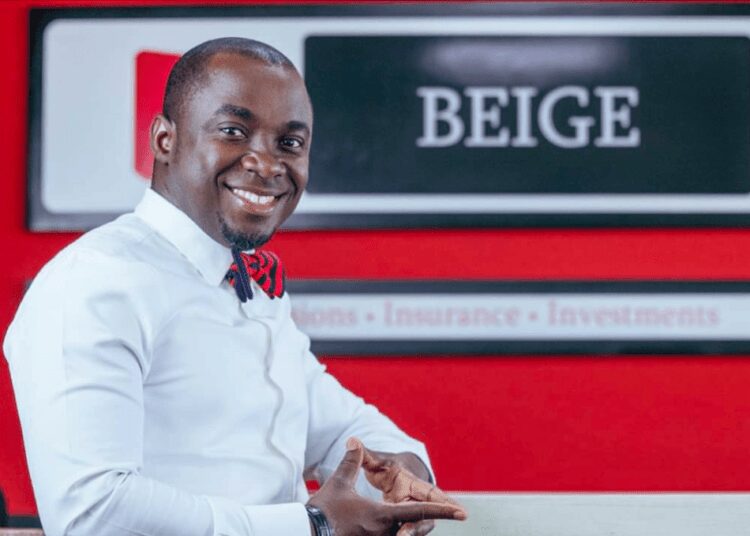
Michael Nyinaku, the former Chief Executive Officer (CEO) of the Beige Bank Limited

Mrs Evelyn Keelson, a Chief State Attorney, has disclosed the state would parade seven witnesses in court to testify in the case against the former Chief Executive Officer (CEO) of the Beige Bank Limited, Michael Nyinaku, who has been accused of theft.

In court, Mrs. Evelyn Keelson, a Chief State Attorney told the court presided over by Justice Afia Serwah Asare-Botwe, now a Justice of the Court of Appeal, that they have filed all their necessary disclosures and would be calling seven witnesses in the matter.

The court has since directed the defence lawyers to make frantic efforts and read all the documents filed by the prosecution to enable them to know how much time they would need to cross-examine the witnesses.

Mr. Nyinaku, whose initial GH¢200 million bail conditions have been varied by the Court of Appeal has pleaded not guilty to the alleged GHc1.2 billion theft. The accused person was charged with stealing, fraudulent breach of trust, and money laundering, which he denied in Court.

ADVERTISEMENT

The accused has since been granted bail to the sum of GHc200 million with three sureties with two of the sureties the court said should be justified with landed property equivalent to the bail bond and the assets should be valued by the Architectural and Engineering Services Limited (AESL) or Land Valuation Division of the Lands Commission.

Brief Facts of the Case

Per the brief facts of the case narrated by Alfred Tuah-Yeboah, Deputy Attorney General, Mr Nyinaku, was the former Chief Executive Officer of the Beige Bank, and on August 1, 2018, the Bank of Ghana (BoG) revoked the banking license of Beige Bank and placed it under receivership.

Mr. Tuah-Yeboah noted that a review of the financial and other records of the Bank conducted by the receiver and his team showed several suspicious and unusual transactions, which were subsequently reported to law enforcement agencies for investigation.

The AG added that investigations conducted revealed that between 2015 and 2018, the accused person as CEO of the Bank had allegedly used various means to transfer huge sums of monies to companies related to him and for his personal benefits.

The Deputy Attorney General, meanwhile, alleged that the funds transferred were depositors’ funds lodged with the Beige Bank and that between 2017 and 2018, Nyinaku had caused the transfer of 10,071.00 fixed deposit account held with Beige Bank in which various customers placed a total of GHC448,636,210.21 to Beige Capital Asset Management Limited, (BCAM), without the knowledge and consent of the customers.

The Attorney General explained that BCAM was a limited liability company wholly owned by the Beige Group Limited (Beige Group), an entity which in turn was wholly owned by the accused person, adding that the accused person between 2017 and 2018 caused the transfer of 35 fixed deposit investments of 23 customers of Beige Bank valued GHC141,042,348.92 to the Beige Group, a Company wholly owned by the accused person and its majority shareholders of Beige Bank.

The prosecutor averred that further investigations revealed that in March 2018, the accused person had caused a “fictitious” second account to be opened in the name of First African Savings and Loans (FASL), an existing account holder with Beige Bank, without the knowledge of the board and management of FASL. The Deputy AG said the accused person then caused the transfer of the sum of GHC320 million from the accounts of various Beige Bank customers into the bank accounts of BCAM held with Beige Bank.

The GHC320 million was subsequently transferred from the BCAM account held with the Beige Bank into the “fictitious” FASL account that had been opened in Beige Bank’s books on the instructions of the accused person allegedly, said the prosecution. The Deputy AG added that between March 2018 and August 2018, GHC 21,123,270.96 out of the GHC320 million was transferred from the “fictitious” FASL bank account to some two individuals and ten companies, nine of which were related to Nyinaku, on his instructions.

Email Transactions

The AG again disclosed that, between 2015 and 2017, the accused person, through the use of payment vouchers, had caused the sum of GHc1,465,000.00 of depositors’ funds lodged with Beige Bank to be paid to himself and other persons.

ADVERTISEMENT

Mr. Tuah-Yeboah noted that transactions were recorded in a general ledger account of the bank described as a Directors’ account, adding that it came out that the accused person through the use of payment vouchers, emails, and memos, had caused a total of GHC20,599,052.58 of depositors’ funds lodged with Beige Bank to be transferred to a number of a general ledger account of the bank described as shareholders’ account.

The AG also said, between 2016 and 2017, the accused, through the use of payment vouchers, had caused a total amount of GHC141,742,087.70 of depositors’ funds lodged with Beige Bank to be transferred to a number of companies and individuals for his benefits allegedly, it said.

The Deputy AG again indicated that investigations established that the money the accused allegedly dishonestly appropriated from the Beige Bank remained unpaid as of August 1, 2018, when the Bank’s license was revoked by BoG.

READ ALSO: The Nature Of The Current Environment Calls For Investment Education- GSE MD

Sign Up to Our Newsletter

Fresh updates, Straight to your inbox

Tags: Attorney GeneralBank of GhanaBeige BankEngineering Services LimitedRevocation of Licence
Share1Tweet1ShareSendSend
Please login to join discussion
Previous Post

Ghanaian Banks’ Capital To Weaken On Sovereign Debt Restructure – Fitch Ratings

Next Post

Xmas Festivities: Ghana National Fire Service Warns Public Against Lightening Of Bonfires And Fire Crackers

Related Posts

Africa Poised to Lead in Global Digital Finance Evolution, Says MTN Group CEO
Banking

Africa Poised to Lead in Global Digital Finance Evolution, Says MTN Group CEO

May 18, 2026
Ecobank Ghana PLC Breaks Silence After Supreme Court Judgement
Banking

Ecobank Ghana PLC Breaks Silence After Supreme Court Judgement

May 17, 2026
Ghana Defies Odds With Record Financial Growth
Banking

Ghana Defies Odds With Record Financial Growth

May 16, 2026
Fidelity Demands Africa Own Its Digital Future At a time when Africa’s digital economy is accelerating at an unprecedented pace, Fidelity Bank Ghana has delivered one of the strongest messages yet on the continent’s technological future. The bank made a bold and urgent case for Africa to stop depending on foreign controlled digital systems and begin building its own infrastructure capable of retaining value, strengthening currencies, and driving long term economic sovereignty. As one of the key sponsors of the 3i Africa summit, Fidelity Bank did not just show up to participate. It arrived with a message that resonated deeply across conference halls and policy discussions. Fidelity Bank emerged as one of the loudest voices championing a future where African nations control the very digital rails that power their economies. Digital Infrastructure Is The New Economic Power One of the defining moments of the summit came during a high level panel discussion on digital public infrastructure, where Adeline Aryee delivered a statement that immediately captured the attention of participants. She declared that if Africa builds its own digital rails, it naturally retains the value created by those systems. Her message was clear and uncompromising. In previous decades, national infrastructure was measured by roads, bridges, ports, and airports. Today, the true engines of economic power are payment platforms, identity systems, financial technology ecosystems, and digital marketplaces. According to Aryee, digital public infrastructure is no longer a luxury. It is now a strategic national asset. Her remarks struck at the heart of one of Africa’s most pressing economic concerns. Despite growing digital adoption, many transactions across the continent still pass through foreign payment systems, resulting in value leakage and continued pressure on local currencies. Ghana’s Success Story Becomes A Continental Blueprint Aryee highlighted Ghana’s progress in financial inclusion, mobile payments, and digital banking, describing the country as an emerging model for other African economies. Over the years, Ghana has invested heavily in domestic payment systems such as GhIPSS and its flagship platform, Gh-link. These systems have significantly expanded access to financial services while promoting digital transactions across urban and rural communities. Yet Aryee argued that inclusion alone is no longer enough. The next chapter for Africa, she insisted, must focus on ownership. She questioned why local transactions continue to depend on foreign rails when domestic infrastructure already exists. According to her, such dependence creates unnecessary external exposure and limits the continent’s ability to fully capture the economic benefits of its growing digital market. Her comments triggered intense debate among summit participants, many of whom acknowledged the urgent need for policy reforms and infrastructure investments. Market Driven Innovation Takes Center Stage Beyond infrastructure, Fidelity Bank also made a strong case for innovation that begins with real market needs. During the Ecosystem Roundtable on platforms, talent, and digital markets, Prince Osei Hyeaman-Addai shared insights from the bank’s years of digital financial innovation. He stressed that successful digital products are not built in boardrooms or based on assumptions. Instead, they are created by listening carefully to the market and understanding customer pain points. According to him, the market itself reveals the problems that need solving, the type of platform required, and the path toward scalable growth. His comments reflected a growing shift in African fintech circles, where customer centered design is becoming essential for product adoption and long term relevance. Trust And Credibility Remain The Real Currency Prince also emphasized that technology alone does not guarantee success. In his view, trust, credibility, and strong operational structures remain the real foundations of successful innovation. He noted that while investor interest in African fintech continues to rise, startups must prove they can deliver sustainable solutions, maintain transparency, and build products that respond to local realities. This perspective reflects Fidelity Bank’s own journey in digital transformation. Over the years, the bank has built strategic collaborations with leading fintech players, including IT Consortium, helping pioneer wallet to bank integrations and mobile financial solutions in Ghana. These partnerships have helped position Fidelity as one of Ghana’s most innovation driven financial institutions. A Defining Moment For Africa’s Digital Future Fidelity Bank’s participation at the 3i Africa Summit 2026 was more than a corporate appearance. It was a strategic declaration. At a time when Africa is racing to build competitive digital economies, the bank’s message was impossible to ignore. Africa cannot simply consume technology created elsewhere. It must own the infrastructure, shape the platforms, and capture the value generated by its digital future. As conversations from the summit continue to ripple across financial and policy circles, one thing is becoming increasingly clear. Africa’s next economic revolution may not be built on oil, gold, or minerals. It may be built on digital rails designed, owned, and powered by Africans. READ ALSO: IMF Ghana Review Ends in Dramatic Cliffhanger Fidelity Demands Africa Own Its Digital Future At a time when Africa’s digital economy is accelerating at an unprecedented pace, Fidelity Bank Ghana has delivered one of the strongest messages yet on the continent’s technological future. The bank made a bold and urgent case for Africa to stop depending on foreign controlled digital systems and begin building its own infrastructure capable of retaining value, strengthening currencies, and driving long term economic sovereignty. As one of the key sponsors of the 3i Africa summit, Fidelity Bank did not just show up to participate. It arrived with a message that resonated deeply across conference halls and policy discussions. Fidelity Bank emerged as one of the loudest voices championing a future where African nations control the very digital rails that power their economies. Digital Infrastructure Is The New Economic Power One of the defining moments of the summit came during a high level panel discussion on digital public infrastructure, where Adeline Aryee delivered a statement that immediately captured the attention of participants. She declared that if Africa builds its own digital rails, it naturally retains the value created by those systems. Her message was clear and uncompromising. In previous decades, national infrastructure was measured by roads, bridges, ports, and airports. Today, the true engines of economic power are payment platforms, identity systems, financial technology ecosystems, and digital marketplaces. According to Aryee, digital public infrastructure is no longer a luxury. It is now a strategic national asset. Her remarks struck at the heart of one of Africa’s most pressing economic concerns. Despite growing digital adoption, many transactions across the continent still pass through foreign payment systems, resulting in value leakage and continued pressure on local currencies. Ghana’s Success Story Becomes A Continental Blueprint Aryee highlighted Ghana’s progress in financial inclusion, mobile payments, and digital banking, describing the country as an emerging model for other African economies. Over the years, Ghana has invested heavily in domestic payment systems such as GhIPSS and its flagship platform, Gh-link. These systems have significantly expanded access to financial services while promoting digital transactions across urban and rural communities. Yet Aryee argued that inclusion alone is no longer enough. The next chapter for Africa, she insisted, must focus on ownership. She questioned why local transactions continue to depend on foreign rails when domestic infrastructure already exists. According to her, such dependence creates unnecessary external exposure and limits the continent’s ability to fully capture the economic benefits of its growing digital market. Her comments triggered intense debate among summit participants, many of whom acknowledged the urgent need for policy reforms and infrastructure investments. Market Driven Innovation Takes Center Stage Beyond infrastructure, Fidelity Bank also made a strong case for innovation that begins with real market needs. During the Ecosystem Roundtable on platforms, talent, and digital markets, Prince Osei Hyeaman-Addai shared insights from the bank’s years of digital financial innovation. He stressed that successful digital products are not built in boardrooms or based on assumptions. Instead, they are created by listening carefully to the market and understanding customer pain points. According to him, the market itself reveals the problems that need solving, the type of platform required, and the path toward scalable growth. His comments reflected a growing shift in African fintech circles, where customer centered design is becoming essential for product adoption and long term relevance. Trust And Credibility Remain The Real Currency Prince also emphasized that technology alone does not guarantee success. In his view, trust, credibility, and strong operational structures remain the real foundations of successful innovation. He noted that while investor interest in African fintech continues to rise, startups must prove they can deliver sustainable solutions, maintain transparency, and build products that respond to local realities. This perspective reflects Fidelity Bank’s own journey in digital transformation. Over the years, the bank has built strategic collaborations with leading fintech players, including IT Consortium, helping pioneer wallet to bank integrations and mobile financial solutions in Ghana. These partnerships have helped position Fidelity as one of Ghana’s most innovation driven financial institutions. A Defining Moment For Africa’s Digital Future Fidelity Bank’s participation at the 3i Africa Summit 2026 was more than a corporate appearance. It was a strategic declaration. At a time when Africa is racing to build competitive digital economies, the bank’s message was impossible to ignore. Africa cannot simply consume technology created elsewhere. It must own the infrastructure, shape the platforms, and capture the value generated by its digital future. As conversations from the summit continue to ripple across financial and policy circles, one thing is becoming increasingly clear. Africa’s next economic revolution may not be built on oil, gold, or minerals. It may be built on digital rails designed, owned, and powered by Africans. READ ALSO: IMF Ghana Review Ends in Dramatic Cliffhanger Fidelity Demands Africa Own Its Digital Future
Banking

Fidelity Demands Africa Own Its Digital Future

May 15, 2026

Sign Up to Our Newsletter

Fresh updates, Straight to your inbox

Recent News

Neymar Jr has scored 79 goals for the Seleçao of Brazil making him the team's all time top scorer

Neymar Returns to Brazil’s Final Squad for 2026 World Cup

May 18, 2026
Dr. Andy Osei Okrah, TCDA CEO

TCDA Mandates Compulsory Licensing For Sector Actors, Sets Deadline

May 18, 2026
Minister of State in charge of Government Communications, Felix Kwakye Ofosu

Kwakye Ofosu Blasts GBA Over Silence on Afenyo’s Judge Attack

May 18, 2026
Ukrainian flag

Hungary, Ukraine To Commence Talks On Hungarian Minority Rights

May 18, 2026
Croatia National Team

Ghana’s WC Opponent Croatia Unveils Strong 26-Man Squad

May 18, 2026
Next Post
FIRE CRACKERS

Xmas Festivities: Ghana National Fire Service Warns Public Against Lightening Of Bonfires And Fire Crackers

The Vaultz News

Copyright © 2025 The Vaultz News. All rights reserved.

Navigate Site

  • About
  • Advertise
  • Privacy Policy
  • Contact

Follow Us

Welcome Back!

Login to your account below

Forgotten Password?

Retrieve your password

Please enter your username or email address to reset your password.

Log In
No Result
View All Result
  • Top Stories
  • News
    • General News
    • Education
    • Health
    • Opinions
  • Economics
    • Economy
    • Finance
      • Banking
      • Insurance
      • Pension
    • Securities/Markets
  • Business
    • Agribusiness
    • Vaultz Business
    • Extractives/Energy
    • Real Estate
  • World
    • Africa
    • America
    • Europe
    • UK
    • USA
    • Asia
    • Around the Globe
  • Innovation
    • Technology
    • Wheels
  • Entertainment
  • 20MOBPL2D
  • Jobs & Scholarships
    • Job Vacancies
    • Scholarships

Copyright © 2025 The Vaultz News. All rights reserved.

This website uses cookies. By continuing to use this website you are giving consent to cookies being used. Visit our Privacy and Cookie Policy.

Discover the Details behind the story

Get an in-depth analysis of the news from our top editors

Enter your email address