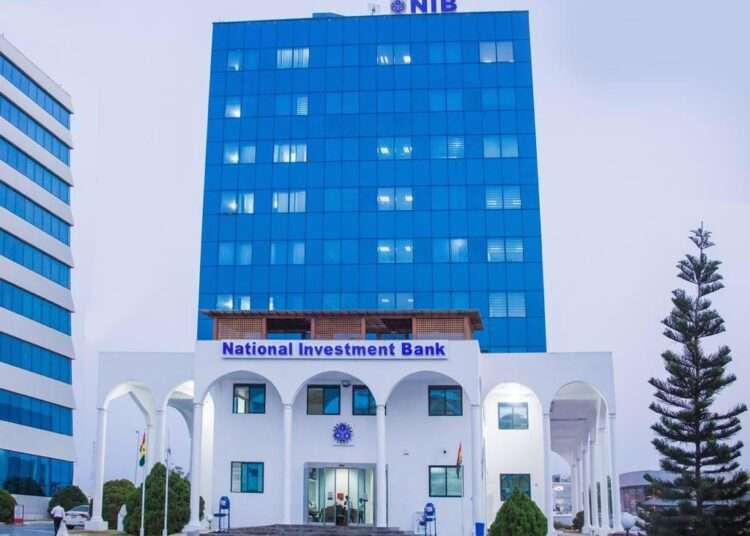
The International Monetary Fund (IMF) has announced a comprehensive review of the National Investment Bank’s (NIB) financial condition, to be conducted by a reputable international firm.
This special review, set to examine NIB’s asset quality and business model, is part of the IMF’s Second Review of the Extended Credit Facility (ECF) programme for Ghana. The terms of reference for this review will be developed in collaboration with IMF staff, ensuring a thorough and objective analysis.
A pivotal outcome of this review will be the formulation of an overarching restructuring plan for NIB. Scheduled for completion by the end of March 2025, this plan will address critical aspects such as necessary changes to the business model, enhancements in risk management, and improvements in corporate governance. The primary goal is to ensure that any capital injections are used efficiently, restoring the bank’s sustainability and financial health.
The restructuring strategy received approval from the Cabinet in May 2024, marking a significant step towards addressing NIB’s financial and operational challenges. This strategy includes a series of capital injections by the government, with the first injection already completed in May 2024. These capital infusions aim to meet immediate liquidity needs and rectify capital shortfalls, providing a foundation for NIB’s recovery.
Addressing Broader Challenges in State-Owned Banks
The IMF’s review and subsequent strategy for NIB are part of a broader effort to address systemic issues within Ghana’s state-owned banks. The IMF highlighted that other state-owned banks are also grappling with financial difficulties, stemming not only from the Domestic Debt Exchange (DDE) but also from persistent problems related to business models and risk management. These issues have led to the accumulation of high non-performing loans (NPLs), exacerbating the banks’ financial instability.
To tackle these challenges, the government will conduct a diagnostic review, examining the business models, governance structures, risk management practices, and legal frameworks of these banks. This review, expected to be completed by the end of April 2025, will inform the development of a comprehensive strategy to reform the state-owned banking sector.
The measures adopted to address NIB’s financial woes will serve as a blueprint for strengthening other key public banks in Ghana. The IMF emphasized the importance of these strong measures, noting that the lessons learned from NIB’s restructuring process could be instrumental in guiding reforms across the sector. This approach aims to create a more robust and resilient state-owned banking system, capable of supporting Ghana’s economic growth and development.
A central theme in the IMF’s review and restructuring strategy is the efficient use of capital injections. By aligning the injection of capital with strategic reforms in business models, risk management, and corporate governance, the IMF and the Ghanaian government aim to restore confidence in NIB and other state-owned banks. This approach seeks to ensure that these banks can effectively serve their roles in the economy, providing necessary financial services while maintaining financial stability.
By addressing both immediate liquidity needs and long-term structural issues, the IMF and the Ghanaian government are working towards a sustainable solution for NIB and other state-owned banks. The upcoming diagnostic reviews and restructuring plans are expected to pave the way for a more resilient banking sector, capable of weathering financial challenges and contributing to Ghana’s overall economic development.
READ ALSO: Enterprise Group and MTN Ghana Propel Ghana Stock Exchange to Recovery