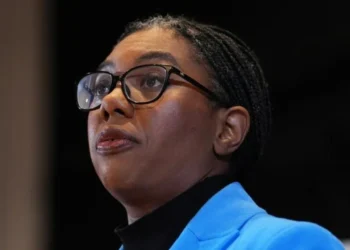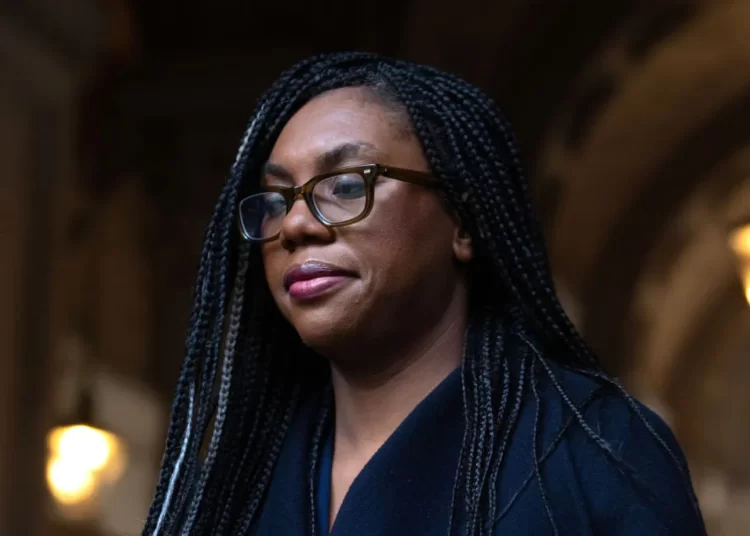
Kemi Badenoch, a prominent Tory leadership contender, has argued that “not all cultures are equally valid” when considering who should be allowed to settle in the UK.
Her remarks were made against the backdrop of ongoing debates about British identity and integration, and she expressed her concern over “the number of recent immigrants to the UK who hate Israel.”
Badenoch, known for her candid and often direct approach, emphasized that the UK needs a new integration strategy that recognizes immigrants may not easily abandon long-standing cultural hostilities at the border.
“Their feet may be in the UK, but their heads and hearts are still back in their country of origin,” she stated, adding that this disconnect can create challenges for societal cohesion.
The Conservative leadership hopeful did not shy away from criticizing her own party’s past failures on immigration, admitting that “the Conservative party lost trust because we promised again and again to lower migration and failed to do so.”
She further asserted that the UK should not be viewed as a place for people to merely make money but as a home for those who share British values and contribute to society.
A New Vision for Immigration
Badenoch is one of four candidates vying for leadership of the Conservative party, alongside Robert Jenrick, James Cleverly, and Tom Tugendhat. All contenders will make their case during a conference this week, where each will have 20 minutes to deliver a speech before the field is narrowed down. The final result will be announced on 2nd November.
Badenoch’s hardline stance on immigration is central to her leadership bid. She has called for the UK to leave the European Convention on Human Rights, but she stressed that such a move alone will not solve the country’s immigration problems.
Instead, she advocates for a more comprehensive approach, asking, “What kind of country do we want to be?” Her message is clear: immigration must be handled with greater scrutiny and foresight.
When pressed about which cultures she believes are less valid, Badenoch pointed to customs that limit the rights of women as an example. “I think that cultures where women are told that they should not work … I don’t think that is as equally valid as our culture,” she explained.
She recounted experiences during her political career where she encountered women unable to speak to her directly, deferring instead to their husbands. This, in her view, is not compatible with British values.
Despite her firm views, Badenoch was careful to avoid broad generalizations, particularly regarding Muslim immigrants. “It is not all Muslim immigrants,” she said, clarifying that her concerns lie with those who “buy into Islamist ideology, political Islam” and harbour anti-Israel sentiments.
Badenoch insisted that such hostility has no place in the UK and urged for a nuanced understanding of cultural integration.
Upholding British Values
Badenoch also addressed criticisms about her forthright manner, defending her approach by saying she would “swing back” when faced with opposition. She rejected the notion that she is “too Nigerian” for British politics, a critique some have levelled against her.
In a related conversation, Badenoch voiced her support for Israel’s military actions, specifically congratulating Israeli Prime Minister Benjamin Netanyahu following airstrikes that killed a Hezbollah leader.
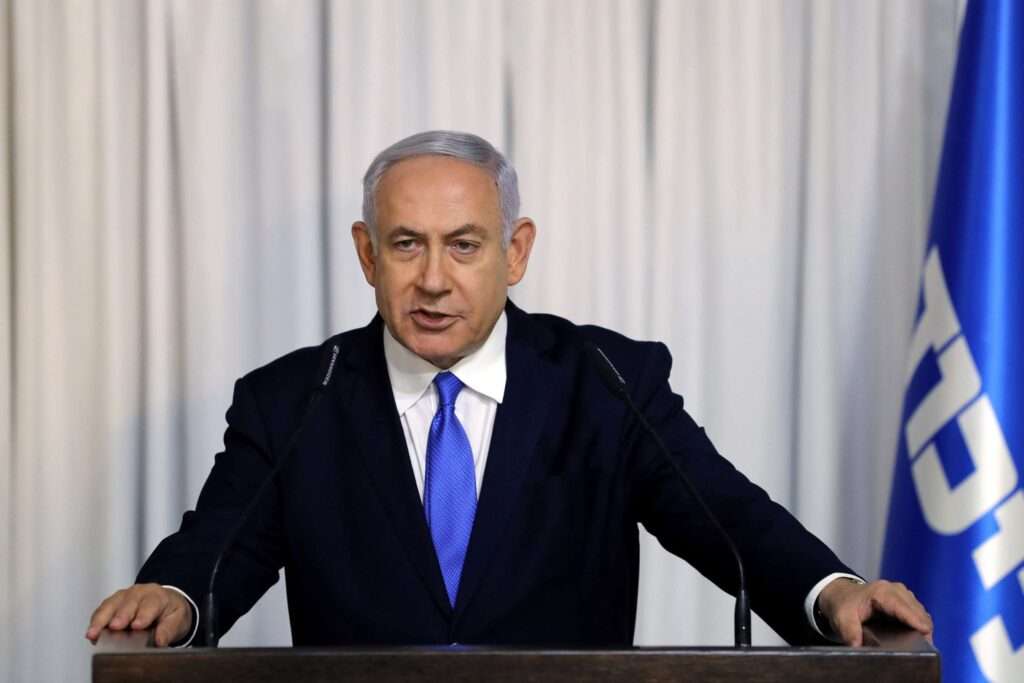
“Israel is showing that it has moral clarity in dealing with its enemies and the enemies of the West as well,” Badenoch said, describing Hezbollah as a terrorist organization. She emphasized that Israel’s actions could lead to greater stability in the Middle East, reflecting her belief that firm action is sometimes necessary to secure peace.
Badenoch’s remarks and strong policy positions are likely to resonate with a segment of the Conservative base that prioritizes immigration control and cultural cohesion.
As the leadership race heats up, her vision of what the UK should stand for — both domestically and on the global stage — will be put to the test.
READ ALSO: EC Justifies Disqualification of Presidential Candidates