The pervasive financial irregularities in Ghana’s public sector have become a growing concern for citizens and experts alike.
Each year, the Auditor-General’s report highlights staggering amounts of public funds either lost, misappropriated, or mishandled, shining a spotlight on the glaring inefficiencies that persist within the country’s financial management systems.
Despite having undergone four major public financial management reforms, including the ongoing efforts to streamline processes, the problem remains deeply entrenched.
The numbers paint a troubling picture. According to IMANI’s Fiscal Recklessness Index report, between 2021 and 2023 alone, government Ministries, Departments, and Agencies (MDAs) were responsible for financial irregularities amounting to a whopping GHS 4.9 billion.
For IMANI, this is indicative of a larger systemic issue: Ghana’s inability to fully commit to the kind of long-term institutional reforms necessary to guarantee fiscal discipline.
Rather, the country has often embraced short-term programs that yield fleeting stability, leaving longer periods of economic turmoil in their wake.
Ghana’s 17th trip to the International Monetary Fund (IMF), according to IMANI is a stark testament to its enduring fiscal woes.
The Cycle of Dysfunction
The core of this issue lies in the systemic weaknesses including lack of proper enforcement of the reforms already enacted, as well as the ineffective oversight of public funds.
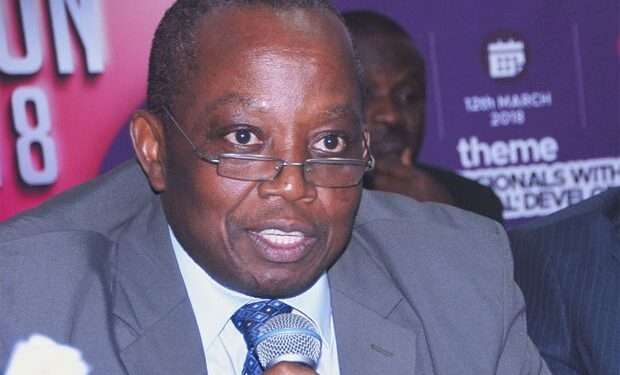
Former Auditor-General Daniel Yaw Domelovo, in his candid remarks, offered a sharp critique of the system, laying bare the reasons behind the persistent failure to manage public funds effectively and proposing urgent measures for reform.
Mr Domelovo’s observations shed light on the systemic failures that continue to plague Ghana’s public financial management. He pointed out that Ghana’s tendency to create multiple institutions, many of which burden the public purse without delivering meaningful results, is a key part of the problem.
Referring to the anti-corruption fight, Mr Domelovo highlighted how, despite establishing several institutions to tackle corruption, there has been little progress.
“We’ve created so many anti-corruption institutions, and we are not making progress. So in my opinion, the attorney general, the auditor general, the director general internal audit, the public accounts committee, these institutions, we should wake them up. If they are up and doing let me be honest with you. The Ministry of Finance will repent”.
Daniel Yaw Domelovo, Former Auditor-General, Ghana
He emphasized that these bodies if functioning effectively, could significantly tighten the financial discipline within the Ministry of Finance and across other public sectors.
Recalling his plans before he left office, Mr Domelovo pointed out that he had wanted to target the Ministry of Finance, where financial recklessness often begins.
“I wanted to attend only to the Minister of Finance and surcharge the minister and his chief directors”, he declared, adding that such a move would enforce accountability and deter future fiscal indiscipline.
Expressing his frustration with the current systemic barriers, Mr Domelovo emphasized that the solution is not to create yet another institution that drains the public purse but rather to empower the existing ones to fulfil their mandates effectively.

Public Procurement: A Breeding Ground for Corruption
Beyond institutional failures, the former Audito-General zeroed in on public procurement—a major avenue for financial loss in the public sector.
He argued that Ghana’s procurement laws, though ostensibly designed to ensure transparency and competition, have instead become a breeding ground for corruption.
“I cannot agree more with the sentiment that you have expressed, on issues of public procurement. And I was laughing to say that when you say some people say they are going to abolish single-source, procurement.
“And I said, even the competitive tendered, it is fixed. Before they even start the process, they know who’s going to win; So they are all scams, and they are all methods of procurement which can be scammed”.
Daniel Yaw Domelovo, Former Auditor-General, Ghana
The issue, as Mr Domelovo explained, is deeply entrenched within the very system meant to oversee and regulate procurement.
According to him, the Public Procurement Authority (PPA) Board, which is supposed to approve procurement processes and ensure fairness, has members with potential conflicts of interest.
Mr Domelovo pointed out that the Attorney-General’s office, responsible for prosecuting offenders of procurement breaches, is represented on the PPA Board.
This overlap in roles, he argued creates a situation where the same individuals who should be upholding the law are also involved in granting procurement approvals.
“I’ve said that if the attorney general who is supposed to prosecute us is seated on the PPA Board and he gives an advice and allow a bad procurement request to go through, is he going to prosecute when the time comes?
“Mind you, no less a person than a deputy attorney general sits on the PPA Board representing the attorney general. Godfred Dame, before he became the Attorney-General, was the one sitting on the PPA Board, now one of his deputies is there. And once the attorney general gives an opinion or opposition, it is taken”.
Daniel Yaw Domelovo, Former Auditor-General, Ghana
This, coupled with the fact that the Ministry of Finance—the same body responsible for much of the country’s procurement—is heavily involved in appointing members of the PPA Board, creates a cycle of unchecked power that allows procurement irregularities to flourish.
Mr Domelovo also expressed concern that the PPA Board frequently oversteps its mandate, granting approvals in situations where they are not legally entitled to do so.
This disregard for the law, he emphasized, is part of the broader culture of impunity that permeates the procurement process.
Breaking the Cycle: The Need for Accountability
Ghana’s financial recklessness, procurement failures, and the institutional weaknesses laid bare by Mr Domelovo reflect a public sector that is failing to uphold accountability and transparency.
Mr Domelovo’s critique of Ghana’s public financial management is not merely about pointing fingers; it is a call to action.
The urgent need to empower existing institutions like the Auditor-General’s office, strengthen procurement laws, and enforce fiscal discipline is clear.
Ghana’s 17th engagement with the IMF should serve as a wake-up call that short-term fixes will not solve long-term problems.
As Mr Domelovo rightly pointed out, “We should ensure fiscal discipline, but I don’t think it is in creating another burden on the consolidated fund.”
Instead, Ghana must focus on enabling the institutions that already exist to operate effectively and without interference.
Additionally, the country’s procurement laws must be critically reviewed and enforced to prevent the entrenched corruption that bleeds the country of much-needed resources.
READ ALSO: Women Bear The Brunt Of Rising Conflict Casualties