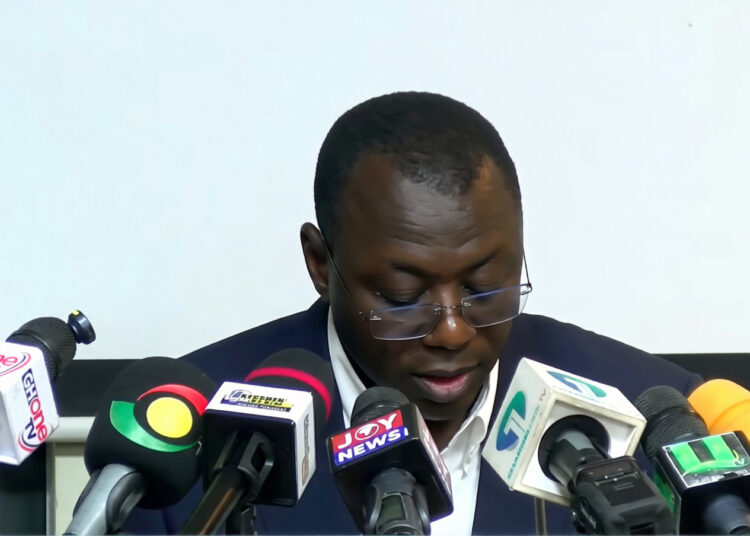
Discussing the 2027 Budget, the Member of Parliament for Karaga and Ranking Member of Parliament’s Finance Committee, Dr Mohammed Amin Adam has defended the New Patriotic Party’s contribution to Ghana’s economic recovery.
In an interview examining the Government’s 2027 fiscal proposals, the former Finance Minister disputed the suggestion that the current administration initiated Ghana’s economic stabilisation, pointing to improvements recorded during the NPP’s final years in office.
He further challenged attempts to attribute the subsequent economic recovery exclusively to the present Government, arguing that its performance must be evaluated against the foundation inherited from its predecessor.
“Economic stability effort did not start now. The NPP government accepted an IMF program, and we implemented the program at least for two years before we left government. And the objectives of the program were being met largely to stabilize the economy. You know, inflation, for example, had reached 54% by the end of 2022. By the time we left government, it was 23%, which means that there was a decline by 31 percentage points.”
Dr Mohammed Amin Adam
Although he acknowledged that inflation subsequently declined further, he insisted that the additional improvement did not invalidate the earlier gains. “This will be about 19 percentage point decline,” he remarked, contrasting the subsequent reduction with the progress achieved under the NPP administration.
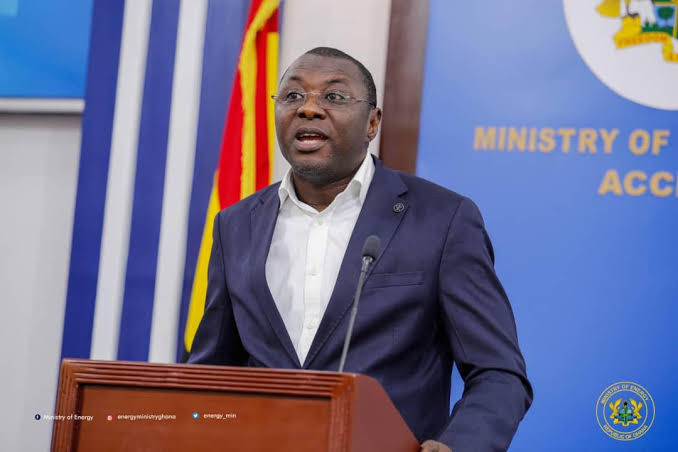
On economic growth, Dr Adam identified the 5.8 percent real GDP expansion recorded in 2024 as “another indication that recovery was already underway” before the current Government assumed office. He compared this with the 6 percent growth achieved in 2025, characterising the difference as “a marginal improvement of just 0.2 percentage points.”
The Ranking Member further anticipated that growth would reach approximately 6 percent in 2026, arguing that the figures demonstrate continuity in the recovery process. He therefore questioned the suggestion that the previous administration left an “economy incapable of generating meaningful expansion.”
Moreover, he distinguished between recovery-driven expansion and growth generated through deliberate policy interventions. In his assessment, the 2025 performance largely represented recovery growth, while the Government should have demonstrated stronger results in 2026 after having a full year to implement its policies.
Karaga MP Links Cedi Appreciation To Cheaper Imports
In addition to his defence of the previous administration’s economic record, the Member of Parliament for Karaga and Ranking Member of Parliament’s Finance Committee, Dr Mohammed Amin Adam has questioned the sustainability of the cedi’s appreciation, attributing much of the currency’s performance to substantial foreign exchange interventions by the Bank of Ghana.
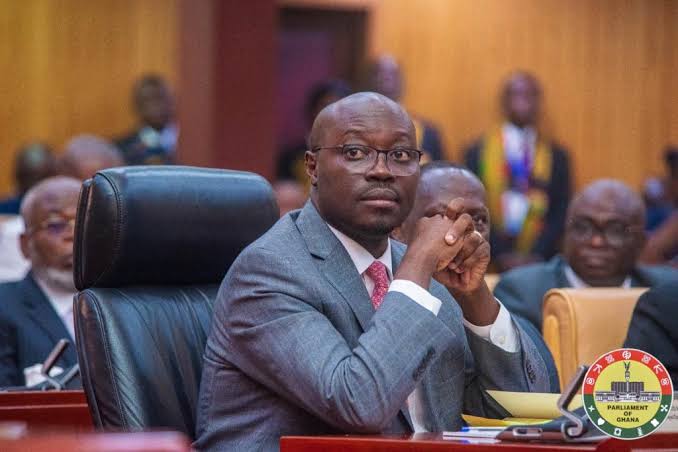
He cautions that the approach risk strengthening the currency without addressing underlying weaknesses in domestic production, thereby exposing local farmers to competition from cheaper imported goods.
“They are not building the structural aspects of the economy; they are just pumping dollars. And when you pump dollars, that is what people call artificial intervention.”
Dr Mohammed Amin Adam
Dr Adam recalled that the cedi appreciated by approximately 35 to 40 percent in 2025, attributing the performance largely to “the volume of foreign exchange supplied to the market.” He contrasted this with the NPP administration’s experience under the IMF programme, which restricted its monthly interventions to approximately US$60 million.
The Karaga MP claimed that the current administration has been intervening with an average of US$1.2 billion monthly, citing publicly available announcements and Bank of Ghana financial reports as the basis for his comparison. He emphasised that the disparity in intervention levels made it “misleading to assess the currency’s performance without considering the resources deployed to support it.”
Although he acknowledged that the cedi has strengthened, Dr Adam questioned whether the appreciation represents a durable improvement in the economy’s fundamentals. He argues that sustained currency stability requires investment in domestic productive capacity.

The former Finance Minister identified cheaper imports as one consequence of the approach, particularly for agricultural producers struggling to compete with foreign supplies.
He linked the decline in rice and maize prices to the stronger cedi, explaining that cheaper imported commodities had placed downward pressure on prices offered by local farmers. “This is the problem farmers are facing today,” he highlighted the difficulties confronting domestic producers as imported alternatives become more affordable.
Dr Adam further cautioned against treating the headline inflation rate of 5.5 percent recorded in October 2026 as an accurate representation of the cost pressures confronting every household. He pointed to service prices, which he indicated have increased by approximately 11 per cent, alongside lorry fares, which have risen by 8 percent.
In addition, he cited a reported 10.1 percent increase in rent and housing-related costs, while drawing attention to diesel prices of approximately GH¢19 per litre. He calculated that the diesel price was 54 percent higher than the level he used for comparison.
READ ALSO: Ghana, UNICEF Deepen Collaboration on Child Protection, Online Safety