• About
  • Advertise
  • Privacy Policy
  • Contact
Monday, May 18, 2026
  • Login
The Vaultz News
  • Top Stories
  • News
    • General News
    • Education
    • Health
    • Opinions
  • Economics
    • Economy
    • Finance
      • Banking
      • Insurance
      • Pension
    • Securities/Markets
  • Business
    • Agribusiness
    • Vaultz Business
    • Extractives/Energy
    • Real Estate
  • World
    • Africa
    • America
    • Europe
    • UK
    • USA
    • Asia
    • Around the Globe
  • Innovation
    • Technology
    • Wheels
  • Entertainment
  • 20MOBPL2DNew
  • Jobs & Scholarships
    • Job Vacancies
    • Scholarships
No Result
View All Result
The Vaultz News
  • Top Stories
  • News
    • General News
    • Education
    • Health
    • Opinions
  • Economics
    • Economy
    • Finance
      • Banking
      • Insurance
      • Pension
    • Securities/Markets
  • Business
    • Agribusiness
    • Vaultz Business
    • Extractives/Energy
    • Real Estate
  • World
    • Africa
    • America
    • Europe
    • UK
    • USA
    • Asia
    • Around the Globe
  • Innovation
    • Technology
    • Wheels
  • Entertainment
  • 20MOBPL2DNew
  • Jobs & Scholarships
    • Job Vacancies
    • Scholarships
No Result
View All Result
The Vaultz News
No Result
View All Result
in Banking

CBG Reassures Customers: Suspension of Foreign Exchange Licence Will Not Disrupt Regular Services

M.Cby M.C
November 14, 2024
Reading Time: 3 mins read
CBG Reassures Customers: Suspension of Foreign Exchange Licence Will Not Disrupt Regular Services

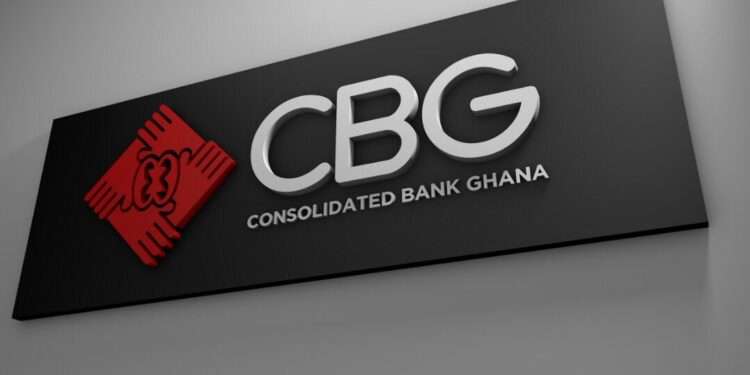
CBG Bank

The Consolidated Bank Ghana (CBG) has reassured its customers and the general public that the temporary suspension of its Foreign Exchange Licence (FEL) will not impact the bank’s core operations.

The announcement follows a directive from the Bank of Ghana (BoG) suspending CBG’s FEL for one month, effective November 26, 2024. Despite this setback, the bank emphasized that its full suite of regular banking services remains operational.

In a statement issued by CBG, the bank clarified that all branches and digital platforms continue to operate as usual, delivering a comprehensive range of services to customers. The suspension only affects foreign exchange-related products and services. The bank’s leadership has assured customers that the situation is under control and that efforts are being made to resolve the concerns raised by the central bank.

“We believe the concerns raised in the notice can be swiftly resolved and are committed to working closely with the Bank of Ghana to ensure compliance. We want to reassure our valued customers that this suspension does not impact CBG’s normal banking operations,” the bank’s statement highlighted.

ADVERTISEMENT

CBG also expressed confidence in the swift resolution of the matter, indicating that it expects to restore foreign exchange services either after engaging with the Bank of Ghana or upon the expiry of the suspension period. The bank apologized for any inconvenience caused and reaffirmed its commitment to upholding high standards of compliance across all aspects of its business.

The Bank of Ghana’s Decision

The suspension of CBG’s Foreign Exchange Licence stems from regulatory breaches identified by the Bank of Ghana. According to a statement from the central bank, the decision is based on violations of several key regulatory guidelines: Foreign Exchange Market Regulations: CBG was found to have breached certain rules governing the operation of the foreign exchange market;

Inward Remittance Services Guidelines (November 2023): The bank did not fully comply with updated guidelines for Payment Service Providers handling inward remittances; Anti-Money Laundering/Combating the Financing of Terrorism (AML/CFT&P) Guidelines (December 2022): The Bank of Ghana cited non-compliance with regulations designed to combat money laundering, terrorism financing, and the proliferation of weapons of mass destruction.

In response to these violations, the Bank of Ghana invoked Section 11 (2) of the Foreign Exchange Act, 2006 (Act 723), which empowers the central bank to suspend or revoke the foreign exchange licence of a financial institution that fails to comply with market regulations. The suspension is set to last for one month, during which time CBG is expected to take corrective measures to address the regulatory concerns.

CBG has pledged to work collaboratively with the Bank of Ghana to resolve the identified issues and ensure full compliance with all regulatory requirements. The bank’s management reiterated its commitment to maintaining robust internal controls and regulatory adherence.

“We apologize unreservedly for any inconvenience this situation may have caused and reaffirm our dedication to maintaining the highest standards of operational compliance across all aspects of our business,” the statement added.

The suspension has raised concerns among customers who rely on CBG for foreign exchange services, especially businesses engaged in international trade. However, the bank’s assurance that regular banking services remain unaffected is expected to mitigate the potential impact on customers. CBG’s digital platforms and physical branches continue to offer full banking services, excluding only the foreign exchange transactions temporarily halted by the suspension.

The Bank of Ghana has indicated that the suspension is temporary and will be lifted once the central bank is satisfied that CBG has implemented effective controls to prevent future regulatory breaches. This period of suspension serves as an opportunity for the bank to review its internal processes and strengthen compliance mechanisms.

The central bank also used this occasion to caution all market participants to adhere strictly to the applicable foreign exchange regulations. The Bank of Ghana remains vigilant in enforcing the guidelines governing the forex market to ensure the integrity and stability of Ghana’s financial system.

ADVERTISEMENT

READ ALSO: GSE Indexes Slip Slightly as CalBank and NewGold ETF Suffer Losses

Sign Up to Our Newsletter

Fresh updates, Straight to your inbox

Tags: Anti-Money LaunderingBank of Ghana (BoG)Consolidated Bank Ghana (CBG)Foreign Exchange Licence
Share1Tweet1ShareSendSend
Please login to join discussion
Previous Post

Peter Okoye Announces Huge Deal With Lagos Club

Next Post

UK Leads Developed Nations in Migration Surge

Related Posts

Africa Poised to Lead in Global Digital Finance Evolution, Says MTN Group CEO
Banking

Africa Poised to Lead in Global Digital Finance Evolution, Says MTN Group CEO

May 18, 2026
Ecobank Ghana PLC Breaks Silence After Supreme Court Judgement
Banking

Ecobank Ghana PLC Breaks Silence After Supreme Court Judgement

May 17, 2026
Ghana Defies Odds With Record Financial Growth
Banking

Ghana Defies Odds With Record Financial Growth

May 16, 2026
Fidelity Demands Africa Own Its Digital Future At a time when Africa’s digital economy is accelerating at an unprecedented pace, Fidelity Bank Ghana has delivered one of the strongest messages yet on the continent’s technological future. The bank made a bold and urgent case for Africa to stop depending on foreign controlled digital systems and begin building its own infrastructure capable of retaining value, strengthening currencies, and driving long term economic sovereignty. As one of the key sponsors of the 3i Africa summit, Fidelity Bank did not just show up to participate. It arrived with a message that resonated deeply across conference halls and policy discussions. Fidelity Bank emerged as one of the loudest voices championing a future where African nations control the very digital rails that power their economies. Digital Infrastructure Is The New Economic Power One of the defining moments of the summit came during a high level panel discussion on digital public infrastructure, where Adeline Aryee delivered a statement that immediately captured the attention of participants. She declared that if Africa builds its own digital rails, it naturally retains the value created by those systems. Her message was clear and uncompromising. In previous decades, national infrastructure was measured by roads, bridges, ports, and airports. Today, the true engines of economic power are payment platforms, identity systems, financial technology ecosystems, and digital marketplaces. According to Aryee, digital public infrastructure is no longer a luxury. It is now a strategic national asset. Her remarks struck at the heart of one of Africa’s most pressing economic concerns. Despite growing digital adoption, many transactions across the continent still pass through foreign payment systems, resulting in value leakage and continued pressure on local currencies. Ghana’s Success Story Becomes A Continental Blueprint Aryee highlighted Ghana’s progress in financial inclusion, mobile payments, and digital banking, describing the country as an emerging model for other African economies. Over the years, Ghana has invested heavily in domestic payment systems such as GhIPSS and its flagship platform, Gh-link. These systems have significantly expanded access to financial services while promoting digital transactions across urban and rural communities. Yet Aryee argued that inclusion alone is no longer enough. The next chapter for Africa, she insisted, must focus on ownership. She questioned why local transactions continue to depend on foreign rails when domestic infrastructure already exists. According to her, such dependence creates unnecessary external exposure and limits the continent’s ability to fully capture the economic benefits of its growing digital market. Her comments triggered intense debate among summit participants, many of whom acknowledged the urgent need for policy reforms and infrastructure investments. Market Driven Innovation Takes Center Stage Beyond infrastructure, Fidelity Bank also made a strong case for innovation that begins with real market needs. During the Ecosystem Roundtable on platforms, talent, and digital markets, Prince Osei Hyeaman-Addai shared insights from the bank’s years of digital financial innovation. He stressed that successful digital products are not built in boardrooms or based on assumptions. Instead, they are created by listening carefully to the market and understanding customer pain points. According to him, the market itself reveals the problems that need solving, the type of platform required, and the path toward scalable growth. His comments reflected a growing shift in African fintech circles, where customer centered design is becoming essential for product adoption and long term relevance. Trust And Credibility Remain The Real Currency Prince also emphasized that technology alone does not guarantee success. In his view, trust, credibility, and strong operational structures remain the real foundations of successful innovation. He noted that while investor interest in African fintech continues to rise, startups must prove they can deliver sustainable solutions, maintain transparency, and build products that respond to local realities. This perspective reflects Fidelity Bank’s own journey in digital transformation. Over the years, the bank has built strategic collaborations with leading fintech players, including IT Consortium, helping pioneer wallet to bank integrations and mobile financial solutions in Ghana. These partnerships have helped position Fidelity as one of Ghana’s most innovation driven financial institutions. A Defining Moment For Africa’s Digital Future Fidelity Bank’s participation at the 3i Africa Summit 2026 was more than a corporate appearance. It was a strategic declaration. At a time when Africa is racing to build competitive digital economies, the bank’s message was impossible to ignore. Africa cannot simply consume technology created elsewhere. It must own the infrastructure, shape the platforms, and capture the value generated by its digital future. As conversations from the summit continue to ripple across financial and policy circles, one thing is becoming increasingly clear. Africa’s next economic revolution may not be built on oil, gold, or minerals. It may be built on digital rails designed, owned, and powered by Africans. READ ALSO: IMF Ghana Review Ends in Dramatic Cliffhanger Fidelity Demands Africa Own Its Digital Future At a time when Africa’s digital economy is accelerating at an unprecedented pace, Fidelity Bank Ghana has delivered one of the strongest messages yet on the continent’s technological future. The bank made a bold and urgent case for Africa to stop depending on foreign controlled digital systems and begin building its own infrastructure capable of retaining value, strengthening currencies, and driving long term economic sovereignty. As one of the key sponsors of the 3i Africa summit, Fidelity Bank did not just show up to participate. It arrived with a message that resonated deeply across conference halls and policy discussions. Fidelity Bank emerged as one of the loudest voices championing a future where African nations control the very digital rails that power their economies. Digital Infrastructure Is The New Economic Power One of the defining moments of the summit came during a high level panel discussion on digital public infrastructure, where Adeline Aryee delivered a statement that immediately captured the attention of participants. She declared that if Africa builds its own digital rails, it naturally retains the value created by those systems. Her message was clear and uncompromising. In previous decades, national infrastructure was measured by roads, bridges, ports, and airports. Today, the true engines of economic power are payment platforms, identity systems, financial technology ecosystems, and digital marketplaces. According to Aryee, digital public infrastructure is no longer a luxury. It is now a strategic national asset. Her remarks struck at the heart of one of Africa’s most pressing economic concerns. Despite growing digital adoption, many transactions across the continent still pass through foreign payment systems, resulting in value leakage and continued pressure on local currencies. Ghana’s Success Story Becomes A Continental Blueprint Aryee highlighted Ghana’s progress in financial inclusion, mobile payments, and digital banking, describing the country as an emerging model for other African economies. Over the years, Ghana has invested heavily in domestic payment systems such as GhIPSS and its flagship platform, Gh-link. These systems have significantly expanded access to financial services while promoting digital transactions across urban and rural communities. Yet Aryee argued that inclusion alone is no longer enough. The next chapter for Africa, she insisted, must focus on ownership. She questioned why local transactions continue to depend on foreign rails when domestic infrastructure already exists. According to her, such dependence creates unnecessary external exposure and limits the continent’s ability to fully capture the economic benefits of its growing digital market. Her comments triggered intense debate among summit participants, many of whom acknowledged the urgent need for policy reforms and infrastructure investments. Market Driven Innovation Takes Center Stage Beyond infrastructure, Fidelity Bank also made a strong case for innovation that begins with real market needs. During the Ecosystem Roundtable on platforms, talent, and digital markets, Prince Osei Hyeaman-Addai shared insights from the bank’s years of digital financial innovation. He stressed that successful digital products are not built in boardrooms or based on assumptions. Instead, they are created by listening carefully to the market and understanding customer pain points. According to him, the market itself reveals the problems that need solving, the type of platform required, and the path toward scalable growth. His comments reflected a growing shift in African fintech circles, where customer centered design is becoming essential for product adoption and long term relevance. Trust And Credibility Remain The Real Currency Prince also emphasized that technology alone does not guarantee success. In his view, trust, credibility, and strong operational structures remain the real foundations of successful innovation. He noted that while investor interest in African fintech continues to rise, startups must prove they can deliver sustainable solutions, maintain transparency, and build products that respond to local realities. This perspective reflects Fidelity Bank’s own journey in digital transformation. Over the years, the bank has built strategic collaborations with leading fintech players, including IT Consortium, helping pioneer wallet to bank integrations and mobile financial solutions in Ghana. These partnerships have helped position Fidelity as one of Ghana’s most innovation driven financial institutions. A Defining Moment For Africa’s Digital Future Fidelity Bank’s participation at the 3i Africa Summit 2026 was more than a corporate appearance. It was a strategic declaration. At a time when Africa is racing to build competitive digital economies, the bank’s message was impossible to ignore. Africa cannot simply consume technology created elsewhere. It must own the infrastructure, shape the platforms, and capture the value generated by its digital future. As conversations from the summit continue to ripple across financial and policy circles, one thing is becoming increasingly clear. Africa’s next economic revolution may not be built on oil, gold, or minerals. It may be built on digital rails designed, owned, and powered by Africans. READ ALSO: IMF Ghana Review Ends in Dramatic Cliffhanger Fidelity Demands Africa Own Its Digital Future
Banking

Fidelity Demands Africa Own Its Digital Future

May 15, 2026

Sign Up to Our Newsletter

Fresh updates, Straight to your inbox

Recent News

Dr. Andy Osei Okrah, TCDA CEO

TCDA Mandates Compulsory Licensing For Sector Actors, Sets Deadline

May 18, 2026
Minister of State in charge of Government Communications, Felix Kwakye Ofosu

Kwakye Ofosu Blasts GBA Over Silence on Afenyo’s Judge Attack

May 18, 2026
Ukrainian flag

Hungary, Ukraine To Commence Talks On Hungarian Minority Rights

May 18, 2026
Croatia National Team

Ghana’s WC Opponent Croatia Unveils Strong 26-Man Squad

May 18, 2026
Fisheries Commission, Enrolls Beneficiaries into Phase Two of the AngloGold Ashanti Aquaculture Project

Eleven Onboarded for Phase Two of AGA’s Aquaculture Project

May 18, 2026
Next Post
Organisation for Economic Co-operation and Development (OECD).

UK Leads Developed Nations in Migration Surge

The Vaultz News

Copyright © 2025 The Vaultz News. All rights reserved.

Navigate Site

  • About
  • Advertise
  • Privacy Policy
  • Contact

Follow Us

Welcome Back!

Login to your account below

Forgotten Password?

Retrieve your password

Please enter your username or email address to reset your password.

Log In
No Result
View All Result
  • Top Stories
  • News
    • General News
    • Education
    • Health
    • Opinions
  • Economics
    • Economy
    • Finance
      • Banking
      • Insurance
      • Pension
    • Securities/Markets
  • Business
    • Agribusiness
    • Vaultz Business
    • Extractives/Energy
    • Real Estate
  • World
    • Africa
    • America
    • Europe
    • UK
    • USA
    • Asia
    • Around the Globe
  • Innovation
    • Technology
    • Wheels
  • Entertainment
  • 20MOBPL2D
  • Jobs & Scholarships
    • Job Vacancies
    • Scholarships

Copyright © 2025 The Vaultz News. All rights reserved.

This website uses cookies. By continuing to use this website you are giving consent to cookies being used. Visit our Privacy and Cookie Policy.

Discover the Details behind the story

Get an in-depth analysis of the news from our top editors

Enter your email address