President John Dramani Mahama has expressed optimism that Ghana is on course to match or even exceed Côte d’Ivoire’s impressive cocoa processing milestone of 50% within the next four to five years.
This bold projection reflects Ghana’s ongoing efforts to boost value addition in its cocoa sector—an ambition that is critical to transforming the country’s economy and lessening its reliance on raw commodity exports.
Speaking during a presidential session at the 60th Annual Meeting of the African Development Bank (AfDB) and the 51st Annual Meeting of the African Development Fund (ADF) in Abidjan, President Mahama emphasized Ghana’s upward trajectory in cocoa processing. “From a low of about 25% processed cocoa, Ghana has risen to about 40%,” he stated, noting the steady gains made in recent years.
Although Ghana still lags slightly behind Côte d’Ivoire, which currently processes 50% of its cocoa output domestically, the President believes the country can catch up and even surpass its neighbor within the medium term.
“Côte d’Ivoire is ahead of us. They have done 50%, which is commendable. We hope that over the next four to five years, we will reach the stage of Côte d’Ivoire at 50% and push even further.”
John Dramani Mahama
Structural Trade Challenges Persist
While celebrating the progress made so far, President Mahama was quick to highlight the structural challenges that continue to hinder Africa’s ability to scale up industrialisation, particularly in the cocoa sector. Chief among these challenges are non-tariff barriers imposed by developed economies, which significantly limit the ability of local businesses to export finished goods to international markets.
“The world economic order is rigged against Africa,” President Mahama lamented, pointing to how indigenous entrepreneurs often face stringent regulatory hurdles when trying to export processed goods into European and American markets.
“Unless they bring a processor from outside—from Europe—who comes and sets up a processing plant and gets all the regulatory things in place, an indigenous person setting up a processing plant sometimes has big difficulty in exporting finished products into the EU market and into the American market.”
John Dramani Mahama
The Case for Local Value Addition
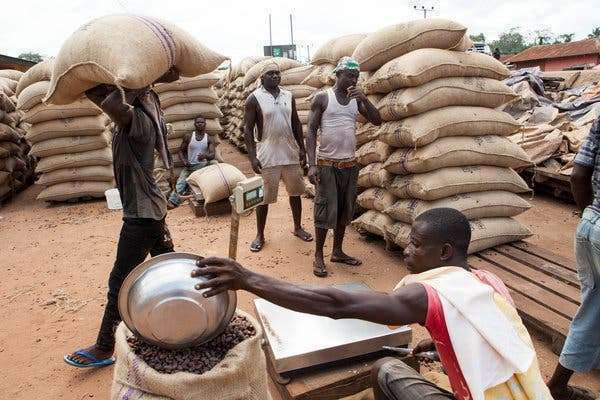
The former President’s comments underscore a broader issue facing many African economies—their continued dependence on exporting raw materials while importing finished products at much higher prices. In the case of cocoa, both Ghana and Côte d’Ivoire are among the world’s top producers, yet they have historically captured only a fraction of the global cocoa value chain, which is dominated by multinational chocolate manufacturers.
Boosting local processing not only promises greater economic returns but also offers the potential for job creation, industrial growth, and technological advancement. For Ghana, increasing the percentage of cocoa processed locally could significantly raise export revenues, reduce trade deficits, and enhance the competitiveness of its manufacturing sector.
To achieve the ambitious target of 50% cocoa processing and beyond, Ghana will need to implement strategic interventions. These could include expanding access to financing for local processors, investing in processing infrastructure, ensuring regulatory support, and strengthening partnerships between government, private sector actors, and international organizations.
Equally important will be Ghana’s ability to negotiate better trade terms and push for fairer access to global markets for its finished cocoa products. Regional and continental trade frameworks such as the African Continental Free Trade Area (AfCFTA) also present promising opportunities for intra-African trade in processed cocoa and other value-added products.
READ ALSO: African Development Bank President Bids Farewell to the AfDB Presidency