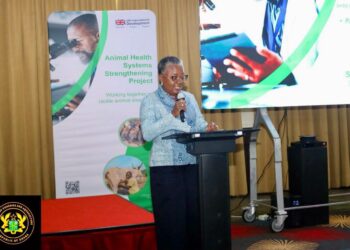

The Greater Accra Regional Canoe Fishermen Association has formally welcomed the government’s decision to implement a “no closed-season” policy for artisanal fishers this year.
Labeling the state directive as highly timely, the Association stated that the exemption directly safeguards the immediate livelihoods of thousands of small-scale traditional fishermen whose economic survival depends entirely on their ability to conduct daily coastal fishing operations.
The policy announcement was confirmed by Nene Raymond Abayateye II, Chairman of the Greater Accra Regional Canoe Fishermen Association, during an informational media Briefing.
According to the leadership, the decision represents a concrete fulfillment of specific commitments made by the presidency to actively support traditional canoe fishers, lower operational burdens, and improve working conditions across the country’s artisanal marine sector.
“Canoe fishermen already have their own difficult periods when the sea becomes rough and dangerous. Sometimes for one or two months, no canoe can go to sea because of the waves”
Nene Raymond Abayateye II, Chairman of the Greater Accra Regional Canoe Fishermen Association
A central argument presented by the association in support of the exemption is the fact that artisanal fishers already experience an organic, climate-driven suspension of activities each year. Unlike larger commercial vessels, traditional canoes are highly exposed to the natural volatility of the marine environment, which acts as a built-in conservation period.

The Association emphasized that during these extended periods of harsh weather, high swells, and dangerous wave action, artisanal operations grind to a complete halt naturally. Because traditional fishermen operate on a significantly smaller scale and remain closer to the shoreline, the physical risks associated with rough sea conditions make fishing logistically impossible for one to two months annually.
Imposing an additional, legally mandated closed season on top of these natural operational shutdowns would result in severe double economic jeopardy for coastal households.
The Greater Accra Regional Canoe Fishermen Association highlighted the sharp structural and technological divide that exists between traditional small-scale fishers and large-scale commercial fleets – a disparity that forms the primary policy justification for treating the two sectors differently under current national marine conservation frameworks.
Industrial trawlers, tuna vessels, and large-scale commercial boats possess heavy displacement hulls, advanced navigation systems, and long-range capabilities that allow them to remain at sea for weeks at a time, largely insulated from the shoreline weather disruptions that ground smaller wooden canoes.
These industrial vessels maintain high-capacity, continuous harvesting operations regardless of seasonal coastal swells, making their impact on marine biomass depletion vastly disproportionate compared to the localized activities of the artisanal fleet.
While artisanal canoes are permitted to fish, industrial trawlers and other large commercial vessels are currently observing a strict, mandatory closed season by the Ministry of Fisheries and Aquaculture Development (MoFAD).

This targeted regulation is to halt intensive industrial fishing during critical spawning periods, and allow pelagic and demersal fish stocks to naturally replenish and improve the long-term productivity of Ghana’s territorial waters.
Sustainable Internal Practices
While celebrating the economic relief brought by the open season, the leadership of the Canoe Fishermen Association stated that the regulatory exemption must not be viewed as a license for environmental misconduct.
The Association issued a strong warning to its members regarding the urgent need to protect marine resources from destructive harvesting methods. Nene Abayateye II made an urgent appeal to all traditional fishers to strictly adhere to legally approved, responsible fishing practices.
He specifically condemned the ongoing use of unapproved methods within the artisanal sector, pointing directly to the highly damaging practices of light fishing and the deployment of toxic chemicals to maximize catches.
The Association warned that these short-sighted, illegal methods pose an immediate threat to the nearshore marine ecosystem. If left unchecked, they will systematically deplete local fish stocks, permanently damage coastal breeding grounds, and destroy the future economic viability of the entire traditional fishing industry.
Nene Abayateye II concluded his brief by urging all stakeholders within the Ghanaian maritime and fisheries sectors to establish a unified front to protect the country’s shared marine heritage.
By working collaboratively with landing beach committees, chief fishermen, the Ministry of Fisheries, and maritime security agencies, the association aims to eliminate illegal practices across coastal zones.
Ensuring that traditional canoe fishers can operate safely during the open season while actively suppressing harmful fishing methods is seen as the only viable path to protecting marine biodiversity, securing national food security, and preserving coastal economies for future generations.
READ ALSO: Sarkodie Joins Fuse ODG on ‘Spirit of New Africa II’ Album