

The Government of Ghana, acting through the Ghana Cocoa Board (COCOBOD), has intervened decisively in the domestic agricultural sector by announcing that the producer price of cocoa will remain entirely unchanged for the upcoming 2025/26 light crop season.
This critical macroeconomic directive arrives at a challenging period for global commodity markets, which are currently experiencing a pronounced downward trend in international cocoa futures. By refusing to lower farmgate returns in response to shifting global supply dynamics, the state has prioritized local income stabilization.
According to COCOBOD, the policy measure is calibrated to insulate millions of smallholder cocoa farmers from external financial shocks, providing predictability and building confidence across the rural economy before harvesting activities accelerate nationwide.
“The producer price will remain at GHS 1,241.76 per load of 30 kilograms for Grade I and II cocoa beans and GHS 2,587.00 per bag of 64 kilograms gross. Consequently, a tonne of cocoa, equivalent to 16 bags, will continue to attract GHS 41,392.00.
“The decision underscores Government’s commitment to protecting the incomes and livelihoods of cocoa farmers, even as international cocoa prices experience a downward trend”
Ghana Cocoa Board
In many unregulated commodity-producing countries, sharp drops in international trading prices translate immediately into slashed revenues for local farming families, driving rural poverty and disrupting national supply chains. Ghana’s state-managed stabilization strategy operates as a crucial financial shock absorber.
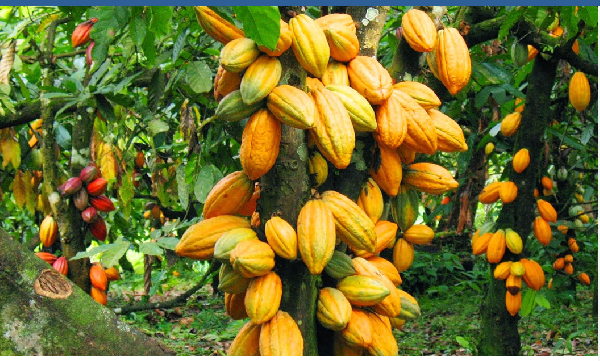
Maintaining the current pricing framework and effectively standing between international market volatility and the domestic agrarian workforce, absorbs the global pricing deficit through state mechanisms to safeguard household incomes.
This pricing consistency is vital for the light crop season, which typically yields slightly smaller beans used primarily by domestic processing factories for cocoa butter and powder manufacturing. Because light crop yields are historically modest compared to the main crop season, any simultaneous drop in state pricing would deal a double blow to farmer revenues.
The preservation of the established price floor guarantees that farmers receive identical per-kilogram compensation across both annual production cycles, eliminating seasonal income inequality and allowing rural households to maintain consistent standards of living.
Logistics and Frameworks
The execution of the upcoming purchasing cycle is backed by a comprehensive administrative setup designed to prevent market manipulation and ensure full compliance at every inland buying post.
The Deputy Chief Executive of COCOBOD in charge of Agronomy and Quality Control, Dr. Francis Baah, has confirmed that purchasing operations for the 2025/26 light crop season will formally commence across all production districts on Thursday, June 18, 2026. This timeline compels all authorized corporate actors to align their procurement systems with the state-mandated financial baselines.
The primary operational link between COCOBOD and the rural farming communities is managed by Licensed Buying Companies.

These private and public marketing intermediaries are legally obligated to deploy their purchasing agents to remote farming villages, extract the harvested yields, verify quality standards, and disburse the exact government-stipulated financial returns directly to the producers.
COCOBOD noted that it has distributed formal directives to all Licensed Buying Companies, field purchasing networks, and regional ministries to guarantee a seamless and transparent rollout. Any attempts to underpay farmers or manipulate purchasing scales will be treated as an infraction against national economic security.
To ensure compliance, quality control officers from COCOBOD will be stationed at key aggregation centers to monitor bean quality and check scale calibrations to prevent external buyers from exploiting rural producers, ensuring that every thirty-kilogram load and sixty-four-kilogram bag precisely matches the mandated monetary payout.
Beyond the technicalities of commodity pricing and logistical mobilization, the state’s decision to maintain the farmgate price functions as a major social safety net with deep macroeconomic benefits.
The cocoa sector remains a foundation of Ghana’s rural economy, directly providing livelihoods for hundreds of thousands of smallholder families and funding critical community infrastructure across the southern and middle ecological belts.
When cocoa incomes are stable, the financial benefits ripple through rural societies, stimulating local retail markets, funding education, and supporting small-scale commercial transport networks.

This state-led intervention is particularly meaningful as West African producers face complex challenges, including changing weather patterns and higher input costs for fertilizers and disease control.
As the light crop season officially opens next week, Ghana’s structured approach demonstrates how proactive state policy can successfully manage global market volatility, protect vulnerable rural populations, and secure national agricultural output.
READ ALSO: Ghana’s Recovery Tested as External Shocks Complicate Inflation Fight