Ghana’s cocoa industry could be on the brink of a major win after the Ghana Cocoa Board (COCOBOD) threw its weight behind an ambitious investment proposal from Italy that seeks to establish a 3,000 hectare mechanised cocoa development zone in the country.
The proposal, which forms part of Italy’s Cocoa Connect Initiative, has raised fresh optimism about the future of Ghana’s cocoa sector as it focuses on modern farming, industrial processing, technology transfer and value addition. If successfully implemented, the initiative could strengthen Ghana’s position in the global cocoa value chain while creating thousands of employment opportunities and boosting export earnings.
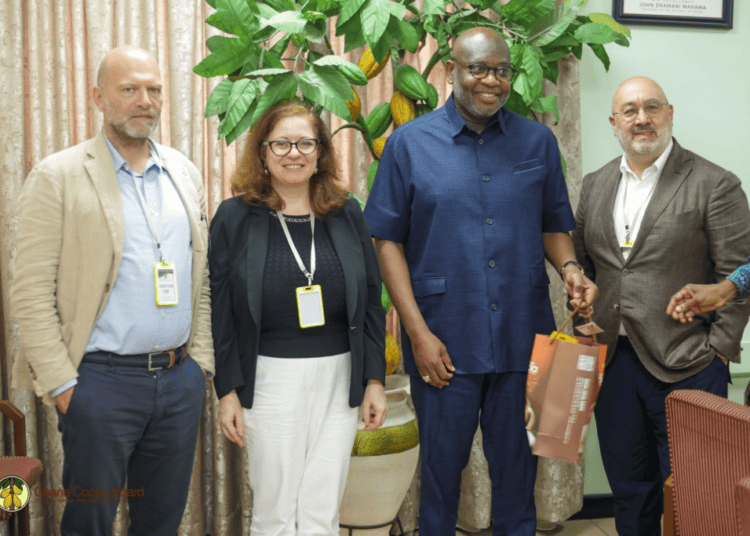
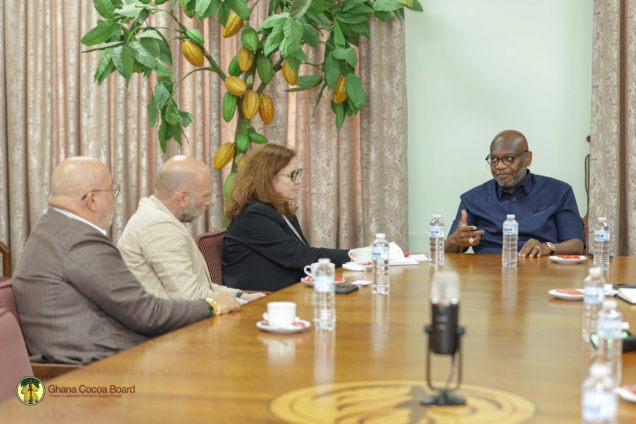
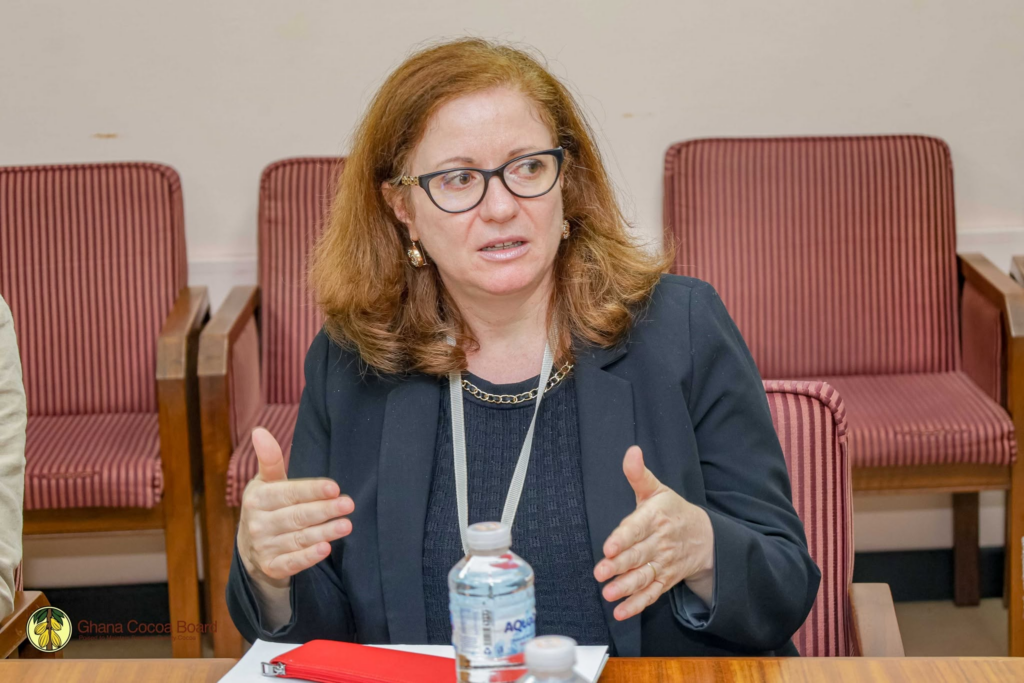
The proposal was presented during a high level meeting between COCOBOD’s management and a delegation led by the Italian Ambassador to Ghana, H.E. Laura Ranalli, accompanied by prospective investors from BF International, Italy’s largest agricultural group with operations across Africa.
Italy targets value addition in Ghana’s cocoa industry
Addressing COCOBOD’s management, Ambassador Laura Ranalli reaffirmed Italy’s commitment to supporting Ghana’s cocoa sector through stronger investment partnerships that move beyond traditional trade relationships.
She explained that the Cocoa Connect Initiative seeks to bring together governments, private sector investors and scientific institutions to modernise cocoa production while increasing local manufacturing of cocoa products.
“We are ready to facilitate new partnerships between the Italian agribusiness community and COCOBOD to promote Ghana’s cocoa industry. Through the Cocoa Connect Initiative, we want to support Ghana in moving beyond the export of raw cocoa beans to the production of semi-finished and finished chocolate products.”
Ambassador Laura Ranalli
The initiative aligns with Ghana’s long standing ambition of capturing greater value from its cocoa resources by expanding domestic processing instead of relying primarily on exports of raw cocoa beans.
Mechanised cocoa zone to drive industrial growth
At the centre of the proposal is the establishment of a 3,000 hectare mechanised cocoa development zone that would combine modern farming techniques with industrial processing facilities.
According to Ambassador Ranalli, the project will serve as a model for technology driven cocoa production while creating a foundation for advanced processing industries capable of producing higher value cocoa products for both domestic and international markets.
The investment is expected to introduce improved agricultural technologies, efficient farm management systems and innovative production methods that could significantly improve cocoa yields while reducing production costs.
Industry observers believe such a project could become one of the largest mechanised cocoa farming initiatives in Ghana and help accelerate the country’s cocoa transformation agenda.
COCOBOD pledges full institutional support
Responding to the proposal, the Chief Executive of COCOBOD, Dr Ransford Anertey Abbey, welcomed the initiative and assured the Italian delegation that the board is fully committed to making the project a success.
“COCOBOD is ready to provide full institutional, agronomic and technical support for the establishment of the proposed mechanised cocoa development zone,” Dr Abbey said.
He praised BF International’s decision to invest directly in Ghana’s cocoa industry, describing it as a strategic opportunity that could strengthen the country’s competitiveness within the global cocoa market.
Dr Abbey also reiterated that increasing local processing remains one of the central priorities of both COCOBOD and the Government of Ghana.
“Local value addition remains at the heart of Ghana’s cocoa transformation agenda. We will constitute a specialised team of COCOBOD experts to provide the research, agronomic and technical support required to make this investment successful.”
Randy Abbey
His comments underline COCOBOD’s determination to attract investments that promote industrialisation rather than simply increasing exports of unprocessed cocoa beans.

A major boost for jobs and industrialisation
The proposed partnership is expected to deliver benefits that extend well beyond cocoa farming.
By combining Italy’s expertise in agribusiness, mechanisation and processing technology with Ghana’s reputation as one of the world’s leading cocoa producers, the initiative could stimulate the growth of local manufacturing industries while creating new opportunities across the cocoa value chain.
Experts believe investments of this scale have the potential to generate employment in farming, logistics, engineering, processing, packaging and export services. They could also encourage technology transfer, strengthen research collaborations and improve productivity across the sector.
The expansion of local cocoa processing would also allow Ghana to retain more value from its cocoa production by exporting semi finished and finished chocolate products instead of relying mainly on raw bean exports.
A new chapter for Ghana’s cocoa future
The proposed partnership between COCOBOD and Italy signals growing international confidence in Ghana’s cocoa industry and its long term prospects.
As global demand for premium chocolate products continues to rise, Ghana has an opportunity to reposition itself from being primarily a supplier of raw cocoa beans to becoming a competitive producer of high value cocoa products.
With COCOBOD pledging full technical and institutional support and Italy bringing investment, technology and industrial expertise, the proposed mechanised cocoa development zone could become a landmark project that reshapes Ghana’s cocoa economy for decades to come.
If realised, the initiative will not only strengthen Ghana’s global standing in cocoa production but also unlock new opportunities for industrial growth, job creation and sustainable economic development.
READ ALSO: Domestic Borrowing Pushes Ghana’s Debt To GH¢720.8bn