
The Ghana National Cocoa Farmers Association (GNACOFA) has leveled severe accusations against public officials within the Ghana Cocoa Board (COCOBOD), alleging their direct involvement in unauthorized private cocoa buying operations.
According to the association, these private commercial activities by regulatory insiders are actively undermining stakeholder confidence, distorting fair market competition, and severely compounding the financial distress already felt throughout the domestic cocoa supply chain.
The explosive allegations were made public during an official industry gathering centered on the signing of a strategic partnership agreement between GNACOFA and the Produce Buying Company (PBC), as the newly formed alliance promises a commercial turnaround for the struggling state-aligned cocoa purchasing firm.
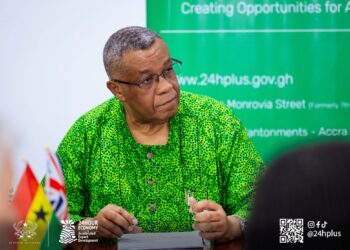
Addressing stakeholders and journalists at the signing ceremony of what is a robust safety net to improve overall farmer welfare across Ghana’s cocoa-growing regions, the President of GNACOFA, Stephenson Anane Boateng, delivered a stark warning regarding the governance failures threatening the survival of the local industry.
“There are concerns involving public officials, particularly within COCOBOD, engaging in private buying operations that undermine confidence in the sector. These issues continue to distort Ghana’s cocoa business, disadvantage genuine cocoa farmers, and create opportunities for financial irregularities”
Stephenson Anane Boateng, President of GNACOFA
According to GNACOFA, when individuals embedded within the state regulatory apparatus operate simultaneously as private buyers, it fundamentally damages the transparency of the cocoa value chain.

The association pointed out that these practices establish highly unfair operating conditions for genuine market players, including licensed independent buyers and the smallholder farmers who form the backbone of the agricultural economy. The farmer group emphasized that these insider operations also actively open the door to systemic corruption.
Mr. Boateng noted that by operating outside the standardized, transparent channels established by the state, these private buying activities create immediate opportunities for financial irregularities that siphon value away from the primary producers and legitimate corporate entities.
Systemic Industry Threats
The public indictment of COCOBOD officials comes at a highly critical juncture for Ghana’s cocoa industry, which is currently navigating a complex matrix of operational and environmental challenges.
GNACOFA leadership highlighted that the issue of insider private buying is compounding several deep-rooted crises that have collectively placed the sustainability of the national cocoa business in jeopardy.
The group noted that the rise of unauthorized private buyers has directly exacerbated cross-border cocoa smuggling, since these illicit operations bypass the official regulatory accounting mechanisms of COCOBOD and frequently feed into parallel markets.
This illegal diversion of beans to neighboring countries deprives the state of critical foreign exchange earnings and distorts official national output statistics. The situation is made worse by the encroachment of illegal mining operations, locally known as galamsey, which remains a destructive force within prime cocoa-growing sectors.

Farmers are increasingly pressured to cede their lands to mining syndicates, resulting in the mass destruction of mature cocoa farms. Mr. Boateng stressed that the environmental degradation is a primary driver behind the country’s declining crop production levels.
Among the most immediate pressures facing local producers is the ongoing issue of delayed payments for delivered crops. GNACOFA noted that when state-approved purchasing channels fail to deliver timely cash to farmers, it creates an operational vacuum.
Desperate for liquidity to maintain their farms and support households, farmers become highly vulnerable to exploitative, immediate-cash offers from unregulated private buyers, including the accused public officials.
Faced with declining production volumes, persistent liquidity challenges, and increasing financial strain on independent Licensed Buying Companies (LBCs), GNACOFA is positioning its partnership with the Produce Buying Company (PBC) as a necessary institutional corrective.
The PBC, which has stood as a dominant force in domestic cocoa purchasing, has faced severe operational hurdles and liquidity shortfalls in recent years, weakening its market presence, but the new agreement seeks to restore missing trust within the cocoa value chain by re-establishing a transparent, dependable, and farmer-centric purchasing pipeline.
Through a direct alignment of the national farmers’ association with the PBC, the partners intend to guarantee a steady, legitimate volume of cocoa beans into the company’s network, effectively bypassing the distorted parallel markets run by unauthorized buyers.

GNACOFA maintained that restoring the commercial strength of the PBC will directly “protect farmer incomes, enforce price transparency at the farm-gate, and actively counter the market distortions” caused by insider trading activities within the regulatory sector.
The formal statements issued by GNACOFA serve as a direct call for comprehensive structural reform and stricter oversight within the Ghana Cocoa Board.
The association reiterated that efforts to turn around struggling buying companies and protect rural livelihoods will be entirely neutralized if public officials are permitted to abuse their institutional positions for private commercial gain.
READ ALSO: Officers Sue Over $1.8bn Settlement Fund