• About
  • Advertise
  • Privacy Policy
  • Contact
Saturday, August 22, 2026
  • Login
The Vaultz News
  • Top Stories
  • News
    • General News
    • Education
    • Health
    • Opinions
  • Economics
    • Economy
    • Finance
      • Banking
      • Insurance
      • Pension
    • Securities/Markets
  • Business
    • Agribusiness
    • Vaultz Business
    • Extractives/Energy
    • Real Estate
  • World
    • Africa
    • America
    • Europe
    • UK
    • USA
    • Asia
    • Around the Globe
  • Innovation
    • Technology
    • Wheels
  • Entertainment
  • 20MOBPL2DNew
  • Jobs & Scholarships
    • Job Vacancies
    • Scholarships
No Result
View All Result
The Vaultz News
  • Top Stories
  • News
    • General News
    • Education
    • Health
    • Opinions
  • Economics
    • Economy
    • Finance
      • Banking
      • Insurance
      • Pension
    • Securities/Markets
  • Business
    • Agribusiness
    • Vaultz Business
    • Extractives/Energy
    • Real Estate
  • World
    • Africa
    • America
    • Europe
    • UK
    • USA
    • Asia
    • Around the Globe
  • Innovation
    • Technology
    • Wheels
  • Entertainment
  • 20MOBPL2DNew
  • Jobs & Scholarships
    • Job Vacancies
    • Scholarships
No Result
View All Result
The Vaultz News
No Result
View All Result
in General News

Prof. Asare Challenges Sub Judice Critics In NSB Case

Lilian Ahedorby Lilian Ahedor
June 11, 2025
Reading Time: 5 mins read
Add as Preferred on Google
Prof. Asare on NLA misused funds

Professor Stephen Kwaku (Azar) Asare

The ongoing sub judice debate has intensified as Prof. Stephen Kwaku Asare, legal expert and Democracy and Development Fellow at CDD-Ghana, addresses critics who have questioned his public analysis of the discovery request in the National Security Bureau (NSB) case.

Since Prof. Asare, widely known for his legal insights, began offering his analysis of the discovery request filed in court by the lawyers of Adu Boahene, former Director of NSB, some commentators have invoked the sub judice principle. 

These critics argued that because the matter is presently before the court, outside commentary amounts to interference. 

They insisted that Prof. Asare should remain silent to avoid what they term as “poisoning the waters,” potentially prejudicing the court’s application and running a parallel legal process outside the courtroom.

ADVERTISEMENT

Prof. Asare, however, strongly disagrees with this interpretation. 
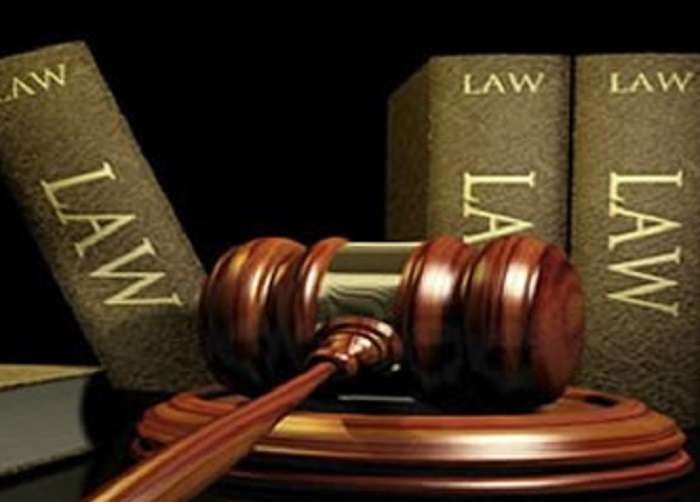
Azar on sub judice issues
Law

“The sub judice rule is not a gag order. It was crafted to protect jury trials from improper influence. It was not created to insulate trained judges from reasoned legal analysis.”

Prof. Stephen Kwaku Asare

The legal scholar emphasized that judges are not laypersons like jurors but trained professionals equipped to remain impartial and analytical even when faced with external commentary. 

He underscored that this professional detachment is at the core of judicial independence and the integrity of democratic institutions.

Sub Judice Misuse Threatens Public Education

Prof. Asare firmly believes that misapplying the sub judice rule stifles free speech and undermines public understanding of the law. 

According to him, democratic principles are not served when legitimate legal commentary is suppressed, particularly when the situation involves no jury, no gag order, and no behavior that threatens the proceedings’ integrity.
ADVERTISEMENT
Judicial independence to be rethought
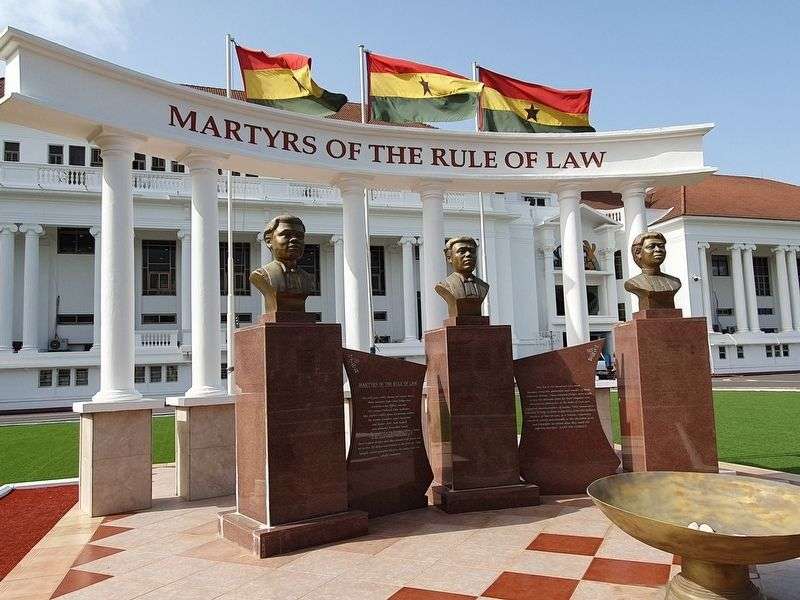
Martyrs of the Rule of Law Marker

He explained that analyzing court documents that have already been publicly filed should be seen as an act of civic education rather than contempt of court. 

In his view, such analysis informs the public without binding the court or usurping the judge’s authority.

“Nothing in the commentary suggested that the accused lacks the right to seek discovery. The issue is specific: whether this particular request—for decades of national security operational records—meets the evidentiary thresholds established by law.”

Prof. Stephen Kwaku Asare

He emphasized that raising these questions publicly does not compromise the proceedings. Rather, it clarifies complex legal questions for ordinary citizens, helping them differentiate between “a legal right and a legal tactic.”

ADVERTISEMENT

Public Understanding, A Constitutional Right

Prof. Asare further asserted that while the judge’s ruling will ultimately be delivered in the courtroom, the broader public square remains an essential arena for discussion, debate, and demystification of legal processes. 

For this reason, Prof. Asare noted that he will continue his mission of providing civic legal education without retreat.

The legal expert assured that public commentary does not threaten the accused’s fundamental rights, which include a fair and public hearing, legal representation, presumption of innocence, a speedy trial, cross-examination of witnesses, and the right to present a defense. 

Prof. Asare stressed that he fully supports these constitutional protections.

Yet, he argued that protecting the right to a fair trial should not mean sacrificing free expression. 

Both, he maintained, are essential elements of a democratic society and can coexist in harmony. “They are not in tension. They are twin pillars of a constitutional democracy—and they can, and must, coexist.”

Prof. Asare also pointed out that this position is not new, indicating that he adopted the same approach during the election petition proceedings, where legal commentary was widely permitted. 

If it was acceptable then, he argued, it remains so now—especially when such commentary is rooted in sound legal principles, reasoned logic, and respectful discourse.

legal and ethical reforms urged to end midnight appointments
legal and ethical reforms

According to Prof. Asare, it is long overdue for the legal community and the public to retire the use of sub judice as a rhetorical tool to shut down legal commentary. 

In a democratic state where justice ultimately flows from the people, the public deserves to understand the legal processes conducted in their name.“Let the court decide. But let the people understand.”

This ongoing debate has reignited broader conversations about the balance between judicial independence, public discourse, and democratic transparency. 

As the NSB case continues to unfold, it remains clear that the role of sub judice in Ghana’s legal discourse will continue to spark passionate and complex discussions across the nation.

READ ALSO: Lands Minister, Chamber of Mines Commit to Responsible Mining 

ADVERTISEMENT

Sign Up to Our Newsletter

Fresh updates, Straight to your inbox

Tags: Free speechGhana JudiciaryJudicial independencelegal commentarysub judice
Please login to join discussion
Previous Post

Republic Bank Ghana Rolls Out Low Cedi Mortgage Campaign

Next Post

Gov’t Commits Prudent Use of Fuel Levy to Revitalise Ailing Power Sector

Related Posts

Suame Interchange Project
General News

Suame Interchange Phase 2 Now 87% Complete, Set to Open in October

August 21, 2026
President John Dramani Mahama at his Inauguration
General News

Mahama: My Mission Is to Prove Democracy Delivers Prosperity in Africa

August 21, 2026
National Council of Parent Teacher Association
General News

No Child Should Be Blamed For Abuse — PTA National Council

August 21, 2026
Dr Justice Srem Sai, Deputy Attorney General and Minister for Justice
General News

Deputy AG Slams Oppong Nkrumah’s Injunction Bid as “Deliberate Falsehood”

August 21, 2026
ADVERTISEMENT

Sign Up to Our Newsletter

Fresh updates, Straight to your inbox

ADVERTISEMENT

Recent News

United Nations

UN Harnesses AI to Tackle Global Challenges

August 22, 2026
Mr Mark Prempeh, Director of Petroleum, Ministry of Energy and Green Transition

Government Pushes GNPC Toward A More Commercial Future

August 21, 2026
Photo from PIAC's 15th anniversary launch

GIZ Urges Ghana To Turn Petroleum Accountability Into Development

August 21, 2026
Kai Harvetz celebrate after scoring against Coventry City at the Emirates Stadium

Arsenal Begin PL Title Defence With Resounding Victory Over Coventry

August 21, 2026
From the left, Mr Patrick Stephenson, Country Director for Ghana, NRGI, the moderator, and the panelists for the engagement, from the left: Mr Michael Aryeetey, Deputy CEO, Exploration&Production, GNPC, Mr Benjamin Boakye, Executive Director, ACEP, Mr Agyemang, Technical Director, PIAC and Dr Steve Manteaw, Co-Chair of GHEITI

GNPC Faces Governance Test As Energy Transition Accelerates

August 21, 2026
ADVERTISEMENT
Next Post
Hon. Felix Kwakye Ofosu, Presidential Spokesperson and Minister of State in Charge of Government Communications

Gov’t Commits Prudent Use of Fuel Levy to Revitalise Ailing Power Sector

The Vaultz News

Copyright © 2025 The Vaultz News. All rights reserved.

Navigate Site

  • About
  • Advertise
  • Privacy Policy
  • Contact

Follow Us

Welcome Back!

Login to your account below

Forgotten Password?

Retrieve your password

Please enter your username or email address to reset your password.

Log In
No Result
View All Result
  • Top Stories
  • News
    • General News
    • Education
    • Health
    • Opinions
  • Economics
    • Economy
    • Finance
      • Banking
      • Insurance
      • Pension
    • Securities/Markets
  • Business
    • Agribusiness
    • Vaultz Business
    • Extractives/Energy
    • Real Estate
  • World
    • Africa
    • America
    • Europe
    • UK
    • USA
    • Asia
    • Around the Globe
  • Innovation
    • Technology
    • Wheels
  • Entertainment
  • 20MOBPL2D
  • Jobs & Scholarships
    • Job Vacancies
    • Scholarships

Copyright © 2025 The Vaultz News. All rights reserved.

This website uses cookies. By continuing to use this website you are giving consent to cookies being used. Visit our Privacy and Cookie Policy.