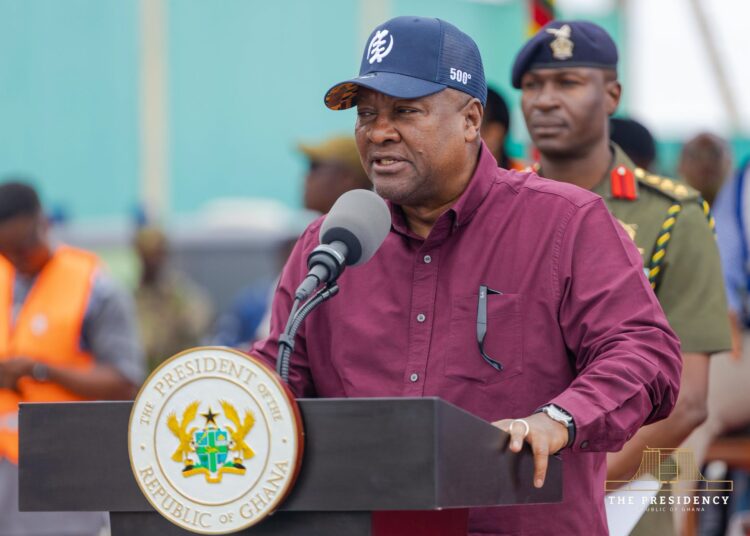
President John Dramani Mahama has unveiled an urban renewal project for Agbogbloshie that will turn the cleared dumpsite into an industrial park anchored by a major textile factory.
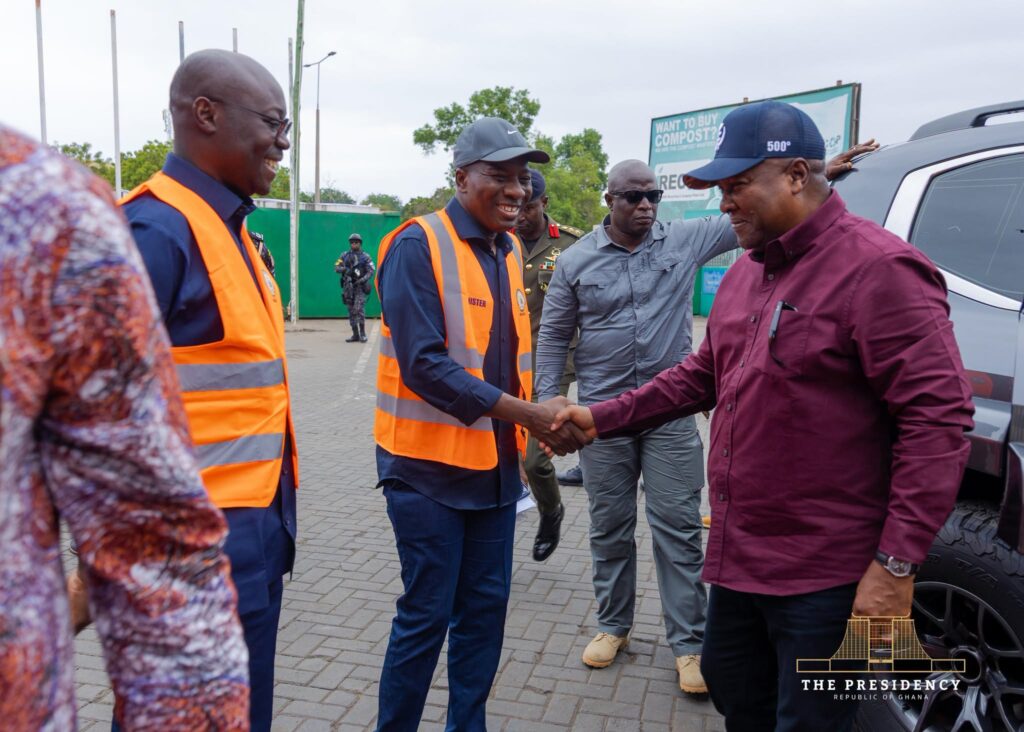
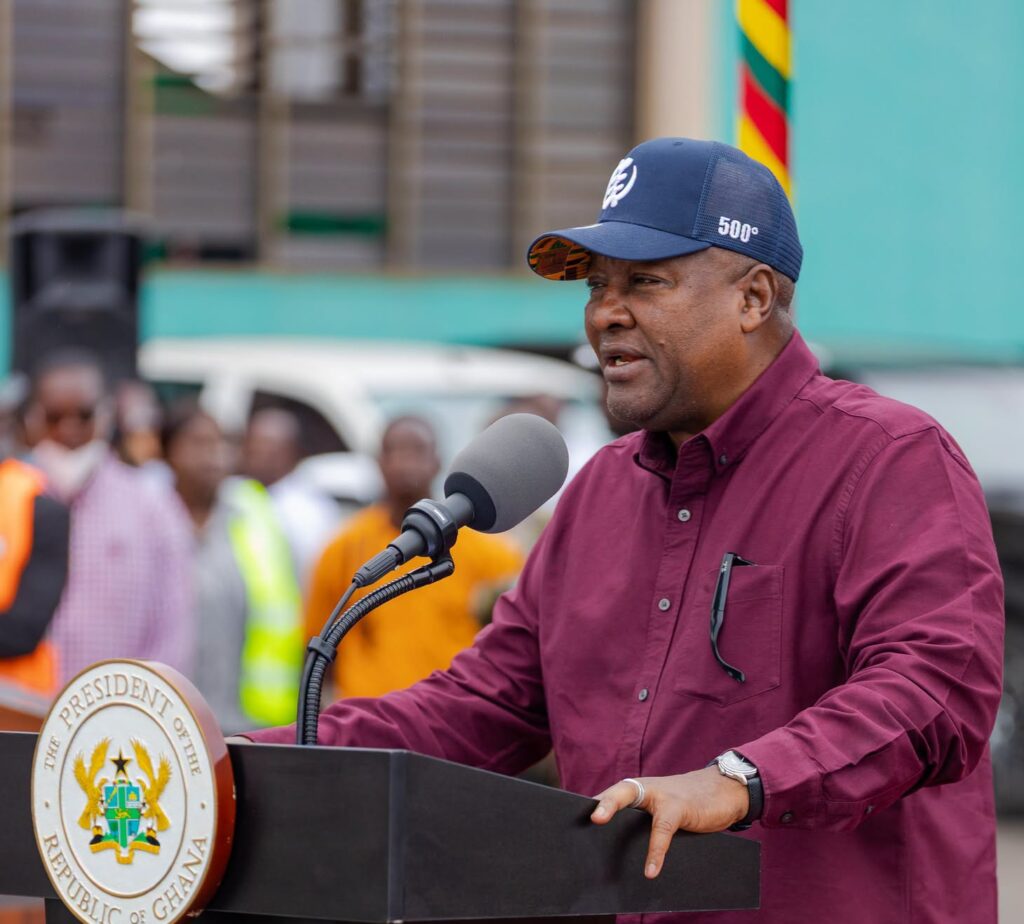
He announced the plan on Friday, 18 September 2026, while commissioning the evacuation of accumulated waste from the site under the National Emergency Waste Evacuation Exercise, at a ceremony held at the IRECOP Management Centre in Jamestown, Accra.
The clearing operation is built around a haul of roughly 42 kilometres from Agbogbloshie to the Adepa Engineered Landfill Site near Nsawam in the Eastern Region, where the waste will be disposed of under controlled conditions.
A drone-assisted assessment puts the volume at about one million tonnes, and the exercise is expected to be completed within 90 days using state-owned equipment and military engineers.
Two Decades Of A Waste Mountain
President Mahama framed the intervention against the site’s long history, telling the gathering that the heap has become a standing indictment of Ghana’s sanitation record. “For more than two decades, Agbogbloshie has stood as a painful reminder of the scale of our sanitation challenges, and the consequence of allowing it to persist,” he said.
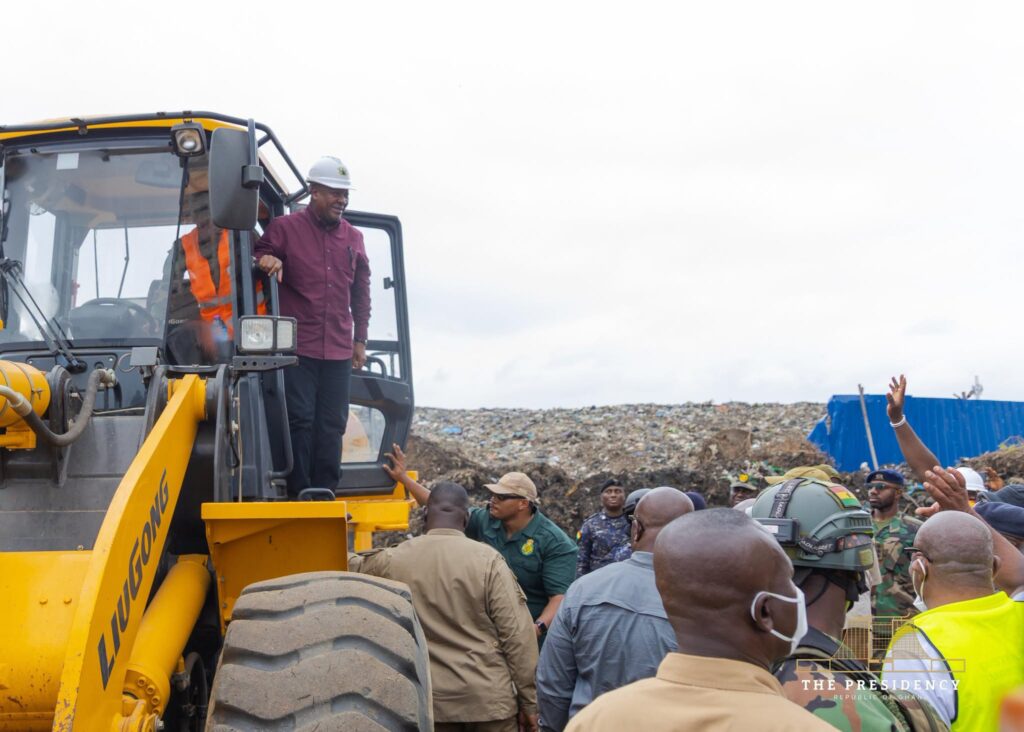
He described accumulated refuse, discarded plastics and electronic waste forming a mountain in the heart of the capital that threatens public health, degrades the environment and undermines the dignity of the surrounding communities.
For residents of Old Fadama, Agbogbloshie, Abosokai and neighbouring areas, he said, the exposure is daily, shaping the air they breathe, the conditions they work in and the environment their children grow up in.
The damage also runs downstream. Waste from the site enters the Odaw River and the Korle Lagoon, obstructing the drainage system and worsening the flood risk that has repeatedly cost lives, homes and livelihoods across Accra.
His conclusion was that the status quo is incompatible with the capital the government says it wants, and that restoring order and reclaiming the city for those who live and work in it required decisive action.
A Textile Factory On Reclaimed Land
The commercial ambition attached to the clearance is what distinguishes this exercise from previous clean-up efforts, since the reclaimed land is earmarked for an industrial park rather than left open.
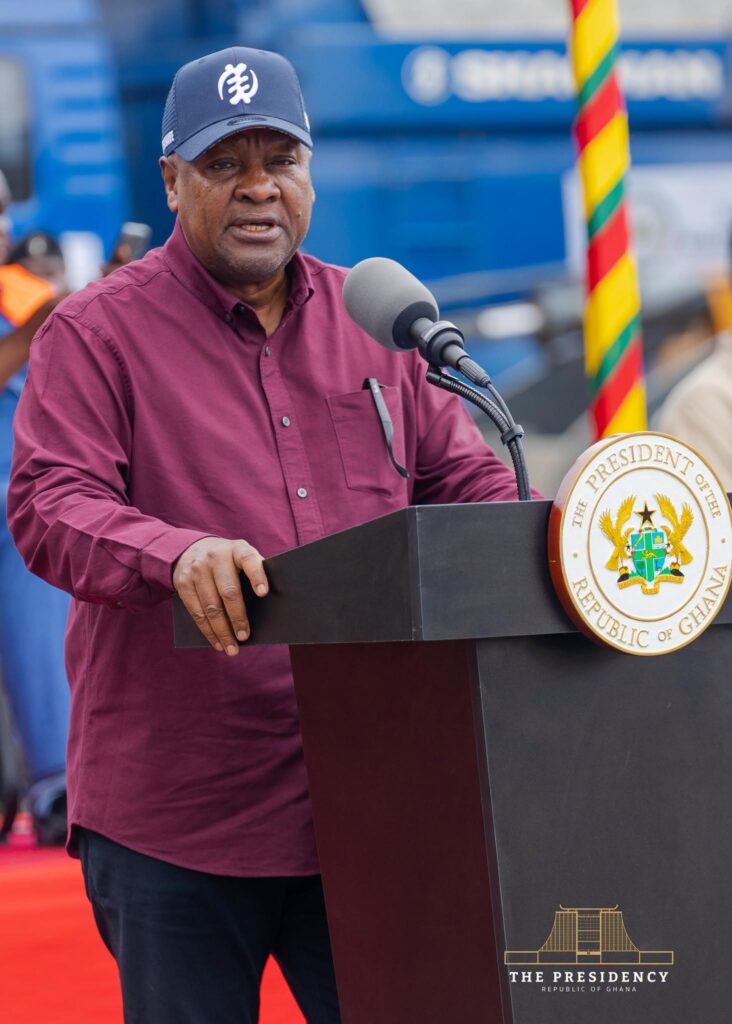
President Mahama was specific about the anchor tenant. “We intend to establish a major textile factory here, so that we can provide employment to our young people,” he said.
He added that the operation would end the open dumping and burning that have damaged the surrounding environment for far too long, which places a continuing obligation on the assemblies to prevent the site from filling up again once the trucks leave.
DRIP Equipment Put To Work
The first of three reasons the President gave for the exercise’s significance concerned the use of assets Ghana already owns. Heavy equipment procured under the District Road Improvement Programme, including tipper trucks, excavators, bulldozers and wheel loaders, is being deployed on the operation.
He tied that to a wider expectation about public property. “These machines were purchased with the taxpayers’ money, and so they must deliver practical benefits to the people of Ghana,” he said.
President Mahama commended the Minister for Local Government, Chieftaincy and Religious Affairs, Mahama Ayariga, the Finance Minister, Dr Cassiel Ato Forson, and the Minister for Roads and Highways, Kwame Governs Agbodza, for proposing an approach that drew on existing equipment and institutions.
Their proposal, as he described it, was to mobilise the DRIP fleet, bring the assemblies together and provide the resources to finish the job. “This is the kind of practical thinking that our Reset Agenda demands,” he said, adding that every public asset must serve a useful purpose and every cedi spent must deliver value.
He also singled out the DRIP coordinators, drivers, operators and maintenance teams mobilised across the southern sector, urging them to work safely.
Soldiers On Domestic Duty
The second reason he gave was coordination across government, with the Ghana Armed Forces supplying operational and engineering support through the 48 Engineer Regiment. The unit recently drew national attention for clearing the Accra to Kumasi expressway, and President Mahama indicated that Agbogbloshie is not the end of its assignments.
He was direct about that expanded role. “Soldiers are not only going to go to war, but they are also going to be used for emergency operations,” he said, before thanking the Chief of Defence Staff and the personnel assigned to the operation.
The remark signals settled policy rather than a one-off deployment, positioning military engineering as a standing instrument of domestic development.
Funding And Private Trucks
The Ministry of Finance is providing the funding, with additional support from the District Assemblies Common Fund, while the Local Government Ministry leads the exercise on the ground.
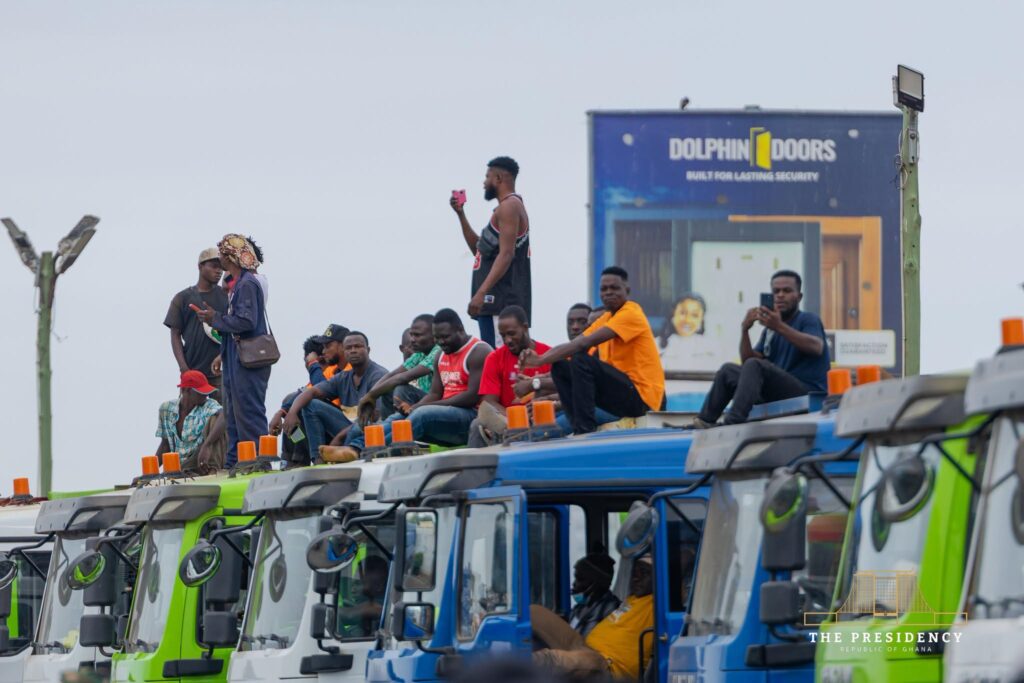
The Roads and Highways Minister has also mobilised private road contractors to contribute equipment, and Mahama said pledges have brought in about another 200 tipper trucks to work alongside the DRIP fleet.
He welcomed those contributions and encouraged further private sector participation, arguing that ministries, assemblies, security services and businesses working to a common goal can overcome any challenge.
The Haul To Nsawam
At the receiving end, the evacuated waste is to be compacted and covered at the Adepa facility with environmental safeguards, rather than simply relocated into another open dump.
The scale of the logistics is considerable. Moving a million tonnes over 42 kilometres within 90 days means a continuous convoy through Accra traffic, which will test both the equipment and the coordination the President praised.
The harder question sits beyond the 90 days. Agbogbloshie has been cleared before in smaller measure and refilled, so the renewal project will be judged on whether the industrial park and its textile factory arrive, and on whether enforcement keeps the reclaimed land from becoming a dumpsite again.