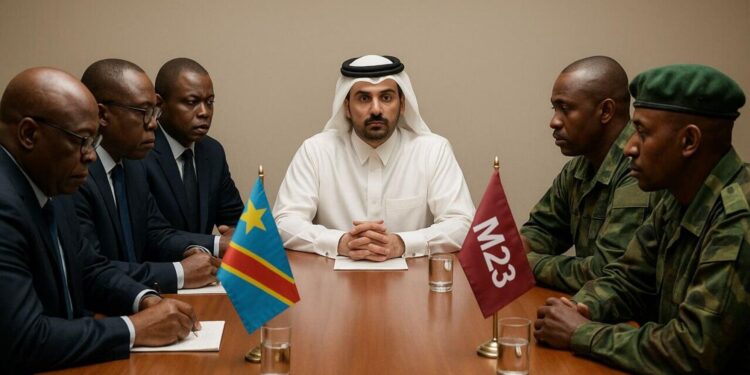
Peace negotiations between the Democratic Republic of the Congo (DRC) and the M23 rebel group, supported by Rwanda, are reportedly progressing steadily in Qatar.
According to a diplomatic source close to the talks, the discussions are “moving in the right direction” as both parties continue working with Qatari mediators to resolve the final sticking points in a complex conflict that has plagued eastern Congo for decades.
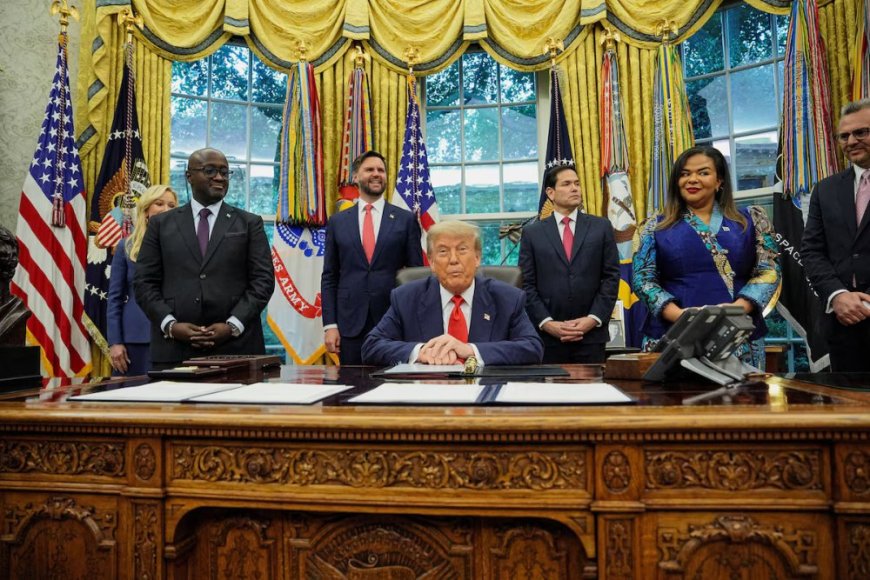
The talks follow the signing of a broader peace agreement between Kinshasa and Kigali last month in Washington. While that deal marked a significant diplomatic milestone, its success hinges largely on M23’s willingness to sign on formally. Without their cooperation, peace in the region remains elusive.
Last week, M23 officials called for renewed dialogue to finalize unresolved elements in the U.S.-brokered deal. The group’s spokesperson, Oscar Balinda, reaffirmed their desire for engagement in the Qatari-mediated process, signaling cautious optimism for a resolution that includes all stakeholders.
For many in Congo, however, the Washington pact has raised questions. While it may offer a diplomatic opening to end the violence, it is also seen as a potential conduit for U.S. strategic interests, especially in securing access to Congo’s mineral wealth, which includes cobalt, lithium, and tantalum. These materials are critical to global technology, from smartphones to fighter jets.
The U.S., under President Donald Trump, has pushed aggressively to tap into these resources, seeking alternatives to Chinese dominance in Africa’s mining sector. In particular, Chinese companies currently control the bulk of cobalt refining operations worldwide, with much of their supply sourced from Congo. American officials see breaking that monopoly as a geopolitical imperative.
Rwanda, which has been accused of profiting from illicit mining in Congo’s eastern regions, denies involvement in mineral exploitation. However, analysts argue Rwanda’s proximity and military involvement make it nearly impossible to disentangle from the mineral trade entirely. During the current talks, Rwanda reportedly agreed to lift “defensive measures,” though it remains unclear whether that includes a full withdrawal of troops from Congolese territory.
Mineral Interests Shape US Mediation
Congolese Foreign Minister Christophe Lutundula Apala has praised the United States for its role in the negotiations, describing Washington as a “reliable partner” in both peacebuilding and development. “So there is no doubt in this moment… when it comes to the credibility of the US as a partner,” he said, emphasizing the dual track of political and economic collaboration between the two nations.
That economic track includes ongoing discussions between the U.S. and Congo over mineral extraction rights. According to the U.S. Department of Commerce, Congo’s largely untapped mineral reserves could be worth as much as $24 trillion, underscoring the high stakes involved in securing a stable investment environment.
Political scientist Christian Moleka of the Dypol think tank in Kinshasa welcomed the Washington-Kigali agreement as a “major turning point,” but cautioned that it cannot address the root causes of the conflict alone. “The current draft agreement ignores war crimes and justice for victims by imposing a partnership between the victim and the aggressor,” he warned.
In North Kivu province, an epicenter of the violence, locals have expressed a mix of hope and skepticism. “I don’t think the Americans should be trusted 100%,” said Hope Muhinuka, a community activist. “It is up to us to capitalize on all we have now as an opportunity.”
The origins of the conflict trace back to the aftermath of Rwanda’s 1994 genocide, when nearly 2 million Hutu refugees fled into Congo, fearing reprisals from the advancing Tutsi-led Rwandan Patriotic Army. Rwanda has long accused some of these refugees, particularly militia elements, of continuing to pose a threat to Tutsi populations, both within and beyond its borders.
Since then, eastern Congo has endured decades of chaos. Over six million people have died as a result of violence, famine, and disease. The rise of armed groups like M23, many of which claim to protect ethnic communities or exploit regional power vacuums, has made peace difficult to achieve.
While current negotiations may not resolve all underlying tensions, they are viewed as a critical step in a broader strategy to stabilize the region. Whether the talks in Qatar can deliver lasting peace, however, remains uncertain.