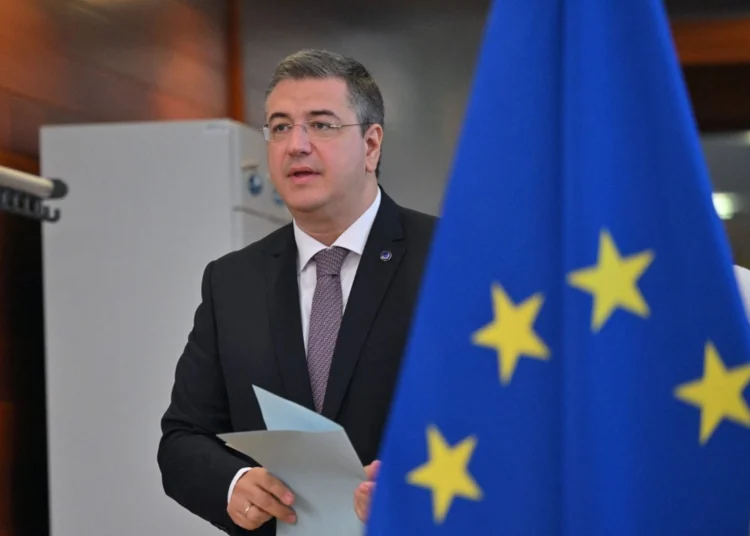
EU Transport Commissioner, Apostolos Tzitzikostas has disclosed that the European Commission will present a plan this autumn to significantly boost high-speed rail travel in Europe, promising a “long-term vision for a more connected, efficient and competitive network across Europe.”
Tzitzikostas announced that the project would involve the “coordinated planning, financing and implementation” of high-speed rail infrastructure and of rolling stock that could operate across national borders.
He stated that the EU is determined to build genuine “passenger-centred, attractive and affordable rail services” with faster lines and smoother cross-border rail travel considered crucial to the bloc’s competitiveness and climate goals.
“Ultimately, people will choose the train not just because it is more sustainable but because it is the more comfortable, faster and more affordable option for long-distance travel in Europe. That is our direction of travel.”
Apostolos Tzitzikostas
Long-distance rail travel in Europe has long suffered from poor coordination and connectivity, with different line gauges, rolling stock specifications, operating technologies and signalling systems hampering cross-border links.
A survey published last month suggested that three in four EU citizens would prefer to take a high-speed train instead of a plane if connections between capitals and major urban areas were fast and reliable. However, according to a 2021 report by the commission, rail accounted for less than 10% of cross-border EU travel.
Cash-strapped national operators tend to prioritise domestic services. New infrastructure – and trains capable of operating across borders – are expensive. While new routes have opened and others are on the way, for most Europeans, the plane is faster on most journeys.
The commission has previously set a goal of doubling high-speed rail traffic from 2015 levels by 2030, and trebling it by 2050, via a proposed 49,400km, €546bn (£476bn) high-speed rail network connecting all EU capitals and major cities at speeds of 250km/h (155mph) or more.
Tzitzikostas said that his new plan would help achieve that goal, which was attainable if “we address systemic bottlenecks.”
The issue was not just more EU money, he said, although rail would be a major beneficiary of a 100% boost to the transport infrastructure budget.
Call For Coordinated Approach
The EU Transport Commissioner expressed the need for “a coordinated financing approach, combining the best use of EU funding, national support and private investment.” However, new high-speed lines – and improved existing ones – would not be enough on their own.
“It’s also about ensuring that infrastructure is used effectively. Making sure new operators can access the market, that new standardised rolling stock is available, and that the network is managed as a single system, with similar operating rules and conditions.”
Apostolos Tzitzikostas
Connectivity is not the only issue. As well as being faster, air travel is often cheaper – and easier to book. A 2023 Greenpeace report which assessed 112 European routes found that trains were, on average, twice as expensive as planes.
T&E, a transport and clean energy advocacy group, noted that air travel is artificially cheap mainly because all parts of the sector – from airports through plane manufacturers through to airlines – are subsidised by local, regional, national and EU authorities, while airlines are exempt from paying tax on their fuel and VAT on their tickets.
Cross-border train passengers dream of the seamless through tickets available to flyers. European train operators share little ticket information with each other or with booking platforms, forcing passengers to buy multiple separate tickets.
While EU plans for a single booking system met with resistance, Tzitzikostas said that the EU was now working to make ticket-buying easier by ensuring all operators and vendors could access ticket sales platform and improving passenger rights.
Without smoother rail connections, lower prices and one-stop ticketing, air travel still has the edge. However, if rail can deliver a “comfortable, affordable, easy-to book service,” passengers will respond, Tzitzikostas insisted. He added that more are choosing high-speed rail already “– not just because it’s more sustainable, but because it’s better.”
READ ALSO: Dormaahene Endorses Mining Policy Review, Urges Stronger Role for Traditional Authorities