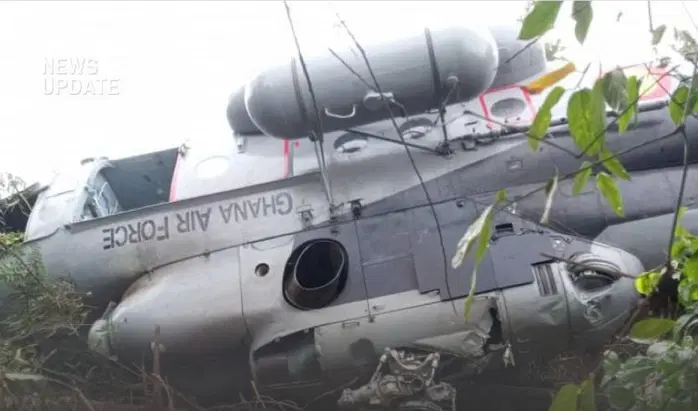
The IMANI Center for Policy and Education has stated that Ghana’s disaster preparedness is dangerously inadequate, a reality laid bare by the recent military helicopter crash in the mist-shrouded forest mountains of Adansi Akrofuom that killed Defence Minister Hon. Omane Boamah, Environment Minister Hon. Murtala Mohammed, and six others.
For IMANI, the tragedy is not just an aviation incident under investigation—it is a glaring indictment of the country’s ability to respond to large-scale emergencies.
As officials sift through weather data, maintenance logs, and flight recordings to determine what went wrong, the think tank warned that the nation’s sense of security has been shattered.
From IMANI’s perspective, Ghana’s relative immunity to major disasters over the years has fostered a false sense of safety and dangerous complacency. When crises are rare, the organisation observes, planning for the worst becomes optional, and procurement processes grow ripe for abuse.
In such a climate, “emergencies” too often become pretexts for inflating budgets and padding contracts, with leaders expending more energy on self-interest than on public protection.
“This lull in calamities must end. We need to institutionalise risk aversion through regular simulation exercises, tabletop drills, and scenario games that force every ministry, every agency, and every district assembly to confront the chaos of a worst-case scenario—before it happens.
“These rehearsals should not be perfunctory annual rituals, but rigorous, multidisciplinary engagements involving meteorologists, engineers, first responders, community leaders, and civil society actors. Only by embedding preparedness in our professional DNA can we dismantle the mindsets that treat safety as an afterthought.”
IMANI Center for Policy and Education
While aviation protocol and ministerial accountability dominate headlines, IMANI indicated a slower but equally deadly crisis is unfolding on Ghana’s roads. Just a week before the helicopter crash, the Savior Church, Ghana lost 16 children in a horrific accident.
The very next day after the crash, multiple fatalities were feared in a collision involving a 2M Express Bus.
Pothole-filled highways, decrepit vehicles, and overcrowded “trotros” have turned daily travel into what IMANI called a national lottery of survival.

The organisation pointed out that Mercedes-Benz Sprinter Vans are manufactured to carry 12 to 15 passengers, yet in many urban areas, operators refit them with additional bench seating to cram in as many as 23 people—often without a single seatbelt in the back rows.
The same is true for the Toyota Hiace “fish” and Hyundai 100 minibuses, which are routinely modified far beyond the manufacturer’s specifications. At highway checkpoints, IMANI lamented, enforcement is often replaced by “rubber-stamping” unfit vehicles in exchange for bribes.
The statistics are grim. In 2024, Ghana recorded 13,489 crashes, killing 2,494 people and injuring 15,607. In just the first quarter of 2025, there were 3,674 reported crashes, resulting in 752 deaths and 4,287 injuries.
Behind each number is, in IMANI’s words, “a family devastated, an income lost, and a community forever scarred.”
Road Safety Overhaul Urged Amid Calls for Disaster Preparedness
Accordingly, IMANI Africa’s proposed solution involves two main actions. The first is to introduce strict regulations for vehicle conversions, supported by national safety standards for seatbelts, structural modifications, and maintenance schedules, all enforced through unannounced inspections and meaningful penalties.
The second is to reform checkpoint operations by introducing body-worn cameras, creating a digital registry of offenders, and empowering community watchdog groups to report extortion without fear.

“Dismantling Ghana’s road-safety crisis means changing deeply ingrained behaviours. Drivers must embrace seat-belt use and speed limits as non-negotiable. Passengers must learn to refuse overloading and demand safe vehicles. Civil society organisations can amplify survivors’ stories and lobby for transparent accident investigations. When citizens wield collective pressure, even the most sluggish authorities are forced to act.”
IMANI Center for Policy and Education
For IMANI, Ghana’s recent tragedies—whether in the skies or on the roads—are “not isolated calamities but warning sirens”.
The think tank argued that “every life lost to avoidable causes is an indictment of systems that put profit and expedience above protection and prevention.”
As part of its recommendations, IMANI called on the National Road Safety Authority to mandate that all commercial passenger vans adhere to the manufacturer’s seating limit of 12 to 15 passengers, with each seat crash-tested and fitted with a working seatbelt.
The group proposed expanding the NSRA’s Pre-Registration Checklist to include a digital inspection verifying seat dimensions, belt integrity, and chassis compliance before a vehicle is registered.
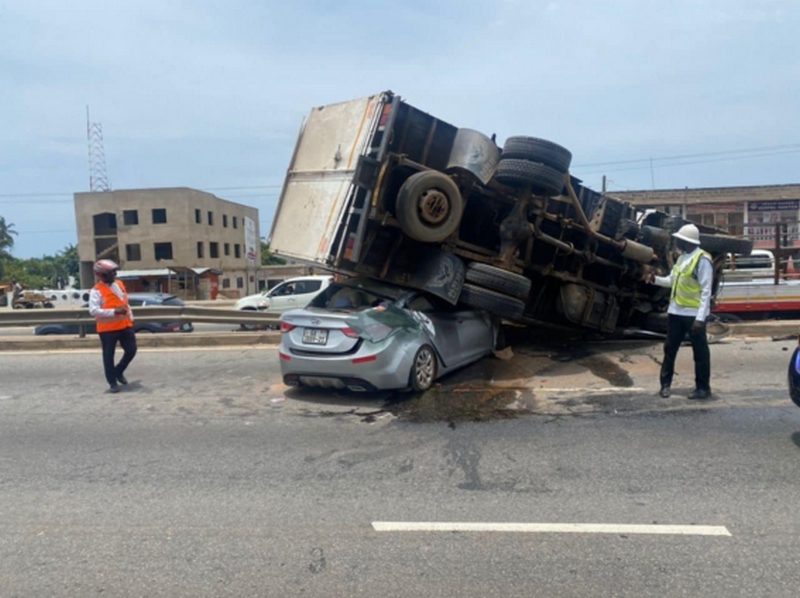
“Non-compliant vehicles would be denied registration, and operators found operating overloaded or belt-deficient vans would incur escalating sanctions, ranging from substantial fines to suspension of commercial licenses.”
IMANI Center for Policy and Education
Older vehicles unable to meet the new standards should be phased out, with drivers given financial support to purchase safer models.
Regular unannounced roadside audits and publicly accessible compliance scores would further incentivise adherence, embed a culture of accountability, and proactively safeguard road users.
For IMANI, the path forward is clear: Ghana must channel its grief into concrete reforms, forging a culture of preparedness that addresses both the sudden shocks of headline-making disasters and the slow-motion tragedies that unfold on the country’s roads every day.
READ ALSO: DC Mayor Meets Bondi Amid National Guard Deployment To US Capital