
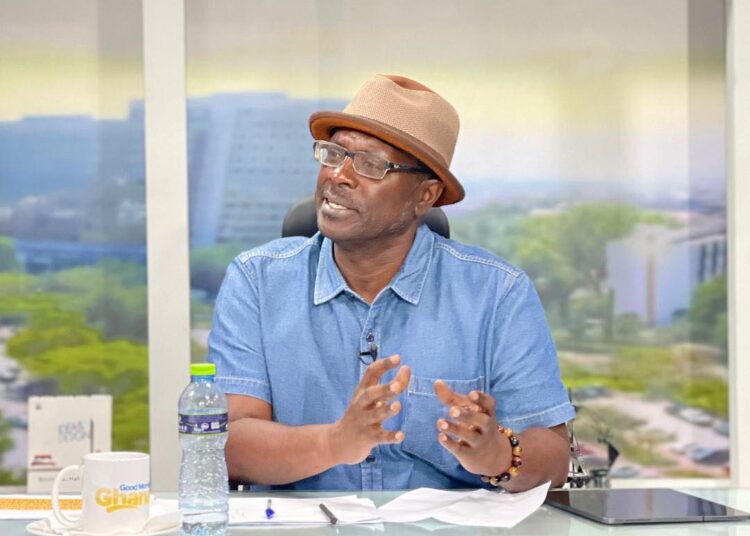
Legal Scholar and Fellow at the Centre for Democratic Development (CDD-Ghana), Professor Stephen Kwaku Asare, has cautioned against ongoing calls to expand the number of Supreme Court justices, insisting that the real crisis in Ghana’s justice delivery system lies in the lower courts, where judges are overwhelmed with massive backlogs.
In a recent analysis of caseloads across the judiciary for the 2022/23 legal year, Prof. Asare underscored what he described as an “uncomfortable truth” – that while the Supreme Court and Court of Appeal are relatively comfortable in terms of caseload distribution, the trial courts, particularly the Commercial High Court and the Circuit Courts, are drowning under a flood of pending cases.
“Much noise has been made about the case overload of the Supreme Court, with proposals to increase the number of justices to 20. Currently, there are 19, but there is no constitutional ceiling.
“With that in mind, we took a deep dive into the data, and the reality is clear: the bottlenecks are not at the appellate courts but in the trial courts.”
Professor Stephen Kwaku Asare
According to the data he presented, total pending cases across the judicial system rose to about 130,000 during the period under review; however, the distribution of cases per judge showed sharp disparities.
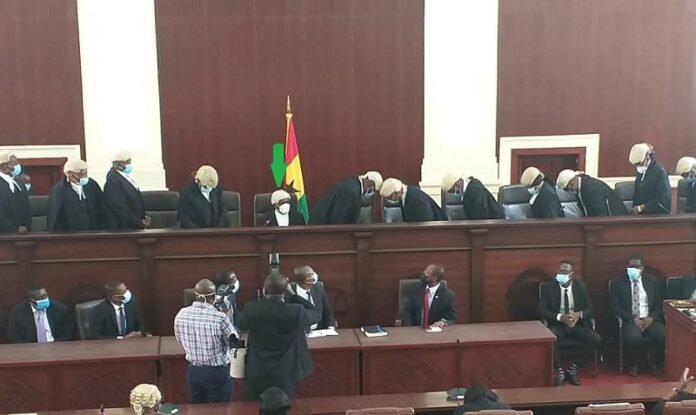
The Supreme Court, with 14 justices, handled a total of 595 cases, averaging about 43 cases per judge. The Court of Appeal’s 25 judges handled roughly 157 cases each.
In contrast, the High Court (General Division), with 75 judges, had an average of 370 cases per judge, while the Commercial and Specialized High Court stood out as the most overburdened, with just 10 judges managing a staggering 1,090 cases each.
The Circuit Courts, which form a critical part of the trial process, fared only slightly better, with 63 judges averaging around 461 cases each. Meanwhile, the District Courts carried the largest total backlog of approximately 58,000 cases, spread across 173 judges, averaging 335 cases each.
Judicial Problem Not the Supreme Court
For Prof. Asare, the conclusion is inescapable: the judiciary’s problem is not at the Supreme Court. “Contrary to the noise, the Supreme Court and Court of Appeal are relatively comfortable,” he observed.
“But at the trial level, especially the Commercial High Court and Circuit Courts, judges are drowning. Justice delayed here is justice denied, and in commercial cases, delays can cripple businesses and the economy.”
Professor Stephen Kwaku Asare
He further argued that the proposed increase of Supreme Court justices to 20 would only misdirect scarce resources, leaving the real bottlenecks unresolved.
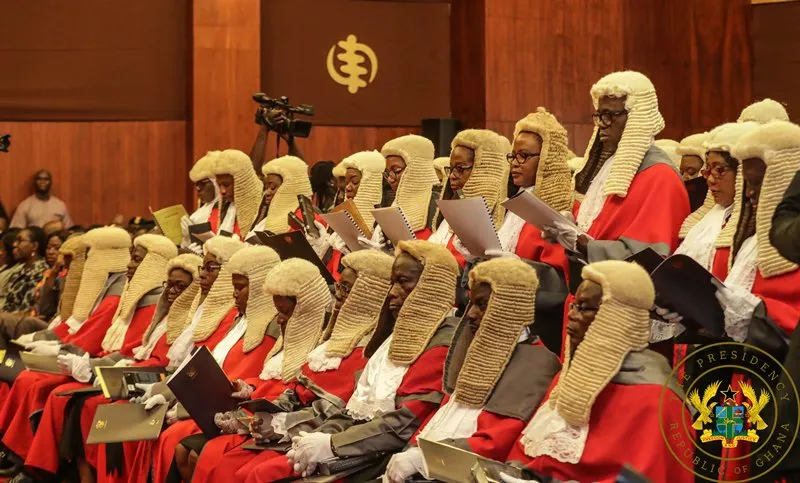
“On the other hand, we should discard talk of increasing the Supreme Court to 20 justices. Instead, cap it at 9, and oust its review jurisdiction, which only adds to perceived workload without serving true justice”.
Professor Stephen Kwaku Asare
Prof. Asare pointed out that redistributing resources and adding personnel at the lower levels would bring more meaningful improvements in justice delivery.
Specifically, he suggested that the Commercial High Court urgently requires reinforcement. “Doubling the bench to 20 would still leave each judge with over 500 cases, but far better than the current 1,090,” he explained.
Similarly, he proposed that the Circuit Courts should receive an additional 20 to 25 judges to bring workloads down to manageable levels. The High Court (General Division), he added, also needs reinforcement to prevent further backlog growth.
His recommendations, if implemented, could significantly reduce delays in the courts where most litigants interact with the justice system and where the economic impact of delayed rulings is most acute.

Many have long warned that delays in trial courts undermine public confidence in the rule of law, clog the business environment with unresolved disputes, and discourage both local and foreign investment.
Prof. Asare’s analysis adds weight to these concerns by demonstrating that without strengthening the lower courts, reforms at the appellate level will do little to solve the crisis.
He concluded by stressing that Ghana’s judicial reform agenda should be guided by evidence rather than perception: “The caseload figures make it clear: if we want faster justice, resources must go to the Commercial High Court and Circuit Courts. This is where justice is most delayed, and therefore most denied.”
READ ALSO: SIGA Directs Bui Power Authority to Pay First Dividends in 2025