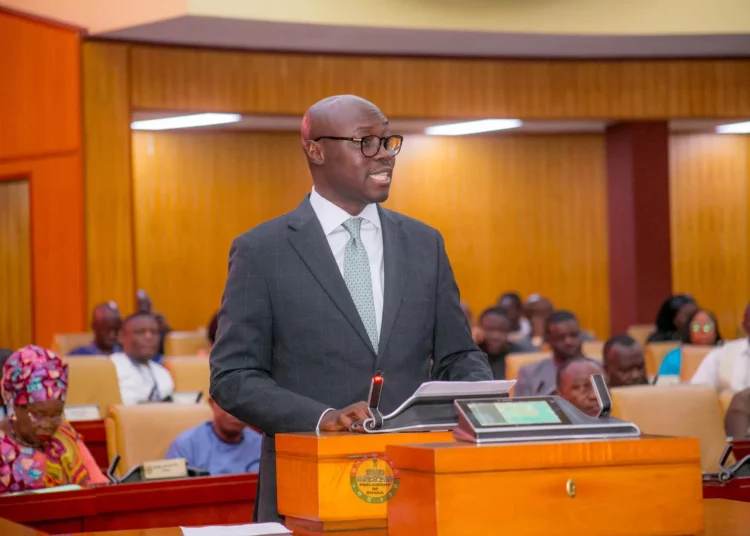
The Government of Ghana has moved to reassure investors, development partners, and financial markets that fiscal discipline will not unravel once the country exits the International Monetary Fund (IMF) programme in May 2026.
Amid fears of a potential return to unsustainable spending, officials have insisted that the gains made so far are the result of deliberate policy decisions rather than merely IMF oversight.
According to government sources, maintaining prudent financial management remains a priority even after the expiration of the three-year, $3 billion Extended Credit Facility (ECF) programme. They argue that current stability in public finances and inflation management reflects Ghana’s internal reforms and resolve.
IMF Programme Nearing Final Stretch
The IMF arrangement, approved in May 2023, has been pivotal in stabilising Ghana’s troubled economy following a debt crisis that eroded investor confidence. Its core objectives include restoring fiscal sustainability through revenue mobilisation and spending efficiency, expanding social protection, strengthening public financial management, and tightening monetary policy to control inflation.
An IMF mission is expected in Accra in late September 2025 to conduct the programme’s fifth review, covering economic data up to June 2025. This penultimate assessment will scrutinise inflation, revenue mobilisation, arrears, social spending, and the recapitalisation needs of banks. The final review is scheduled for April 2026.
Officials maintain that Ghana’s steady progress through the IMF assessments is evidence of credible reforms that will endure beyond the programme’s end.
Investors Still Wary
Despite these assurances, investors and ratings agencies remain cautious. Analysts note that Ghana has a history of fiscal slippages following previous IMF exits, raising fears of a repeat scenario once external oversight is removed. Some donors have argued that Ghana’s recent macroeconomic improvements owe more to IMF enforcement than government initiative.
One government official has strongly dismissed these claims, stressing that the current checks and balances are homegrown policies. “The progress we are making is not simply because of IMF policing. These are deliberate policy choices to ensure long-term stability,” the official said.
To further signal its commitment, government is exploring the possibility of subscribing to one of the IMF’s policy instruments even after the ECF ends. While this would not be a full programme, it would serve as a confidence-building measure for investors, donors, and ratings agencies.
Such an arrangement could act as a “safety valve,” assuring markets that Ghana intends to maintain prudent management even without direct IMF enforcement. This move, according to analysts, may prove critical in sustaining access to international credit and reducing borrowing costs.
Mahama Rules Out IMF Extension
President John Mahama has already confirmed that the current IMF programme will not be extended beyond May 2026. This decision places the responsibility squarely on government to prove that fiscal discipline can be self-sustaining.
Economic commentators describe this as one of Ghana’s biggest post-IMF tests. If successful, it could mark a turning point in the country’s history of cyclical IMF interventions. However, failure to maintain prudence could reignite investor anxiety and trigger downgrades by ratings agencies.
Donors have urged government to build stronger “shock absorbers” to withstand potential economic pressures in a post-IMF environment. These include widening the tax base, addressing energy sector challenges, resolving arrears in statutory funds like the NHIL, GETFund, and Road Fund, and safeguarding social spending.
The government has responded by insisting that reforms in tax administration, energy restructuring, and social protection are already in motion to ensure resilience.
As Ghana nears the end of its IMF journey, the focus is shifting from recovery to sustainability. The government’s assurances of fiscal discipline are being closely watched by both domestic and international stakeholders.
If Ghana successfully maintains stability after May 2026, it will boost investor confidence, enhance creditworthiness, and signal maturity in managing its finances. But if discipline unravels, it risks undoing the hard-won gains achieved under the IMF programme.
READ ALSO: GSE Market Cap Sheds GHS2 Million as Trading Volume Plunges 50%