
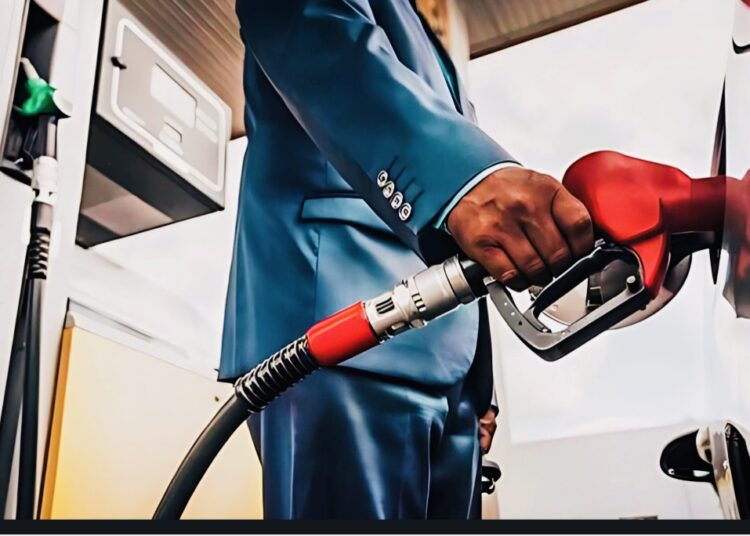
The Centre for Environmental Management and Sustainable Energy (CEMSE) has intensified its campaign against the Bulk Oil Storage and Transportation (BOST) margin, describing it as an unnecessary burden on consumers and businesses that should be scrapped immediately.
The levy, which was introduced to support BOST in maintaining strategic petroleum storage and distribution infrastructure, has surged sharply over the past five years.
According to CEMSE, the charge has risen fourfold—from GHS 0.03 per litre in 2020 to GHS 0.12 per litre as of August 2025. This increase has translated into a windfall for BOST, with revenues from the levy climbing from GHS 211 million in 2020 to over GHS 424 million by 2023.
However, CEMSE argues that while Ghanaians continue to shoulder the levy through higher fuel prices, the benefits have been questionable.
“Spending on training, seminars, and conferences surged from GHS 3 million in 2020 to GHS 20 million in 2023, while the much-publicized Afram Plains pipeline project remains incomplete, with some imported pipes declared unfit for purpose.”
Centre for Environmental Management and Sustainable Energy (CEMSE)
Levy Branded an “Unfair Advantage”
CEMSE further pointed out that BOST has grown into a profitable entity, generating billions of cedis in terminal and commercial revenues independent of the levy. This, it argues, undermines the original justification for the charge.
“If other limited liability companies like TOR or ECG don’t receive free levies, why should BOST?
“The BOST margin has transformed from a support mechanism into an unfair subsidy that distorts competition in a deregulated market.”
Centre for Environmental Management and Sustainable Energy (CEMSE)
The centre stressed that with private players already handling close to 80% of petroleum storage and transportation in Ghana, the rationale for propping up BOST with a dedicated levy no longer holds. Instead, it gives the company an undue edge over competitors who operate without such guaranteed income.

Perhaps the most striking criticism from CEMSE concerns the broader economic impact of the levy. By adding directly to fuel prices, the BOST margin has knock-on effects on transportation costs, inflation, and household spending power.
“In a deregulated market where efficiency and fair competition should prevail, the BOST margin is redundant.
“Every extra pesewa added to fuel prices pushes up the cost of living. The BOST margin is no longer a safety net, it’s a hidden tax.”
Centre for Environmental Management and Sustainable Energy (CEMSE)
With fuel prices already a sensitive driver of inflation and public discontent, the group warned that the continuation of the levy risks further eroding consumer welfare.
Questions Over Accountability

Beyond its economic impact, CEMSE also raised concerns about transparency in how BOST utilises the funds.
The report pointed to questionable spending priorities, noting that training and conference budgets had ballooned while key infrastructure projects, such as the Afram Plains pipeline, have failed to materialise as promised.
“The public deserves clear answers on how over GHS 400 million in levy revenues have been managed.
“Projects that were supposed to justify the levy remain incomplete, yet administrative spending keeps rising. This is not the accountability that Ghanaians were promised.”
Centre for Environmental Management and Sustainable Energy (CEMSE)
CEMSE’s renewed advocacy places the government under pressure at a time when economic conditions remain fragile, and public patience with rising living costs is wearing thin.
The centre insists that the time has come for bold reform to protect consumers and restore fairness in the petroleum downstream sector.
“Scrapping the BOST margin will ease pressure on fuel prices, reduce transport costs, and bring relief to households.
“BOST has demonstrated that it can stand on its own feet. It does not need to be cushioned at the expense of ordinary Ghanaians.”
Centre for Environmental Management and Sustainable Energy (CEMSE)
The debate over the levy is expected to intensify in the coming months as policymakers weigh competing priorities: shoring up BOST’s strategic role in national energy security on one hand, and alleviating the financial burden on consumers on the other.
READ ALSO: Investors Snub T-Bills As Government Struggles to Raise GH¢6.7bn, Settles for GH¢3.2bn