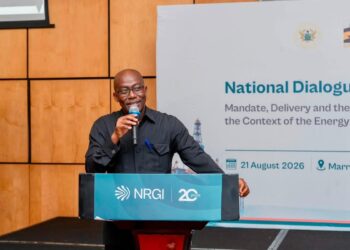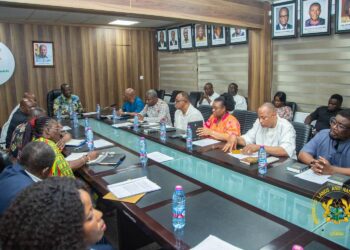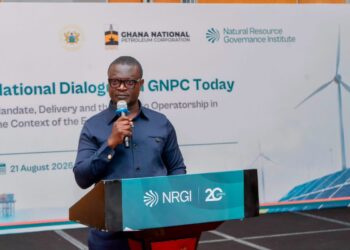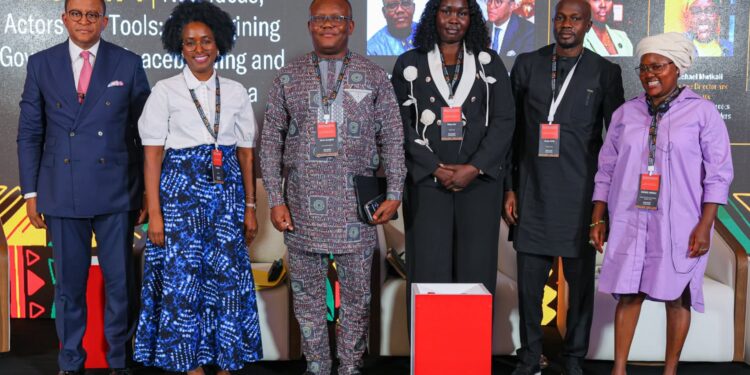
Participants at the High-Level Conference on Governance, Critical Minerals, and Conflict in Africa have gathered to formulate a shared, people-centered governance framework designed to ensure that the continent’s vast critical mineral wealth directly strengthens democratic governance, advances regional peace, and drives inclusive socio-economic development.
Concentrating on practical institutional actions, delegates outlined how resource-rich African nations can prevent mineral wealth from degenerating into instability, environmental degradation, and armed conflict.
“Participants began to develop a shared, people-centered framework for critical mineral governance grounded in democracy, peace, and justice. At the heart of the discussions was a shared recognition that governance, critical minerals, and conflict cannot be addressed in isolation. Participants emphasized that critical mineral governance is fundamentally a question of political choice: whether mineral wealth becomes a force for peace and equity, or a source of tension and instability.”
Open Society-Africa
Expanding on this vision, representatives from African governments, regional organizations, civil society groups, mining communities, development institutions, and the private sector emphasized that critical mineral governance is fundamentally a political choice.

Rather than treating resource extraction as a purely technical or commercial endeavor, delegates established that mineral wealth must become a catalyst for equity and social cohesion.
To achieve this transformation, stakeholders highlighted four foundational pillars: strengthening governance across the entire mineral value chain, deploying peacebuilding mechanisms to address localized resource grievances, moving beyond raw material extraction to foster local economic diversification, and strategically leveraging global critical mineral demand to accelerate continental industrialization.
Addressing the Roots of Resource Contestation
The drive for a people-centered governance model stems from decades of structural challenges across Africa’s mining corridors, where resource extraction has frequently triggered social displacement, environmental violence, and localized violent conflicts.
Historically, top-down resource management models have prioritized foreign capital returns and state revenues over the security and economic well-being of local host communities.
This systemic exclusion has fueled deep-seated grievances, creating fertile ground for political instability and armed insurgencies in mineral-dense zones.
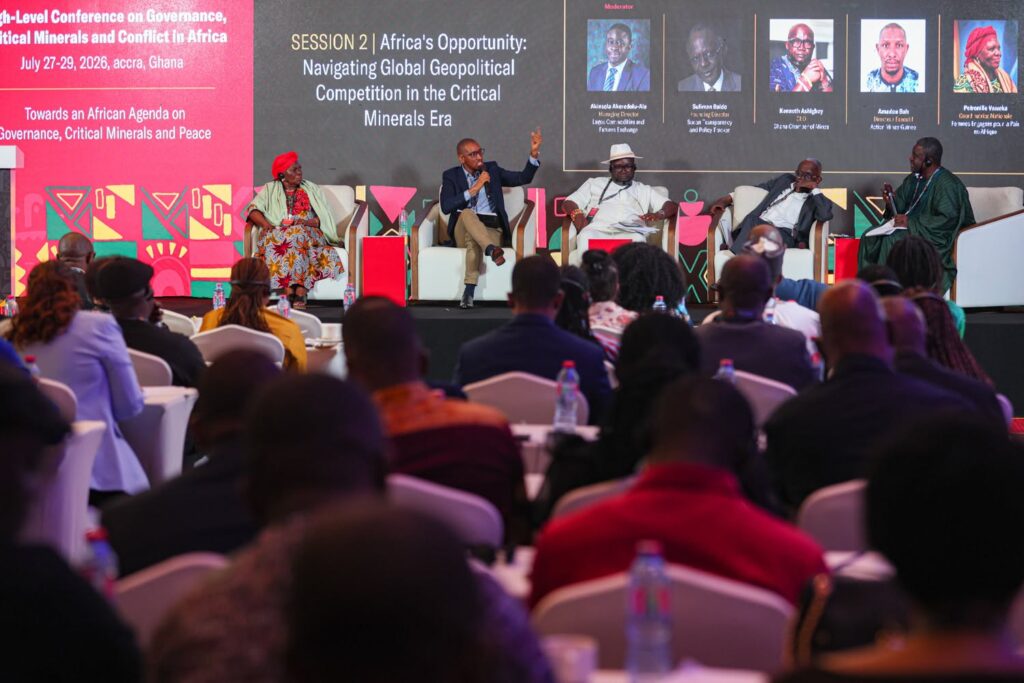
Establishing inclusive governance structures directly addresses these underlying tensions by converting historical sites of contestation into spaces for civic engagement and collaborative peacebuilding.
When frontline communities possess a binding voice in resource management backed by enforceable rights and transparent revenue-sharing mechanisms the probability of violent dispute drops significantly.
As conference delegates asserted, “governance, critical minerals, and conflict cannot be addressed in isolation,” underscoring that institutional legitimacy relies heavily on whether extractive operations uphold human rights and foster local stability.
Industrial Transformation and Local Value Addition
Beyond mitigating conflict, a people-centered framework is necessary to break the historical cycle of raw material exportation, which has left host nations vulnerable to volatile global commodity cycles and persistent poverty.
For decades, the African continent has supplied raw cobalt, lithium, manganese, and copper to international supply chains while capturing only a fraction of the ultimate value generated by global energy technologies.
Re-engineering the mineral value chain requires moving decisively beyond traditional extraction to establish domestic processing, refining, and manufacturing industries.

Localizing industrial value chains creates high-skilled jobs, retains wealth within domestic markets, and builds resilient local economies capable of sustaining communities long after mine closures.
Leveraging the soaring global demand for green transition minerals grants African governments unprecedented strategic leverage to demand local content integration, joint ventures, and technology transfers from foreign investors.
Strategic Positioning in the Global Energy Transition
The global shift toward renewable technologies, electric vehicles, and digitalization has thrust Africa’s vast critical mineral reserves into the epicenter of international geopolitics.
Without a unified, human-rights-based governance agenda, the rapid expansion of global mineral demand risks reproducing historical dynamics of exploitation and external resource capture.
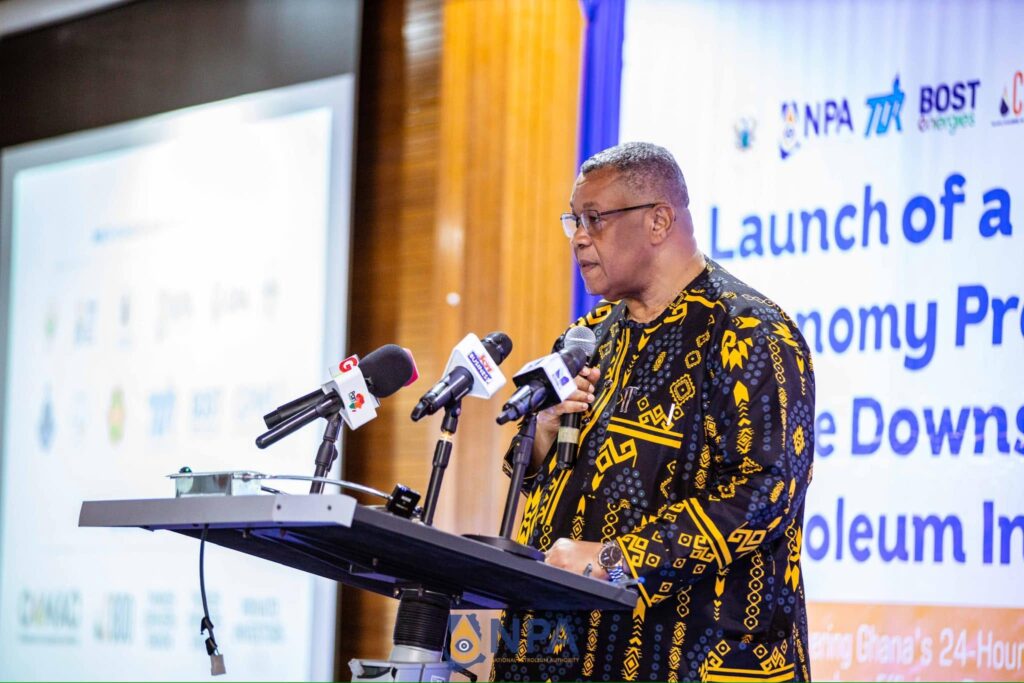
A cohesive, people-centered approach allows African states to align national policy frameworks with regional economic agendas, such as the African Continental Free Trade Area (AfCFTA).
By unifying regulatory standards, environmental protocols, and fiscal regimes, African nations can counter predatory investment practices and secure equitable terms in trade negotiations.
Ultimately, transforming critical minerals into instruments of broad-based prosperity depends on political will and institutional integrity, ensuring that the global demand for Africa’s resources directly secures the peace, sovereignty, and democratic future of its citizens.
READ ALSO:Galamsey Near Police Station Unacceptable, Akwatia MP Says