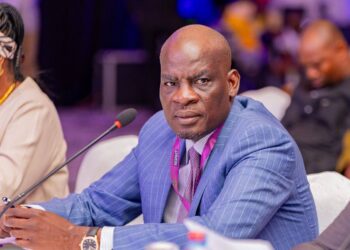
![NPP ; Kwame Baffoe [Abronye ]'s bail denial in focus](https://thevaultznews.com/wp-content/uploads/2025/09/Kwame-Baffoe-Abronye.jpg "Court Decision in Abronye’s Arrest Raises Questions About Justice 1")
Abronye’s arrest has ignited a heated national debate about the balance between free speech and state authority.
Kay Codjoe, a volunteer associate at IMANI Africa and political commentator, weighed in on the matter, questioning whether the case represents true justice or political maneuvering.
Kwame Baffoe, popularly known as Abronye, is no stranger to controversy. For years, he has built his reputation on fiery rhetoric and provocative statements.
Codjoe described him as someone who treats “microphones like weapons of mass provocation,” turning every talk show into “a boxing ring” and every interview into “a wrestling match where he swings verbal chairs before the referee even blows the whistle.”
Given this track record, Codjoe argued that no one should be shocked that Abronye’s words eventually landed him in court. The charges are rooted in longstanding laws that have been part of Ghana’s legal framework for decades.
“The law is clear enough. Sections 207 and 208 of Act 29 have been on our books since 1960. Section 207 forbids conduct that can disturb the peace. Section 208 makes it an offence to spread false news that may cause fear or alarm.”
Kay Codjoe
These provisions, he emphasized, are legitimate tools for maintaining public order. They give the state authority to act when speech threatens to incite unrest or erode social stability. On this fundamental point, he said, “There can be no dispute.”
While Codjoe acknowledged the existence and necessity of these laws, he noted that the way they are being applied in this case has unsettled many Ghanaians.
Abronye, a regional chairman of the opposition NPP, has been transported to court in a Black Maria, denied bail repeatedly, and detained over a misdemeanor charge that stems from words rather than violent actions.
This, Codjoe argued, represents a dramatic display of state power. Though the law permits such measures, he suggested that the optics raise important questions about proportionality and intent.
The presiding judge in the case has maintained a firm stance, reminding the public that free speech is not without limits.
Codjoe agreed with this principle, noting that words hold immense power. Lies, insults, and reckless accusations, if left unchecked, can corrode trust in democratic institutions and even spark unrest.
“Freedom of speech is not absolute,” he emphasized, echoing the judge’s reasoning. For this reason, Codjoe said, the judiciary has both the right and the duty to enforce limits when speech crosses into dangerous territory.
However, he cautioned against misplacing blame.
“Here is where clarity is needed. To associate this case directly with the president is flawed. The president does not sign charge sheets or determine bail applications. These processes begin with the police and the Attorney General.”
Kay Codjoe
By focusing solely on the president, Codjoe argued, the public risks overlooking the real institutions responsible for prosecution and enforcement, leaving them unchecked and unaccountable.
Beyond Politics: Reforming Colonial-Era Speech Laws Amid Abronye’s Arrest
The case has quickly become a flashpoint between the two major political parties. The NPP has described the situation as harassment, claiming their member is being unfairly targeted.
Meanwhile, the ruling NDC insists that the law must apply equally to all, especially when speech veers into recklessness.

Codjoe acknowledged that both parties have elements of truth in their positions but stressed that the larger issue goes beyond partisan battles.
According to him, the true question is whether Ghana will continue to rely on colonial-era laws that criminalize certain types of speech or whether it will take steps to modernize its legal framework.
Modernization, he argued, is necessary to strike a balance between maintaining public order and safeguarding liberty. “It is about whether our courts will hold the line in interpreting these laws narrowly, so that justice protects both order and freedom,” Codjoe emphasized.
He warned that without reform, Ghana risks either suppressing free speech through excessive state power or rendering the law ineffective through lack of enforcement. Neither outcome, he said, serves the nation’s long-term democratic health.
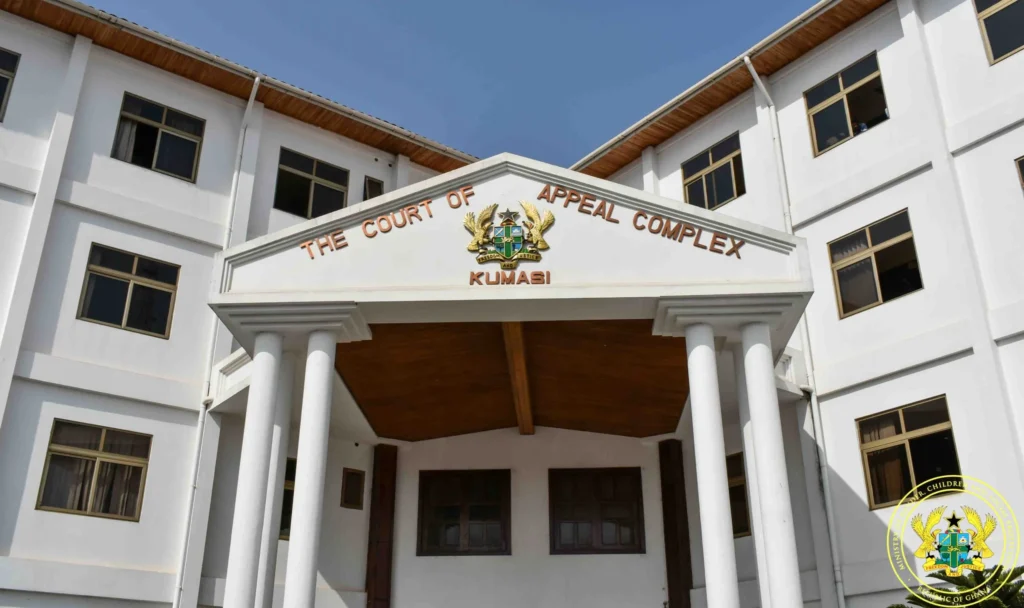
In Codjoe’s view, the stakes go far beyond Abronye’s personal fate. While the controversial politician may win or lose his legal battle, Ghana as a whole must not lose sight of the broader challenge: how to protect free speech for all citizens while preventing its abuse.
This balance, Codjoe concluded, is the hallmark of a mature democracy. It requires vigilance, thoughtful judicial interpretation, and a willingness to modernize outdated laws.
Ultimately, he argued, the question is not just whether Abronye is guilty or innocent but whether Ghana’s justice system can navigate the fine line between order and freedom without tipping into political vendetta or legal overreach.
READ ALSO: Rubio In Israel For Two-day State Visit