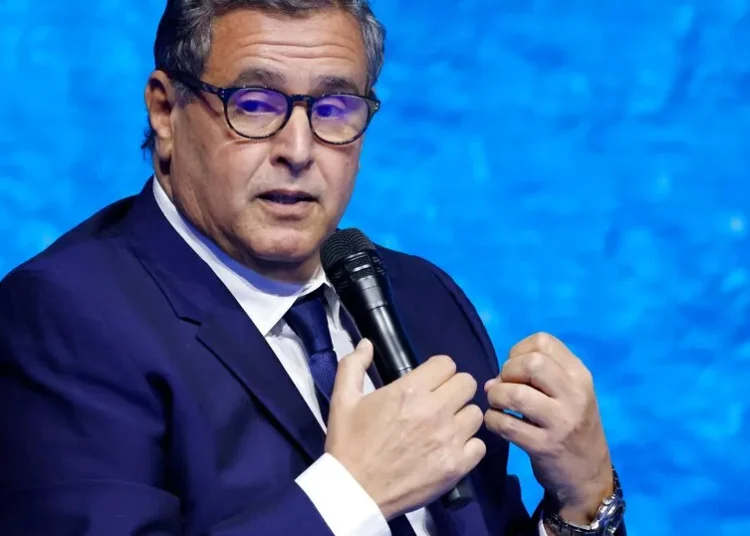
Moroccan Prime Minister Aziz Akhannouch has said he is open to dialogue as his government faces mounting unrest sparked by youth-led protests that have shaken the country for nearly a week. Security forces are preparing for a sixth consecutive night of demonstrations that have escalated into riots, leaving deep scars on communities across Morocco.
Since Saturday, hundreds have been arrested and injured, while buildings have been ransacked and cars set ablaze. What began as calls for improved education and healthcare has spiraled into the worst wave of street unrest since the mass protests in the Rif region between 2016 and 2017.
On Wednesday, the protests turned deadly. Authorities reported that security forces shot and killed three youths armed with knives who allegedly tried to steal weapons and ammunition in Lqliaa, near Agadir. According to officials, around 200 people stormed a security forces station, injuring officers who initially responded with tear gas and warning shots. Akhannouch, in a statement, insisted his government is committed to listening.
“We have engaged with the demands expressed by the youth movements and are ready for dialogue and discussion. Once again, we reiterate that a dialogue-based approach is the only path to addressing the various challenges facing our country.”
Moroccan Prime Minister Aziz Akhannouch
The protests have been driven by a loosely formed, anonymous youth movement known as “GenZ 212”. Using platforms such as TikTok, Instagram, and the gaming app Discord, the group has mobilized thousands while denouncing violence. In a statement posted on Discord, it said: “We urge all participants to remain disciplined and ensure the peaceful nature of our actions.”
Membership in the group’s Discord channel has surged dramatically, from 3,000 users last week to more than 150,000 by Thursday. Organisers have announced new protests in major cities for Thursday evening, though the most violent clashes have so far erupted in smaller towns where no demonstrations had been formally planned.
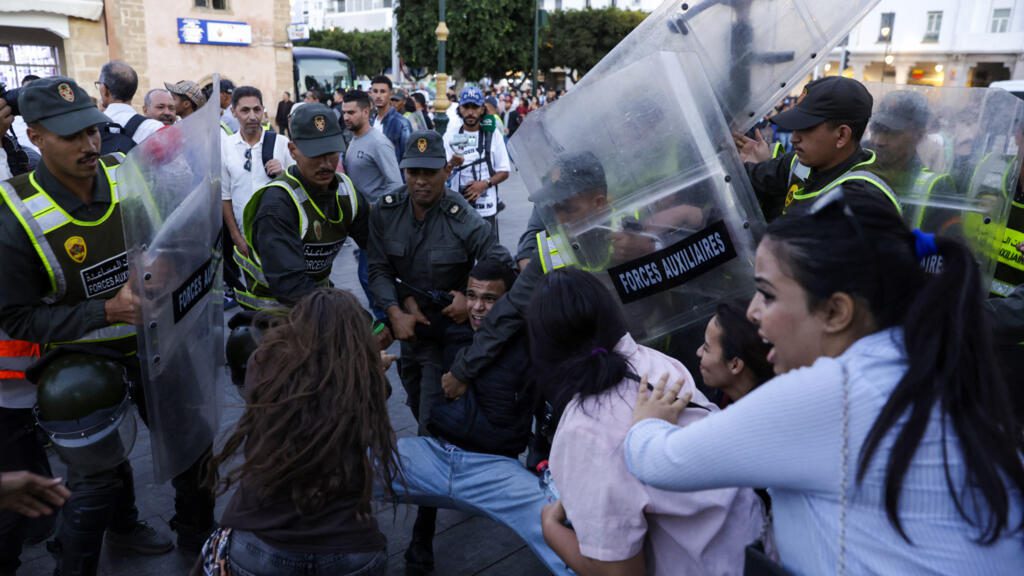
Despite its online calls for calm, the movement has been tainted by escalating violence. The interior ministry reported that 70% of those involved in vandalism and clashes with security forces have been minors. By Thursday, 640 people had been injured, including 589 members of the security forces. At least 413 police vehicles and 195 private cars were damaged in the unrest.
“Adults have been placed in police custody, while minors have been held under protective measures. Authorities will take all necessary legal measures, without hesitation or leniency, against anyone proven to be involved in acts criminalised by law.”
Interior Ministry
Violence Sparks Public Unease
For many citizens, the violence has dimmed sympathy for the protesters’ demands. Outside a torched bank in Sale, near Rabat, Fatima, 54, expressed her dismay. “I used to support their demands for education and health … but after I saw this fire, I am wondering how can this serve their demands?” she said.
Authorities have warned that rioters could face sentences ranging from 20 years to life in prison. Ouali Alami, a senior official at the public prosecutor’s office, confirmed the state’s readiness to pursue harsh penalties.
The GenZ 212 movement, however, remains inspired by similar youth-driven protests in Asia and Latin America, drawing strength from digital platforms to rally widespread support.
The turmoil has begun spilling into Morocco’s financial outlook. The country’s five-year credit default swap, which measures the cost of insuring government debt against default, widened by nine basis points on Thursday to 84, the highest since June, according to S&P Global Market Intelligence.
The unrest comes just days after S&P upgraded Morocco’s credit rating to BBB-/A-3, citing solid economic management and a narrowing budget deficit.
As Morocco heads into a sixth night of turmoil, Akhannouch’s call for dialogue faces a critical test. The challenge for his government is not only to restore order but also to convince young Moroccans that their grievances will be heard and addressed through peaceful means, rather than through street battles.
READ ALSO: President Mahama Swears In New Appeal Court Justices, Cautions Against Cynicism