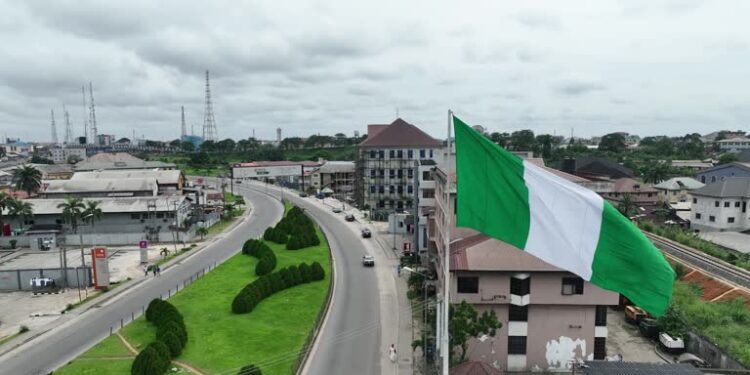
Nigeria’s subnational governments have recorded a sharp reduction in infrastructure spending in the opening months of 2026, pointing to a possible shift in fiscal priorities as political activity builds ahead of the 2027 general elections.
A review of first-quarter financial reports from 26 state governments shows that total capital expenditure dropped from N3.79tn in the final quarter of 2025 to N1.59tn between January and March 2026. The N2.20tn reduction represents a 58.1 per cent decline, marking one of the steepest quarterly contractions in recent years and raising questions about the pace of infrastructure delivery across the country.
The sudden slowdown has sparked concerns that several states may be delaying or scaling back key development projects at a time when citizens are already grappling with inflation, weak infrastructure and slowing economic activity.
This development also comes amid early political alignments ahead of the next general elections, with analysts warning that governments may increasingly prioritise recurrent expenditure and political commitments over long-term capital investments.
It was reported that only 26 of Nigeria’s 36 states had published their first-quarter financial reports at the time of review, while 10 states were yet to release their figures. The states yet to submit reports include Abia, Anambra, Delta, Edo, Imo, Nasarawa, Ogun, Osun, Plateau and Rivers.
Among the states that published their data, Lagos remained the highest spender on infrastructure, although it also recorded a notable decline. The state’s capital expenditure fell to N340.76bn in the first quarter from N535.46bn in the previous quarter, representing a drop of N194.70bn or 36.4 per cent.
Oyo State stood out as the only major exception to the nationwide downturn, significantly increasing its capital spending from N105.35bn to N231.27bn. The N125.93bn rise represents a 119.5 per cent increase, making it the only reporting state to record strong growth in development expenditure.
In contrast, most states experienced steep declines. Enugu recorded one of the most severe contractions, with capital spending plunging by 91.4 per cent from N365.69bn to N31.37bn. Bayelsa cut its expenditure by 79.9 per cent, while Akwa Ibom recorded a 67.9 per cent decline.
Katsina, Benue and Kwara each posted declines of 77.8 per cent, while Cross River’s spending fell by 83 per cent. Ebonyi, Ondo, Sokoto and Zamfara also recorded reductions of over 70 per cent.
Although economists note that capital spending typically slows in the first quarter, the scale of the decline has deepened concerns that infrastructure development momentum may be weakening at a critical stage for Nigeria’s economy.
Rising State Borrowing Sparks Concerns Over Fiscal Pressure in Nigeria
Even as many Nigerian states scaled back capital spending in the first quarter of 2026, borrowing activity continued to climb, heightening concerns about growing fiscal pressure among subnational governments.
According to an analysis of first-quarter financial reports, 13 of the 26 states that published their data collectively secured N361.98bn in fresh loans within the three months. The figures suggest that while infrastructure investment slowed sharply, several governments increasingly relied on borrowing to bridge funding gaps and sustain operations.
A breakdown of the data shows wide disparities in borrowing levels across the country. Oyo State recorded the highest figure at N164.88bn, accounting for nearly half of the total loans obtained by reporting states. Bauchi followed with N56.57bn, while Niger State borrowed N39.28bn. Taraba secured N23.4bn, while Ebonyi and Yobe each obtained N20bn.
Other states also expanded their debt exposure during the period. Katsina borrowed N8.55bn, Kaduna took N8.06bn, and Gombe raised N7.61bn. Jigawa obtained N6.27bn, Ekiti borrowed N3.01bn, while Borno secured N2.85bn. Kwara recorded N438.88m, Ondo borrowed N300m, and Kogi posted the lowest figure at N5.32m.
The rising trend in borrowing adds to broader concerns about Nigeria’s subnational debt profile. Recent figures indicate that the external debt of 32 states and the Federal Capital Territory increased to nearly $5.7bn in new loans during 2025, underscoring the growing reliance on debt financing.
Commenting on the trend, Director and Chief Economist at Proshare Nigeria LLC, Teslim Shitta-Bey, indicated, “The challenge here is that most of the governments, including the Federal Government, are unable to manage their balance sheets properly, ” adding, “ While borrowing might seem like an easy way to run operations, it is not necessarily the right approach.”
However, the Chief Executive Officer of the Centre for the Promotion of Private Enterprise, Muda Yusuf, offered a different perspective, noting that capital expenditure typically begins slowly in the early months of the year due to procurement and contracting delays. “It is not like recurrent expenditure, where spending happens every day through salaries, travels, and the like,” he added.
“For capital expenditure, there are usually more disbursements around the second and third quarter because by then they would have concluded most of the procurement processes, which are often very bureaucratic.
“It also involves huge sums of money, and payments are not made at once. So, for capital expenditure to gather momentum, it usually gets to the second or third quarter before you begin to see significant spending.”
Muda Yusuf
Despite differing views, financial experts continue to warn that sustained borrowing without corresponding revenue growth could intensify fiscal strain and threaten the long-term financial stability of Nigeria’s state governments.