
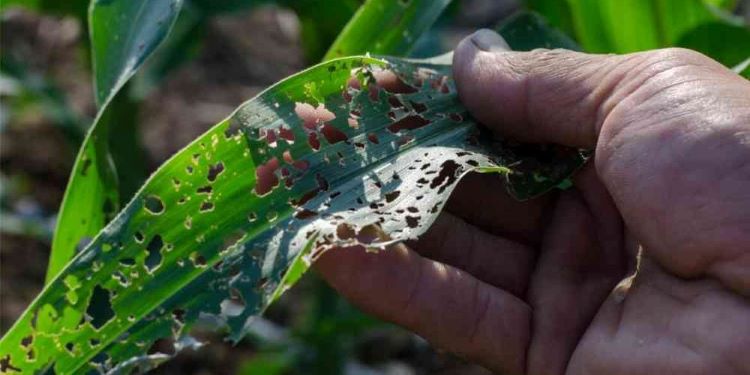
Invasive biological agents have officially transitioned from a localized farming nuisance into a severe macroeconomic threat, draining a staggering, estimated US$7 billion from African economies every single year.
To confront this escalating threat to cross-border commerce, food security, and rural stability, plant health specialists, researchers, and heads of National Plant Protection Organisations (NPPOs) from 16 West African nations have convened in Accra for a high-level, three-day regional workshop.
Organized by the Centre for Agriculture and Bioscience International (CABI) under its flagship PlantwisePlus Programme, the summit marks a decisive, sub-regional push to deploy advanced Pest Risk Analysis (PRA) frameworks to insulate national borders from devastating biological incursions.
Dr. Victor Clottey, CABI’s Regional Director for West Africa, brought this reality to the forefront of the Accra summit, warning that the widely cited US$7 billion annual loss is highly conservative, given the vast number of unquantifiable social variables involved.
“People often look at the monetary value, but the effects go much deeper. When pests destroy crops, farmers lose income, families struggle to pay school fees, healthcare becomes difficult to afford, and communities become more vulnerable. Many of these losses cannot be quantified”
Dr. Victor Clottey, CABI’s Regional Director for West Africa
With agriculture serving as the backbone of West African economies and the primary livelihood anchor for millions, the unchecked spread of alien insects, fungi, and bacterial pathogens represents a silent drag on regional GDP, as the true financial toll of biological invasions extends far beyond simple crop destruction metrics.
When an alien pathogen infiltrates an agricultural landscape, it initiates a destructive chain reaction that compromises the entire rural economic ecosystem. This socio-economic drain severely undermines national poverty reduction campaigns and weakens community resilience across the sub-region.

When a primary cash or staple crop faces an uncontained biological outbreak, like the unresolved fungal disease outbreak that tore through ginger farms across the Kadjebi District in Ghana, the immediate loss of household liquidity reduces local purchasing power, directly affecting secondary markets and municipal tax collections.
Furthermore, the long-term cost of managing an established invasive species is profoundly higher than the capital required to execute proactive border exclusions, trapping debt-strained governments in an expensive cycle of downstream mitigation rather than upstream prevention.
Modern Biosecurity Shield
To combat this vulnerability, West African regulators are shifting away from reactive eradication campaigns and moving toward predictive, data-driven border management.
At the center of this structural realignment is the deployment of Pest Risk Analysis (PRA) – a specialized diagnostic methodology used to evaluate import commodities that may harbor dangerous organisms and assess specific biological threats before they penetrate domestic agricultural networks.
Opening the multi-nation workshop, Mr. Eric Bentsil Quaye, Director of Ghana’s Plant Protection and Regulatory Services Directorate (PPRSD), highlighted the critical importance of integrating scientific analysis directly into modern border protection protocols.
“Increasing global trade, climate variability, and the movement of plant materials across borders have heightened the risk of invasive pests entering new territories, threatening food security, farmer livelihoods, environmental sustainability, and regional integration.
“Effective pest risk analysis enables countries to make science-based decisions, improve surveillance and preparedness efforts, strengthen quarantine systems, and facilitate safe agricultural trade within and beyond the region”
Mr. Eric Bentsil Quaye, Director of Ghana’s Plant Protection and Regulatory Services Directorate

The vectors for these biological incursions are often deeply tied to essential economic activities. Invasive species frequently hitchhike across borders via international container shipping, the informal movement of raw agricultural goods between neighboring border communities, and even through uninspected humanitarian food aid shipments.
Through rigorous PRA protocols, West African states can make objective, science-based decisions regarding import bans, mandatory quarantine periods, and specialized border treatments without interrupting legitimate, safe regional trade.
A prevailing thesis of the Accra summit is that West Africa must be “policed as a single, contiguous biological ecosystem” because insect vectors, fungal spores, and bacterial blights do not respect political boundaries, and isolated national biosecurity protocols are fundamentally inadequate.
A vulnerability in one nation’s quarantine system directly threatens the agricultural security of all neighboring states.
Dr. Clottey illustrated this structural interdependence by referencing the current regional management of Banana Bunchy Top Disease. While the highly destructive viral pathogen has been confirmed and reported in several neighboring West African countries, Ghana has not yet recorded a single case.
To preserve Ghana’s uninfected status, regional collaboration must ensure that early detection and aggressive containment actions occur within the infected territories before the virus crosses the border. To operationalize these advanced regional directives, the workshop is introducing modern, scalable technology to eliminate administrative backlogs at border inspection points.
Dr. Lakpo Koku Agboyi, a Senior Scientist in Invasive Species Management at CABI, unveiled a new digital Pest Risk Analysis tool explicitly aligned with international phytosanitary standards.
This software enables National Plant Protection Organisations to quickly reference global pest distributions, evaluate the biological risk profiles of incoming plant products, and execute standardized preventive measures in real time.

Crucially, the experts emphasized that sustainable biosecurity cannot rely solely on border inspectors and digital tools; it requires broad public participation. The strategy outlines a decentralized surveillance framework where academic institutions, researchers, local farmers, and the general public act as an extended early warning network.
The common consensus is that educating rural communities to recognize unusual crop abnormalities and report them immediately to agricultural extension officers can dramatically lower the critical time window between a pest’s initial introduction and its eradication in the sub-region.
Early containment prevents a localized biological introduction from transforming into a widespread, multi-billion-dollar regional emergency, ensuring that West Africa’s agricultural trade remains secure, competitive, and resilient.