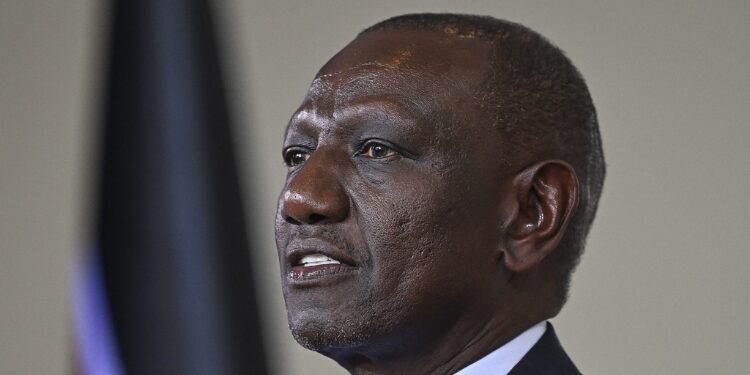
Kenya’s President, William Ruto, has defended a controversial Ebola quarantine facility intended for US nationals, as legal action and public protests intensify over fears that the arrangement could expose the country to the deadly virus.
The US-built isolation centre at Laikipia Air Base was scheduled to open last week, according to American officials, to house citizens arriving from the Democratic Republic of Congo (DRC), where a major Ebola outbreak is ongoing. The facility, located about 200 kilometres from Nairobi, was designed to accommodate 50 isolation beds and would be operated by US medical personnel.
The plan has triggered widespread concern within Kenya, with critics warning that hosting quarantined Ebola patients on Kenyan soil could increase the risk of transmission.
Tensions escalated into violent protests near the air base, where security forces responded with tear gas to disperse demonstrators.
Despite the backlash, President William Ruto strongly defended the agreement, describing it as part of a broader national health preparedness strategy.
According to President William Ruto, the proposed US facility was “neither unique nor exceptional but part of a broader national preparedness system,” adding that it “will be there to serve the people of Kenya and to serve our friends, including the Americans.”
He further insisted that the partnership had been established in Kenya’s national interest, arguing that critics were politicising a serious public health issue.
“I can assure the people of Kenya that the agreement between the government of Kenya and the American government is for the good of our country and for the partnership.”
William Ruto
“Why anybody would want to politicise, to mobilise negative politics on a matter so serious as a pandemic?” he questioned, adding, “we are a responsible government. We know what we are doing. So people should relax.”
The controversy has already reached the courts. The High Court extended a temporary suspension of the project, following a petition by the Katiba Institute, a rights organisation that argues the agreement was reached without adequate transparency or public consultation.
The court, in response, has ordered the government to disclose all agreements related to the facility within seven days.
Deadly Protests Erupt in Kenya Over US Ebola Isolation Facility Plan
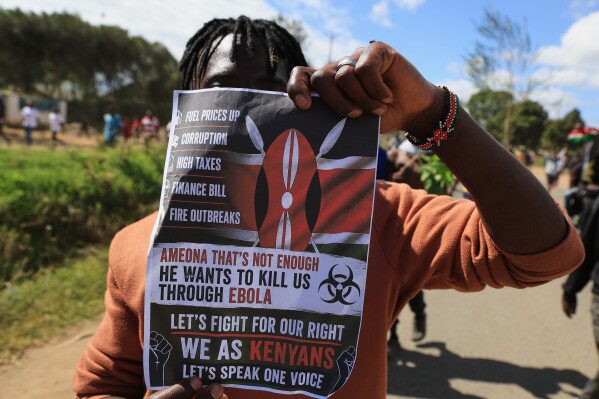
Meanwhile, violence has broken out in central Kenya amid escalating opposition to a proposed US-backed Ebola isolation centre, with two people reported killed during clashes between protesters and security forces near a military airbase.
The deaths occurred in the town of Nanyuki, close to the Laikipia Air Base, where authorities have been preparing a facility intended to quarantine US nationals arriving from the Democratic Republic of Congo (DRC), which is battling a major Ebola outbreak. The circumstances surrounding the fatalities remain unclear, and officials have not issued an immediate confirmation.
According to reports, one of the victims was shot in an area near the protest site and later taken to the hospital by friends, where he was pronounced dead. The second victim was already dead when brought to the hospital by soldiers. Both bodies reportedly showed gunshot wounds, though details of how they were sustained have not been independently verified.
The violence followed days of growing public anger over the planned Ebola isolation facility, which has sparked fears that hosting the centre on Kenyan soil could increase the risk of exposure to the virus.
The proposal has continued to face growing public criticism. Wearing safety costumes, a small number of demonstrators gathered in central Nairobi with signs that read “Reject Ebola in Kenya” and a coffin bearing the word “Ebola.”
The controversy takes place in the context of a rising Ebola outbreak in the Democratic Republic of the Congo, where the Africa Centres for Disease Control and Prevention report that since mid-May, over 1,000 suspected cases, including over 250 deaths, have been reported. Fears of a larger regional spread have been raised by the confirmation of six more new cases of Ebola in neighbouring Uganda.
Kenya itself has not recorded any Ebola cases. However, government officials highlighted that enhanced screening measures are in place at entry points as part of broader efforts to prevent the virus from entering the country.
Despite this, tensions over the planned quarantine centre have exposed deep divisions over public health preparedness, sovereignty and the risks associated with hosting foreign-run medical facilities during a regional health emergency.
READ ALSO: IShowSpeed Drops Viral World Cup Anthem Ahead of 2026 Tournament