United Nations has warned that South Sudan may not be able to hold credible, peaceful and inclusive elections in December unless urgent political, security and institutional challenges are addressed, raising fresh concerns over the country’s fragile peace process and democratic transition.
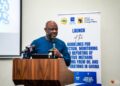
Briefing the UN Security Council, the Special Representative of the Secretary-General and Head of the United Nations Mission in South Sudan (UNMISS), Anita Kiki Gbeho, revealed that preparations for the long-awaited polls have increasingly dominated the country’s political landscape.
However, she cautioned that serious concerns remain over whether the necessary political, security and institutional conditions can be established before citizens head to the ballot box.
“The political discourse in South Sudan has been increasingly dominated by preparations for the December election. Concerns are growing about whether the conditions necessary for credible, peaceful and inclusive elections can be established in time.”
Anita Kiki Gbeho
The warning comes as South Sudan approaches one of the most critical moments since gaining independence in 2011. The elections are expected to mark the culmination of the country’s prolonged transitional period under the Revitalised Agreement on the Resolution of the Conflict in the Republic of South Sudan, signed in 2018 to end years of devastating civil war.
Yet, nearly eight years after the agreement was reached, many of its key provisions remain only partially implemented, while political mistrust among the country’s principal actors continues to undermine confidence in the transition.
According to the Special Representative of the Secretary-General and Head of the United Nations Mission in South Sudan the current situation is “interconnected and challenging,” pointing out that not much has changed since her last briefing to the Council.
According to her, there is still a lack of trust among political stakeholders, and recent events have made the peace agreement’s implementation even more difficult.
One of the issues brought up was the ongoing exclusion of significant opposition individuals from crucial political processes, which she claimed had undermined the transitional framework’s capacity for inclusivity and consensus-building.
She also highlighted the ongoing trial of opposition leader Riek Machar, which has now exceeded 100 court sessions and continued for nearly one year while he remains in detention.
The prolonged legal proceedings have become another source of political tension, raising fresh questions about whether all major stakeholders will participate meaningfully in the electoral process.
Moreover, Gbeho expressed particular concern over renewed tensions between the South Sudan People’s Defence Forces and the Sudan People’s Liberation Army-in-Opposition (SPLA-IO) in Jonglei State, alongside recurring communal violence in Warrap and Lakes states.
The deteriorating security environment has compounded existing humanitarian challenges in one of Africa’s youngest nations, where years of conflict, displacement, flooding and food insecurity have already left millions dependent on humanitarian assistance.
George Aggrey Owinow, Interim Chairperson of the Reconstituted Joint Monitoring and Evaluation Commission, echoed similar concerns indicating that implementation of the Revitalised Peace Agreement has been “significantly constrained” by persistent political and security challenges since March 2025.
According to Owinow, preparations for the December elections are “way behind schedule,” despite the registration of 39 political parties intending to participate in the polls.
He warned that urgent political and legal decisions remain unresolved, including completing the unification of armed forces, guaranteeing political space for all actors and ensuring sufficient logistical and financial resources for institutions responsible for implementing the peace agreement.
Women and Civilians Bear Brunt of Conflict as Calls for Dialogue Grow
Women and civilians continue to bear the brunt of South Sudan’s protracted instability while political leaders discuss the nation’s future.
The Founder and President of the South Sudan Women’s Empowerment Network, Lilian Riziq disclosed that many of the issues she first brought up in 2022 are still unsolved almost four years later.
She pointed to repeated extensions of the political transition, worsening insecurity, deteriorating humanitarian conditions and the slow implementation of the peace agreement as factors that have further increased the vulnerability of women and girls.
According to Lilian Riziq, more than one-third of South Sudan’s population remains displaced, with women and girls accounting for approximately 85% of those forced from their homes.
She also emphasised the startlingly high rate of gender-based violence, pointing out that approximately 65% of women and girls are abused at some point in their lives, many of them before they reach maturity.
In addition, UNMISS recorded a 147% rise in civilian victims of sexual violence due to war between July and September of 2025 alone when compared to the same time the year before.
The documented abuses include rape, trafficking, sexual exploitation and attacks targeting vulnerable communities, particularly around mining areas where insecurity and weak governance have heightened risks for women and girls.
In view of that, Representatives of several UN Security Council member states also urged South Sudan’s leaders to place dialogue above confrontation.
Jennifer Locetta of the United States quoted a grieving mother from Western Equatoria State, stating that, “our children are dying like flowers falling.”
She also called for direct and genuine dialogue among all signatories to the 2018 peace agreement, arguing that meaningful peace remains impossible while the leader of the second-largest political party continues to be under house arrest and on trial.
Meanwhile, Ambassador Asim Iftikhar Ahmad of Pakistan stressed that UNMISS remains indispensable to stability despite operating below its authorised military strength.
According to Ambassador Asim Iftikhar Ahmad, the mission currently fields 9,176 military personnel against an authorised ceiling of 12,500 and argued that the remaining capacity should be deployed given worsening security conditions.
Ahead of South Sudan’s scheduled December polls, the Security Council has urged political leaders to rebuild trust, accelerate the implementation of key peace commitments and place the needs of ordinary people above political rivalries.
It warned that failure to do so could undermine the country’s democratic aspirations and deepen uncertainty for millions already facing humanitarian hardship.
READ ALSO: Medeama Handed Tough First Round Test in CAFCL Qualifiers, Nations Set for Mali Trip