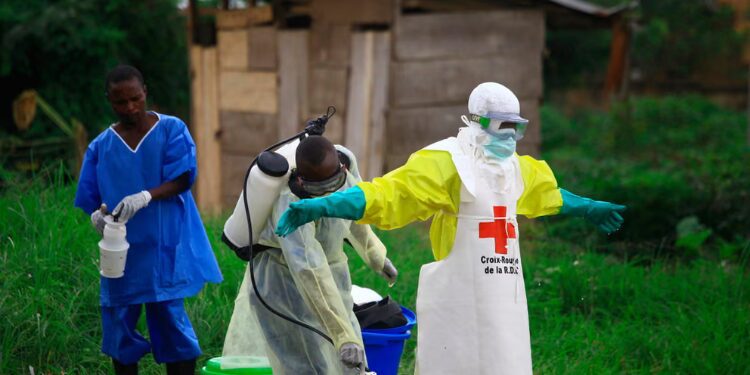
Three distinct vaccine development programmes are currently being fast-tracked as part of an intensified global response to control a rare and highly lethal strain of Ebola. The outbreak has already resulted in approximately 250 deaths and continues to spread across regions of Central and East Africa, prompting urgent international health interventions.
According to Health researchers, the outbreak, driven by the Bundibugyo species of the virus, is raising serious concern among global health experts, with warnings that it could become one of the most severe Ebola crises recorded if transmission is not brought under control quickly.
International Aids Vaccine Initiative (IAVI), University of Oxford, and pharmaceutical company Moderna are all working on experimental vaccines targeting the strain, with funding support from the Coalition for Epidemic Preparedness Innovations (CEPI).
The outbreak has already resulted in more than 1,000 suspected cases in the Democratic Republic of Congo, alongside confirmed infections in neighbouring Uganda. Health agencies fear that delayed detection, combined with ongoing conflict and weak healthcare infrastructure in affected regions, could allow the virus to spread further before containment measures take full effect.
Medical experts have also warned that the current situation bears troubling similarities to the West African Ebola outbreak of 2014 to 2016, which infected nearly 29,000 people and caused more than 11,000 deaths. In contrast, the Bundibugyo strain is less common and historically understudied, making it more difficult to respond to in real time.
According to Dr Mark Feinberg, head of IAVI, the outbreak is “clearly threatening to be as severe an outbreak as that, if not even worse, and development of a vaccine, and other countermeasures, is clearly a priority.”
His remarks echo concerns raised by Médecins Sans Frontières, which described the situation as “deeply alarming” and warned that the scale and speed of infections are unprecedented for this type of outbreak.
Unlike the more widely known Zaire strain of Ebola, for which an approved vaccine already exists, the Bundibugyo species has no licensed vaccine available. Scientists note that Ebola viruses are diverse, with six known species, although only three have historically caused major outbreaks in humans.
Each of the three vaccine candidates currently in development uses a different scientific approach, but all are designed to train the immune system to recognise a key structure on the virus known as the Bundibugyo glycoprotein.
IAVI is developing a vaccine using a modified, non-dangerous virus engineered to carry the Ebola protein. This approach allows the immune system to respond to the harmless virus while learning to identify and attack Ebola in the future. Early animal studies, including tests in monkeys, have shown strong immune responses and near-complete protection, raising cautious optimism among researchers.
Dr Mark Feinberg indicated that early findings were encouraging, adding that there was “optimistic” potential in the approach. However, he cautioned that even with accelerated development, it could take seven to nine months before the vaccine is ready for human clinical trials, though efforts are underway to shorten that timeline.
At the same time, Moderna has begun adapting its mRNA vaccine technology, which played a central role in the rapid development of COVID-19 vaccines. The company says it is applying the same platform to Bundibugyo Ebola, aiming to speed up early-stage development and response capacity.
University of Oxford is also advancing its own vaccine candidate using similar genetic technology to stimulate immune recognition of the virus. Researchers there have indicated that early-stage clinical trials could begin within two to three months, depending on regulatory approvals and trial readiness.
Although all three vaccines aim to achieve the same outcome, their underlying technologies differ significantly. Scientists explained that these differences may influence how strong the immune response is, how many doses are required, and how quickly protection develops, all of which will need to be evaluated in upcoming clinical trials.
Ebola Recoveries Offer Hope as Outbreak Response Intensifies in Eastern DRC
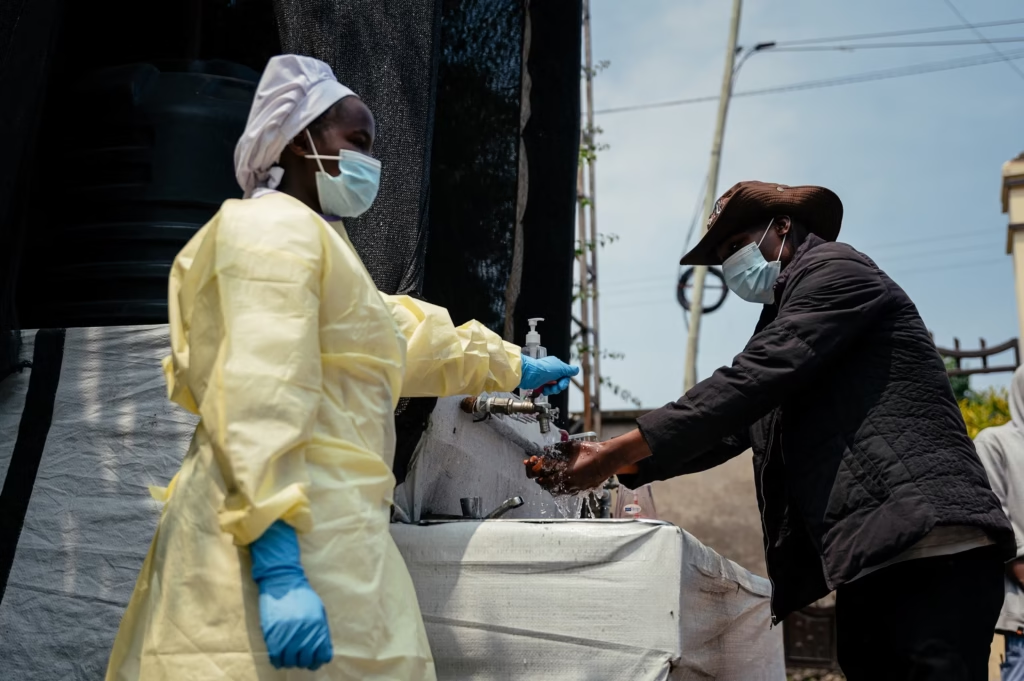
Meanwhile, four nurses who contracted Ebola in eastern Democratic Republic of the Congo (DRC) have been discharged from the hospital after recovering from the often-deadly virus.
World Health Organization (WHO) confirmed earlier that the health workers had recovered and were safely released. “More recoveries are expected, especially when people are diagnosed early and able to access care, and as outbreak response intensifies,” the agency added.
According to WHO, five patients have now recovered from the virus, including a laboratory worker who was declared Ebola-free recently.
The positive developments come as international health agencies intensify efforts to contain the outbreak caused by the Bundibugyo strain of Ebola, a rare variant for which there is currently no approved vaccine or treatment.
READ ALSO: Tennis Star Serena Williams Set for Competitive Return After Four-Year Absence